Circuits Courses
Circuits courses can help you learn about electrical components, circuit design, signal processing, and troubleshooting techniques. You can build skills in analyzing circuit behavior, using simulation software, and implementing practical projects. Many courses introduce tools like multimeters, oscilloscopes, and circuit simulation programs, that support testing and validating your designs.
Popular Circuits Courses and Certifications
 Status: Preview
Georgia Institute of Technology
Skills you'll gain: Basic Electrical Systems, Electronic Components, Electrical Power, Electrical Systems, Electronic Systems, Electrical Engineering, Engineering Analysis, Electronics, Electronics Engineering, Engineering, Scientific, and Technical Instruments, Engineering Calculations, Physics, Calculus, Integral Calculus
Birla Institute of Technology & Science, Pilani
Skills you'll gain: Electronic Systems, Semiconductors, Basic Electrical Systems, Electrical Engineering, Electronics, Electronic Hardware, Electronic Components, Electronics Engineering, Electrical Power, Power Electronics, Electrical Systems, Engineering Analysis, Network Analysis, Engineering Calculations, Control Systems, Mathematical Modeling, Applied Mathematics
 Status: Free Trial
University of Colorado Boulder
Skills you'll gain: Biological Engineering, Markov Model, Molecular Biology, Biotechnology, Bioinformatics, Simulation and Simulation Software, Mathematical Modeling, Mathematical Software, Process Engineering, Engineering Design Process, Systems Design, Simulations, Biochemistry, Molecular, Cellular, and Microbiology, Life Sciences, Failure Analysis, Electrical and Computer Engineering, Differential Equations, Process Modeling, Design Specifications
 Status: NewStatus: Free Trial
Coursera
Skills you'll gain: AI Security, USB, Threat Modeling, Hardware Design, Electronic Hardware, Model Deployment, CI/CD, Electronics, Security Engineering, Electronic Systems, Electronics Engineering, Routing Protocols, Electrical Power, Electrical Engineering, Computer-Aided Design, Electronic Components, Schematic Diagrams, Drafting and Engineering Design, Technical Design, Design Software
 Status: Free Trial
University of Colorado Boulder
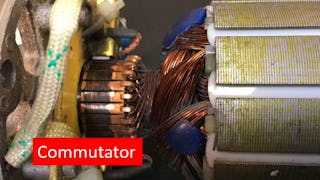
Skills you'll gain: Machine Controls, Electrical and Computer Engineering, Control Systems, Embedded Software, Laboratory Experience, Electronic Systems, Embedded Systems, Power Electronics, Electronic Hardware, Electrical Equipment, Hardware Design, Electrical Engineering, Electrical Systems, Electronics, Electronic Components, Torque (Physics), Design Specifications
 Status: Free Trial
Rice University
Skills you'll gain: Basic Electrical Systems, Electrical Engineering, Torque (Physics), electromagnetics, Physics, Electrical Systems, Electronics, Electronic Components, Engineering Calculations, Mechanics, Applied Mathematics, Problem Solving, Scientific Visualization, Calculus, Integral Calculus, Differential Equations, Mathematical Modeling
What brings you to Coursera today?
 Status: Free Trial
Johns Hopkins University
Skills you'll gain: Hardware Design, Electronic Hardware, Schematic Diagrams, Electronics, Computer-Aided Design, Electronic Systems, Mechanical Design, Drafting and Engineering Design, Communication Systems, Electronics Engineering, Remote Access Systems, Linux, Digital Communications, Restful API, Electrical Engineering, Web Applications, Telecommunications, Systems Of Measurement, Digital Signal Processing, Data Processing
 Status: Preview
Georgia Institute of Technology
Skills you'll gain: Electrical Power, Electrical Engineering, Basic Electrical Systems, Electronics, Electronic Systems, Electronics Engineering, Electronic Components, Electrical Systems, Engineering, Scientific, and Technical Instruments, Electrical and Computer Engineering, Engineering Analysis, Engineering Calculations, Algebra
 Status: Free Trial
Rice University
Skills you'll gain: Basic Electrical Systems, Electrical Engineering, Electrical Systems, Physics, Electronics, Electronic Components, electromagnetics, Scientific Visualization, Problem Solving, Calculus, Integral Calculus
 Status: NewStatus: Free Trial
Skills you'll gain: USB, Electronic Hardware, Hardware Design, Electronics, Electronic Systems, Electronics Engineering, Electrical Power, Electronic Components, Computer-Aided Design, Schematic Diagrams, Drafting and Engineering Design, Design, Design Specifications, Design Strategies, Verification And Validation, Data Import/Export
 Status: Free Trial
Arizona State University
Skills you'll gain: Semiconductors, Analytical Testing, Electronic Components, Engineering, Scientific, and Technical Instruments, Analytical Chemistry, Image Analysis, Electronics, Application Specific Integrated Circuits, Laboratory Equipment, Production Process, Basic Electrical Systems, Test Equipment, Materials science, Electrical Engineering, Laboratory Testing, Manufacturing Processes, Process Control, Electronics Engineering, Structural Analysis, Laboratory Research
 Status: Free Trial
University of Colorado Boulder
Skills you'll gain: Markov Model, Mathematical Modeling, Failure Analysis, Electrical and Computer Engineering, Biological Engineering, Process Modeling, Hazard Analysis, Simulations, Model Evaluation
In summary, here are 10 of our most popular circuits courses
- Linear Circuits 1: DC Analysis: Georgia Institute of Technology
- Basic Electronics: Birla Institute of Technology & Science, Pilani
- Engineering Genetic Circuits: University of Colorado Boulder
- Mastering PCB Design and Layout: Coursera
- Motors and Motor Control Circuits: University of Colorado Boulder
- Introduction to Electricity and Magnetism: Rice University
- Raspberry Pi Projects: Johns Hopkins University
- Linear Circuits 2: AC Analysis : Georgia Institute of Technology
- Physics 102 - Electric Potential and DC Circuits: Rice University
- From Schematic to PCB: Layout Fundamentals: Coursera










