• For Individuals
  • For Businesses
  • For Universities
  • For Governments
Degrees
​
Log In
Join for Free
  • Browse
  • High Performance Computing

High Performance Computing Courses

High Performance Computing courses can help you learn parallel processing, algorithm optimization, and data management techniques. You can build skills in performance tuning, workload balancing, and utilizing distributed systems effectively. Many courses introduce tools such as MPI, OpenMP, and CUDA, that support implementing high-performance applications and conducting simulations in fields like scientific computing and big data analysis.


More to explore:

Popular High Performance Computing Courses and Certifications

  • U

    University of Colorado Boulder

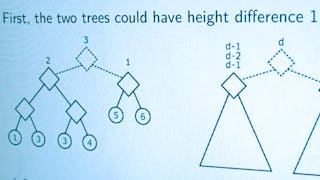
    Introduction to High-Performance and Parallel Computing

    Skills you'll gain: Bash (Scripting Language), Scalability, Distributed Computing, Computer Systems, Big Data, Operating Systems, File Systems, Linux, Scripting, Command-Line Interface, Performance Tuning, Programming Principles

    Build toward a degree

    3.7
    Rating, 3.7 out of 5 stars
    ·
    160 reviews

    Beginner · Course · 1 - 4 Weeks

  • U

    University of Colorado Boulder

    High-Performance and Parallel Computing

    Skills you'll gain: Hardware Architecture, Bash (Scripting Language), Distributed Computing, Scalability, Computer Systems, File I/O, Big Data, Operating Systems, File Systems, Scripting, Command-Line Interface, C and C++, Performance Tuning, Computer Programming Tools, Linux, Load Balancing, Programming Principles, Communication Systems, Linear Algebra

    3.8
    Rating, 3.8 out of 5 stars
    ·
    174 reviews

    Advanced · Specialization · 3 - 6 Months

  • J

    Johns Hopkins University

    GPU Programming

    Skills you'll gain: Artificial Neural Networks, Image Analysis, Event-Driven Programming, Scalability, Deep Learning, C and C++, Performance Tuning, Convolutional Neural Networks, Data-oriented programming, Distributed Computing, Linear Algebra, Computer Graphics, Hardware Architecture, Mathematical Software, Numerical Analysis, Programming Principles, Computer Architecture, System Programming, Program Development, Machine Learning

    Build toward a degree

    2.8
    Rating, 2.8 out of 5 stars
    ·
    190 reviews

    Intermediate · Specialization · 3 - 6 Months

  • C

    Coursera

    GPU Clusters & Containers

    Skills you'll gain: Model Deployment, Containerization, Application Deployment, MLOps (Machine Learning Operations), AI Orchestration, Docker (Software), Kubernetes, AI Workflows, Distributed Computing, Cloud Computing, Scalability, Cloud Infrastructure

    Intermediate · Course · 1 - 4 Weeks

  • É

    École Polytechnique Fédérale de Lausanne

    Parallel programming

    Skills you'll gain: Scala Programming, Data Structures, Distributed Computing, Algorithms, Functional Design, Scalability, Java Programming, Other Programming Languages, Performance Tuning

    4.4
    Rating, 4.4 out of 5 stars
    ·
    1.8K reviews

    Intermediate · Course · 1 - 4 Weeks

  • U

    University of Colorado Boulder

    Software Architecture for Big Data

    Skills you'll gain: Service Level, Database Management, Acceptance Testing, Software Engineering, Web Applications, Performance Testing, Scalability, Microservices, Software Architecture, Data Architecture, Distributed Computing, Data Infrastructure, System Monitoring, Functional Requirement, Application Deployment, User Acceptance Testing (UAT), Application Development, Prototyping, Predictive Modeling, Big Data

    Build toward a degree

    3.5
    Rating, 3.5 out of 5 stars
    ·
    105 reviews

    Advanced · Specialization · 1 - 3 Months

What brings you to Coursera today?

  • A

    Arm

    Computer Architecture Essentials on Arm

    Skills you'll gain: Microarchitecture, Computer Architecture, Hardware Architecture, Simulations, Computer Hardware, Performance Tuning, Scalability, Data Storage

    Intermediate · Course · 1 - 3 Months

  • U

    University of Colorado Boulder

    Efficient Programming

    Skills you'll gain: Hardware Architecture, Computer Programming Tools, Linear Algebra

    4.4
    Rating, 4.4 out of 5 stars
    ·
    9 reviews

    Intermediate · Course · 1 - 3 Months

  • G

    Google Cloud

    AI Infrastructure: Introduction to AI Hypercomputer

    Skills you'll gain: Model Deployment, Google Cloud Platform, Cloud Deployment, Cloud Computing Architecture, Performance Tuning, Infrastructure Architecture, Artificial Intelligence, Hardware Architecture

    4.2
    Rating, 4.2 out of 5 stars
    ·
    18 reviews

    Intermediate · Course · 1 - 4 Weeks

  • G

    Google Cloud

    Infraestructura de IA: GPU de Cloud

    Skills you'll gain: Google Cloud Platform, Cloud Infrastructure, Hardware Architecture, Performance Tuning, Artificial Intelligence

    Intermediate · Course · 1 - 4 Weeks

  • U

    University of London

    Logic and Reasoning for Computing

    Skills you'll gain: Computational Logic, Logical Reasoning, Deductive Reasoning, Theoretical Computer Science, Computer Science, Critical Thinking, Computational Thinking, Business Logic, Algorithms, Mathematical Modeling, Problem Solving, Strategic Communication

    Intermediate · Course · 1 - 4 Weeks

  • U

    University of Pittsburgh

    Cloud Computing for Data Science

    Skills you'll gain: Apache Hadoop, Cloud Computing, Apache Spark, Web Services, Cloud Services, Cloud Computing Architecture, Cloud Infrastructure, PySpark, Cloud Applications, Cloud Platforms, Data Pipelines, Google Cloud Platform, Distributed Computing, Data Processing, Cloud Storage, Docker (Software), Virtualization, Containerization, Restful API, Data Architecture

    Build toward a degree

    Intermediate · Specialization · 1 - 3 Months

1234…745

In summary, here are 10 of our most popular high performance computing courses

  • Introduction to High-Performance and Parallel Computing: University of Colorado Boulder
  • High-Performance and Parallel Computing: University of Colorado Boulder
  • GPU Programming: Johns Hopkins University
  • GPU Clusters & Containers: Coursera
  • Parallel programming: École Polytechnique Fédérale de Lausanne
  • Software Architecture for Big Data: University of Colorado Boulder
  • Computer Architecture Essentials on Arm: Arm
  • Efficient Programming: University of Colorado Boulder
  • AI Infrastructure: Introduction to AI Hypercomputer: Google Cloud
  • Infraestructura de IA: GPU de Cloud: Google Cloud

Skills you can learn in Software Development

Programming Language (34)
Google (25)
Computer Program (21)
Software Testing (21)
Web (19)
Google Cloud Platform (18)
Application Programming Interfaces (17)
Data Structure (16)
Problem Solving (14)
Object-oriented Programming (13)
Kubernetes (10)
List & Label (10)

Frequently Asked Questions about High Performance Computing

High performance computing (HPC) refers to the use of supercomputers and parallel processing techniques to solve complex computational problems at high speeds. It is crucial in various fields, including scientific research, engineering, and data analysis, as it enables researchers and organizations to process vast amounts of data quickly and efficiently. HPC plays a vital role in simulations, modeling, and data-intensive tasks, helping to drive innovation and discovery across disciplines.‎

Careers in high performance computing are diverse and can include roles such as HPC system administrator, computational scientist, data analyst, and software engineer specializing in parallel computing. These positions are found in sectors like academia, government research labs, and private industry, where professionals leverage HPC to tackle complex problems, optimize performance, and enhance data processing capabilities.‎

To succeed in high performance computing, you should develop a strong foundation in programming languages such as C, C++, and Python. Familiarity with parallel computing frameworks like MPI (Message Passing Interface) and OpenMP is also essential. Additionally, understanding computer architecture, algorithms, and data structures will enhance your ability to optimize performance and solve computational challenges effectively.‎

Some of the best online courses for high performance computing include the Introduction to High-Performance and Parallel Computing course, which provides a solid foundation in HPC concepts. For those looking to deepen their knowledge, the High-Performance and Parallel Computing Specialization offers a comprehensive curriculum that covers advanced topics and practical applications.‎

Yes. You can start learning high performance computing on Coursera for free in two ways:

  1. Preview the first module of many high performance computing courses at no cost. This includes video lessons, readings, graded assignments, and Coursera Coach (where available).
  2. Start a 7-day free trial for Specializations or Coursera Plus. This gives you full access to all course content across eligible programs within the timeframe of your trial.

If you want to keep learning, earn a certificate in high performance computing, or unlock full course access after the preview or trial, you can upgrade or apply for financial aid.‎

To learn high performance computing, start by enrolling in introductory courses that cover the basics of parallel computing and programming. Engage in hands-on projects to apply your knowledge practically. Joining online communities or forums can also provide support and resources as you progress in your learning journey.‎

Typical topics covered in high performance computing courses include parallel algorithms, performance optimization techniques, distributed computing, and the architecture of supercomputers. Courses may also explore specific applications of HPC in fields like scientific computing, big data analytics, and machine learning.‎

For training and upskilling employees in high performance computing, courses like the High-Performance and Parallel Computing Specialization are excellent choices. They provide structured learning paths that can help teams enhance their computational capabilities and improve overall performance in data-intensive tasks.‎

This FAQ content has been made available for informational purposes only. Learners are advised to conduct additional research to ensure that courses and other credentials pursued meet their personal, professional, and financial goals.

Other topics to explore

Arts and Humanities
338 courses
Business
1095 courses
Computer Science
668 courses
Data Science
425 courses
Information Technology
145 courses
Health
471 courses
Math and Logic
70 courses
Personal Development
137 courses
Physical Science and Engineering
413 courses
Social Sciences
401 courses
Language Learning
150 courses

Coursera Footer

Skills

  • Accounting
  • Artificial Intelligence (AI)
  • Cybersecurity
  • Data Analytics
  • Digital Marketing
  • Human Resources (HR)
  • Microsoft Excel
  • Project Management
  • Python
  • SQL

Professional Certificates

  • Google AI Certificate
  • Google Cybersecurity Certificate
  • Google Data Analytics Certificate
  • Google IT Support Certificate
  • Google Project Management Certificate
  • Google UX Design Certificate
  • IBM AI Engineering Certificate
  • IBM AI Product Manager Certificate
  • IBM Data Science Certificate
  • Intuit Academy Bookkeeping Certificate

Courses & Specializations

  • AI Essentials Specialization
  • AI For Business Specialization
  • AI For Everyone Course
  • AI in Healthcare Specialization
  • Deep Learning Specialization
  • Excel Skills for Business Specialization
  • Financial Markets Course
  • Machine Learning Specialization
  • Prompt Engineering for ChatGPT Course
  • Python for Everybody Specialization

Career Resources

  • Career Aptitude Test
  • CAPM Certification Requirements
  • CompTIA A+ Certification Requirements
  • CompTIA Security+ Certification Requirements
  • Essential IT Certifications
  • Free IT Certifications and Courses
  • High-Income Skills to Learn
  • How to Learn Artificial Intelligence
  • PMP Certification Requirements
  • Popular Cybersecurity Certifications

Coursera

  • About
  • What We Offer
  • Leadership
  • Careers
  • Catalog
  • Coursera Plus
  • Professional Certificates
  • MasterTrack® Certificates
  • Degrees
  • For Enterprise
  • For Government
  • For Campus
  • Become a Partner
  • Social Impact
  • Free Courses
  • Share your Coursera learning story

Community

  • Learners
  • Partners
  • Beta Testers
  • Blog
  • The Coursera Podcast
  • Tech Blog

More

  • Press
  • Investors
  • Terms
  • Privacy
  • Help
  • Accessibility
  • Contact
  • Articles
  • Directory
  • Affiliates
  • Modern Slavery Statement
  • Do Not Sell/Share
Learn Anywhere
Download on the App Store
Get it on Google Play
Logo of Certified B Corporation
© 2026 Coursera Inc. All rights reserved.
  • Coursera Facebook
  • Coursera Linkedin
  • Coursera Twitter
  • Coursera YouTube
  • Coursera Instagram
  • Coursera TikTok