Software Engineering Courses
Software engineering courses can help you learn programming languages like Python and Java, software development methodologies, version control systems, and testing practices. You can build skills in code optimization, debugging, and collaborative project management. Many courses introduce tools such as Git for version control, Docker for containerization, and integrated development environments (IDEs) like Visual Studio Code, which enhance your ability to develop, test, and deploy software efficiently.
Popular Software Engineering Courses and Certifications

Skills you'll gain: Simulation and Simulation Software, Simulations, Engineering Design Process, Finite Element Methods, Engineering Analysis, Cloud Engineering, Hydraulics, Verification And Validation

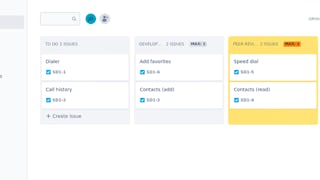
Skills you'll gain: Sprint Planning, Azure DevOps, Backlogs, Collaborative Software, Issue Tracking, Kanban Principles, Agile Software Development, Microsoft Azure, Project Management, DevOps
Coursera
Skills you'll gain: Workflow Management, Jira (Software), Product Roadmaps, Collaborative Software, Kanban Principles, Project Coordination, Agile Software Development, Agile Methodology, Issue Tracking, Agile Project Management, Project Management Software
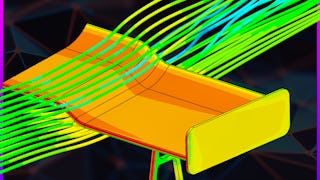
Skills you'll gain: Simulation and Simulation Software, Engineering Analysis, Finite Element Methods, Simulations, Engineering, Computer-Aided Design, Cloud Technologies, Engineering Design Process, Cloud Computing
Coursera
Skills you'll gain: R (Software), Data Import/Export, Package and Software Management, R Programming, Data Structures, Software Installation, Data Analysis Software, Data Analysis, Data Science

What brings you to Coursera today?

Skills you'll gain: Google Analytics, Web Analytics and SEO, Statistical Reporting, Data-Driven Marketing, Analytics, Data Analysis, User Accounts

Skills you'll gain: Work Breakdown Structure, Project Scoping, Project Estimation, Organizational Skills, Scope Management, Procedure Development, Project Management Software, Project Management, Google Sheets, Verification And Validation, Technical Standard

Skills you'll gain: Microsoft Excel, Excel Formulas, Spreadsheet Software, Microsoft Office, Microsoft 365
Skills you'll gain: Prompt Engineering, OpenAI API, Education Software and Technology, Generative AI, AI Integrations, OpenAI, Scripting, Scripting Languages, Python Programming, Application Programming Interface (API), Application Development, Machine Learning, Software Engineering

Skills you'll gain: Excel Formulas, Spreadsheet Software, Microsoft Excel, Microsoft Office, Microsoft 365, Data Analysis, Gross Profit, Business Mathematics

Coursera
Skills you'll gain: Collaborative Software, Google Workspace, Gmail, Telecommuting, File Management

Skills you'll gain: Finite Element Methods, Simulation and Simulation Software, Engineering Analysis, Simulations, Engineering, Verification And Validation
What brings you to Coursera today?
Best free Software Engineering courses
High-quality free Software Engineering courses you can start today.
- CFD Simulation Through a Centrifugal PumpCourseraBeginnerLess Than 2 HoursFree
- Getting Started with Azure DevOps BoardsCourseraBeginnerLess Than 2 HoursFree
- Get started with JiraCourseraBeginnerLess Than 2 HoursFree
Best Software Engineering courses from Coursera
Top-rated Software Engineering courses offered by Coursera on Coursera.
- Computational Fluid Mechanics - Airflow Around a SpoilerCourseraBeginnerLess Than 2 HoursCoursera
- Getting Started with RCourseraBeginnerLess Than 2 HoursCoursera
- Getting Started in Google AnalyticsCourseraBeginnerLess Than 2 HoursCoursera
Best Software Engineering courses for beginners
Top-rated beginner-friendly Software Engineering courses with no prerequisites.
- Project Management: Creating the WBSCourseraBeginnerLess Than 2 HoursNo prerequisites
- Using Basic Formulas and Functions in Microsoft ExcelCourseraBeginnerLess Than 2 HoursNo prerequisites
- Collaborating with G Suite AppsCourseraBeginnerLess Than 2 HoursNo prerequisites
Best short Software Engineering courses
Quick Software Engineering courses you can complete in a few hours or less.
- Getting Started with Microsoft ExcelCourseraIntermediateLess Than 2 HoursQuick completion
- Prompt Engineering with GPT: Programming for Custom ContentCourseraIntermediateLess Than 2 HoursQuick completion
- Finite Element Analysis Convergence and Mesh IndependenceCourseraBeginnerLess Than 2 HoursQuick completion










