• For Individuals
  • For Businesses
  • For Universities
  • For Governments
Degrees
​
Log In
Join for Free
  • Browse
  • Calculus

Top Projects to Practice Your Calculus Skills

Whether you’re starting fresh or building on what you already know, these calculus projects are designed to help you put knowledge into practice. Each project offers a structured way to explore real scenarios, make progress, and strengthen your skills—one step at a time.


Explore Calculus Project Ideas


  • C

    Coursera

    Introduction to C++ Programming: Build a Calculator

    Skills you'll gain: Program Development, C and C++, C++ (Programming Language), Object Oriented Programming (OOP), Computer Programming, Development Environment, Software Development, Computer Science

    4.4
    Rating, 4.4 out of 5 stars
    ·
    60 reviews

    Beginner · Guided Project · Less Than 2 Hours

  • C

    Coursera

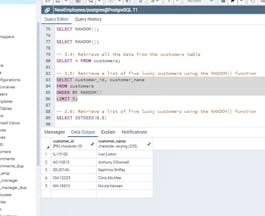
    SQL Mathematical Functions

    Skills you'll gain: SQL, PostgreSQL, Database Management, Data Manipulation, Database Systems

    4.2
    Rating, 4.2 out of 5 stars
    ·
    13 reviews

    Intermediate · Guided Project · Less Than 2 Hours

  • Next level skills. New Year savings.

    Save on Coursera Plus

What brings you to Coursera today?

Loading search results

Searches related to calculus

calculus 1
calculus for machine learning and data science
calculus: single variable part 1 - functions
calculus for engineers
calculus 2
calculus through data & modeling: differentiation rules
calculus through data & modelling: vector calculus
calculus: single variable part 2 - differentiation
1

In summary, here are 2 of our most popular calculus courses

  • Introduction to C++ Programming: Build a Calculator: Coursera
  • SQL Mathematical Functions: Coursera

Skills you can learn in Machine Learning

Python Programming (33)
Tensorflow (32)
Deep Learning (30)
Artificial Neural Network (24)
Big Data (18)
Statistical Classification (17)
Reinforcement Learning (13)
Algebra (10)
Bayesian (10)
Linear Algebra (10)
Linear Regression (9)
Numpy (9)

Frequently Asked Questions about Calculus

Calculus is a branch of mathematics that focuses on the study of change and motion. It provides tools for understanding how things vary and is essential in fields such as physics, engineering, economics, and statistics. By analyzing rates of change and accumulation, calculus helps us model real-world phenomena, making it a foundational subject for many scientific and technical disciplines.‎

A solid understanding of calculus can open doors to various career paths. Jobs that often require calculus skills include roles in engineering, data analysis, economics, and computer science. Positions such as data scientist, financial analyst, and software engineer frequently utilize calculus concepts to solve complex problems and make informed decisions.‎

To learn calculus effectively, you should develop a strong foundation in algebra and trigonometry. Key skills include understanding functions, limits, derivatives, and integrals. Familiarity with mathematical notation and the ability to solve equations will also be beneficial. Practicing problem-solving and applying calculus concepts to real-world scenarios can enhance your learning experience.‎

There are several excellent online calculus courses available. For example, the Differential Calculus through Data and Modeling Specialization and the Integral Calculus through Data and Modeling Specialization provide comprehensive coverage of the subject. Additionally, courses like Calculus for Engineers focus on practical applications in engineering contexts.‎

Yes. You can start learning calculus on Coursera for free in two ways:

  1. Preview the first module of many calculus courses at no cost. This includes video lessons, readings, graded assignments, and Coursera Coach (where available).
  2. Start a 7-day free trial for Specializations or Coursera Plus. This gives you full access to all course content across eligible programs within the timeframe of your trial.

If you want to keep learning, earn a certificate in calculus, or unlock full course access after the preview or trial, you can upgrade or apply for financial aid.‎

To learn calculus, start by reviewing algebra and trigonometry concepts. Then, explore online courses or textbooks that introduce calculus topics step-by-step. Practice regularly by solving problems and applying concepts to real-life situations. Engaging with study groups or forums can also enhance your understanding and provide support.‎

Typical topics covered in calculus courses include limits, derivatives, integrals, and the Fundamental Theorem of Calculus. Students often explore applications of calculus in various fields, such as physics and economics, and learn techniques for solving complex problems. Advanced courses may also introduce multivariable calculus and differential equations.‎

For training and upskilling employees, courses like Applied Calculus with Python and Calculus through Data & Modeling: Applying Differentiation can be particularly beneficial. These courses focus on practical applications of calculus in data analysis and modeling, making them suitable for professionals looking to enhance their skills.‎

This FAQ content has been made available for informational purposes only. Learners are advised to conduct additional research to ensure that courses and other credentials pursued meet their personal, professional, and financial goals.

Other topics to explore

Arts and Humanities
338 courses
Business
1095 courses
Computer Science
668 courses
Data Science
425 courses
Information Technology
145 courses
Health
471 courses
Math and Logic
70 courses
Personal Development
137 courses
Physical Science and Engineering
413 courses
Social Sciences
401 courses
Language Learning
150 courses

Coursera Footer

Skills

  • Artificial Intelligence (AI)
  • Cybersecurity
  • Data Analytics
  • Digital Marketing
  • English Speaking
  • Generative AI (GenAI)
  • Microsoft Excel
  • Microsoft Power BI
  • Project Management
  • Python

Certificates & Programs

  • Google Cybersecurity Certificate
  • Google Data Analytics Certificate
  • Google IT Support Certificate
  • Google Project Management Certificate
  • Google UX Design Certificate
  • IBM Data Analyst Certificate
  • IBM Data Science Certificate
  • Machine Learning Certificate
  • Microsoft Power BI Data Analyst Certificate
  • UI / UX Design Certificate

Industries & Careers

  • Business
  • Computer Science
  • Data Science
  • Education & Teaching
  • Engineering
  • Finance
  • Healthcare
  • Human Resources (HR)
  • Information Technology (IT)
  • Marketing

Career Resources

  • Career Aptitude Test
  • Examples of Strengths and Weaknesses for Job Interviews
  • High-Income Skills to Learn
  • How Does Cryptocurrency Work?
  • How to Highlight Duplicates in Google Sheets
  • How to Learn Artificial Intelligence
  • Popular Cybersecurity Certifications
  • Preparing for the PMP Certification
  • Signs You Will Get the Job After an Interview
  • What Is Artificial Intelligence?

Coursera

  • About
  • What We Offer
  • Leadership
  • Careers
  • Catalog
  • Coursera Plus
  • Professional Certificates
  • MasterTrack® Certificates
  • Degrees
  • For Enterprise
  • For Government
  • For Campus
  • Become a Partner
  • Social Impact
  • Free Courses
  • Share your Coursera learning story

Community

  • Learners
  • Partners
  • Beta Testers
  • Blog
  • The Coursera Podcast
  • Tech Blog

More

  • Press
  • Investors
  • Terms
  • Privacy
  • Help
  • Accessibility
  • Contact
  • Articles
  • Directory
  • Affiliates
  • Modern Slavery Statement
  • Do Not Sell/Share
Learn Anywhere
Download on the App Store
Get it on Google Play
Logo of Certified B Corporation
© 2026 Coursera Inc. All rights reserved.
  • Coursera Facebook
  • Coursera Linkedin
  • Coursera Twitter
  • Coursera YouTube
  • Coursera Instagram
  • Coursera TikTok