As an expert in infectious diseases, editor of the Journal of Infectious Diseases and author of the textbook Infectious Diseases: A clinical short course, McGraw-Hill April 2020, I have been concerned about the misinformation being shared about the COVID-19 epidemic. How did this disease develop? Where did it come from? How does it cause diseases? The answers to these questions will be answered in the first video of module 1. The world has been startled and frightened by the rapid spread of this virus throughout the world. In Video 2 the epidemiology as presently understood is reviewed. This video will be periodically updated recognizing the rapid progression of the pandemic. Many want to know how does this disease present, what are the symptoms associated with COVID-19? How dangerous is COVID-19? Who is at risk of dying? All these questions are answered in Video 3. And finally how is this disease best treated and how can we slow the spread of the infection? These questions are answered in video 4. In addition to the videos multiple choice questions are included to test your understanding and there is an epidemiology peer reviewed exercise designed to teach you how this infection is spread and to show the power of the tracing of cases and isolating those who are infected. The second peer review exercise will encourage you to create a campaign to shift your countries culture to embrace behaviors that can lead to suppression of the epidemic, behaviors that will save lives. After completing this course you will be armed with the knowledge and skills to make a difference and help to bend the curve.
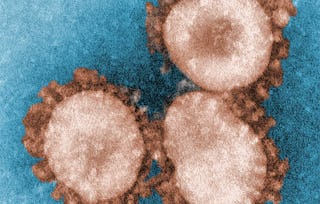
Coronaviruses infect many species of animal including the bat. These RNA viruses frequently mutate particularly in bats, and chance mutations rendered the SARS-CoV-2 capable of readily infecting humans. The bat virus infected an intermediate host, possibly the Pangolin that was sold in the live fish and animal market in China. A key virulence (characteristic that allows a pathogen to cause disease) factor is the S protein which was the likely primary target of the mutations. This protein forms knobs on the outer surface of the virus that bind strongly to the ACE2 receptor on human respiratory epithelial cells. Binding is followed by internalization and within the cell the virus replicates its RNA using a replicase and assembles into a nuclear capsid in the host cell cytoplasm RNA is also translated into proteins that coat the outer surface of the virus. Once fully assembled the virus is exocytosed (released) from vesicles. The new viral particles can infect other cells and spread to other humans. Because of the inaccuracy of the viral replicase as the virus actively grows it produces point mutations. Some of these mutant virus more effectively infect cells. The alpha variant became prominent in the Winter and Spring of 2021 subsequently a more highly infectious variant the Delta variant that originated in India dominated and now a third variant, omicron that originated in South Africa is now spreading throughout the world and quickly dominating in Europe and the U.S. The virus first replicates in the throat and nasal passages and then spreads to the trachea, bronchi and alveoli where it induces inflammation and damage to the alveolar walls causing fluid to leak into the air exchanging sacks and interfering with oxygen exchange. If inflammation continues the alveolar walls become fibrosed (scarred) and further compromising oxygen exchange resulting in decreases in oxygen saturation (hypoxia). SARS-CoV-2 is able to spread efficiently from person to person primarily by droplets and aerosol (tiny particles that stay in the air for hours). Infection quickly spread throughout the world and caused a pandemic within 3 months. Humans were infected at the Huanan live fish and animal market. The infection initially was confined to workers in the market (point source) but then quickly spread person to person within the first 10 days. Because of the lack of travel restrictions early in the outbreak Chinese traveling from the area quickly spread the virus to many other countries. In the early phases lack of therapy or vaccine allowed the virus to move from person to person unchecked with a steep exponential curve with a doubling of cases every 2-3 days. This virus is one of the most infectious ever reported each infected person on average infecting 2.0 to 2.7 people, the alpha variant can infect 3.0-5.0, the Delta variant one person on average infects 5-8 individuals and the omicron 10-16. The last two variants can cause breakthrough infections in vaccinated individuals. Another characteristic that has allowed rapid spread is the existence of 40-60% asymptomatic or minimally symptomatic carriers. 10% are superspreaders infecting on average 10-80 others.
What's included
5 videos2 readings1 assignment1 peer review
Show info about module content
5 videos•Total 52 minutes
Introduction to COVID-19: A clinical update•3 minutes
1. How SARS-CoV-2 Causes Disease (1-6-23)•15 minutes
COVID-19 Epidemiology Part I (1/6/23)•13 minutes
COVID-19 Epidemiology Part II (1-6-23)•13 minutes
Video- Dr. Richard Wenzel discusses Epidemic Curves•8 minutes
2 readings•Total 60 minutes
A Review of SARS-CoV-2 genetics and pathogenesis•30 minutes
First description of the SARS-CoV-19 virus outbreak•30 minutes
1 assignment•Total 15 minutes
Quiz on the pathogenesis and epidemiology of COVID-19•15 minutes
1 peer review•Total 40 minutes
Draw Point Source Diagram for T= 0 , and person to person spread for 1 wk, 2 wks and 3 wks.•40 minutes
COVID-19 Symptoms and Signs, Diagnosis, and Treatment
Module 2•3 hours to complete
Module details
COVID-19 presents similarly to influenza. The most common symptoms are fever (>100.4 °F or 38°C), dry cough, and shortness of breath. Other common symptoms include marked fatigue, myalgias (muscle aches), headache, and sorethroat. Chest tightness can develop early in severe cases. Diarrhea and vomiting less commonly can be presenting complaints. Physical exam is usually unremarkable with the exception of fever, tachycardias (elevated pulse), an elevated respiratory rate and low oxygen saturation on room air. Lymphadenopathy is usually not present and pulmonary exam is unremarkable. Laboratory studies are nonspecific with a low lymphocyte count, low platelets, elevated CRP, and normal procalcitonin level. CXR is insensitive (60% sensitivity) chest CT being more sensitive and highly specific and is the study of choice in patients being considered for admission to the hospital. Treatment consists of supportive care by administering nasal O2 to maintain saturation above 92%. If nasal O2 fails to achieve appropriate oxygenation intubation and mechanical ventilation with PEEP (positive end expiratory pressure) is recommended and standard ARDS protocols should guide care. Septic shock with end organ damage can develop and standard sepsis protocols are recommended with the exception of fluid administration which should be cautious.
What's included
6 videos1 reading1 assignment
Show info about module content
6 videos•Total 63 minutes
Video: Clinical Characteristics of COVID-19: Symptoms (1-6-23)•10 minutes
Clinical Characteristics of COVID-19: Diagnosis (1-9-23) •11 minutes
Clinical Characteristics of COVID-19: Course and Prognosis (1-9-23)•10 minutes
Video - COVID-19 Treatment: Supportive Care (1-10-23)•10 minutes
Infectious Disease Society of America (IDSA) COVID-19 treatment guidelines (1/11/23)•8 minutes
1 reading•Total 60 minutes
Reading Clinical Characteristics and treatment •60 minutes
1 assignment•Total 30 minutes
Quiz on the clinical characteristics, treatment and prevention of COVID-19•30 minutes
Preventing the Spread of SARS-CoV-2
Module 3•5 hours to complete
Module details
The critical management tool for this disease is prevention through infection control methods. The 5 tactics for preventing the spread of infection were promoted from the very beginning of the pandemic 1. Identification and isolation of infected individuals. 2. Quarantining all contacts of infected patients 3. Social (or physical) distancing of individuals >70 yo, 4. Social distancing by everyone and 5. Closing of schools, universities, and nonessential businesses. Modeling by the Imperial College revealed that suppression (instituting all 5 tactics) was the only way to reduce R sub 0 to <1. Mitigation ( lowering the R sub0 but remaining > 1 allows the infection to continue and demands for treatment then outstrip the capacity of each country's health system. Campaign methods will need to be used to encourage effective infection control practices by everyone. A major challenge particularly in the United States disinformation. If people don't believe the disease is a concern they will resist following the 5 practices. Another major issue has been the socioeconomic consequences of closing schools, universities and businesses. The blunt approach of shelter in place should be avoiding whenever possible. A combination of infection control practices best described using the Swiss cheese analogy should allow a partial opening. However, this approach requires consensus and alignment. Each individual must agree to 1. wear a face mask in any potential infectious environment. 2. Avoid crowds and when necessary limit the duration of exposure. 3. Avoid closed poorly ventilated spaces , outdoor gathering being preferred. 4. Practice 6 foot physical distancing. 5. Practice good hand hygiene 6. Avoid touching your face and eyes. and 7. Ignore rumors and conspiracy theories and listen to acknowledged experts. Governments and institutions must provide adequate supplies of Personal Protective Equipment (PPE), provide accessible, timely and effective testing, respond to positive tests by contact tracing and appropriate quarantine and isolation procedures, create consistent scientifically based messages about infection control, treatment and vaccination. Create effective supply chains to provide PPE, medications, and vaccines. Vaccination will provide the ultimate solution and efficacious vaccines will soon be available. If enough individuals receive the vaccine herd immunity can be achieved and the pandemic will end.
What's included
16 videos2 readings1 assignment1 peer review
Show info about module content
16 videos•Total 139 minutes
COVID-19 Prevention: Part 1 (1/31/23)•7 minutes
COVID-19 Prevention: Part 2 (1/31/23)•7 minutes
Disinformation•3 minutes
Person to Person Spread of COVID-19 Dr. R. Wenzel•10 minutes
The efficacy of face masks and the danger of aerosols. Dr. R. Wenzel•13 minutes
Personal Guidelines for Preventing COVID-19•2 minutes
Why should you wear a face mask?•5 minutes
COVID-19 Simulations of spread after Shelter-in-Place with Dr. Glenn Morris•8 minutes
One elderly patient's view of the SARS-CoV-2 vaccine•3 minutes
Is the COVID-19 bivalent booster vaccine effective? Dr. Paul Offit (1-17-23)•9 minutes
COVID-19 Testing Scale Up in the U.S.: The Problem•14 minutes
COVID-19 Testing Scale Up in the U.S.: The Solution•11 minutes
COVID-19 Vaccine Delivery•13 minutes
2 readings•Total 70 minutes
Campaign material YouTube Video Links to share on social media•10 minutes
Reading About Prevention of COVID-19•60 minutes
1 assignment•Total 30 minutes
Prevention strategies and vaccines•30 minutes
1 peer review•Total 40 minutes
Organize a campaign to encourage everyone to adhere to the tactics to suppress the COVID-19 Epidemic•40 minutes
Advanced Management of COVID-19 for Health Professionals (optional)
Module 4•3 hours to complete
Module details
This optional module is designed with the clinician in mind. We will assume that students choosing to review this module have a strong medical background because technical terms will be used. Students opting to review this module will learn how to take the most effective history for patients with COVID-19 using an illness script that contains 4 key elements - epidemiology, timing of the progression of illness (illness pace), key symptoms, and past medical history. An assessment score NEWS-2 is described that helps to predict the course and severity of COVID-19. CXR and CT scan for the evaluation of patients are compared and contrasted. Next the roles of RTPCR, point of care Antigen testing and Antibody testing are compared. The use of other laboratory tests - CRP, D-dimer, ferritin, LDH, CPK, troponin and absolute lymphocyte count is reviewed. We show how the application of Bayes' theorem and a tiered differential diagnosis can increase the efficiency and effectiveness of SARS-CoV-2 testing. Next the management of hypoxia and respiratory failure in the ICU is covered in detail. ARDS is defined, and the 4 treatment tools: low volume ventilation, PEEP, fluid management, and prone positioning are described. The basic principles of high quality ICU care are described using the A2F bundle mnemonic. Specific considerations for management of COVID-19 ICU patients are discussed. Next management of COVID-19 patients on the medical-surgical floors is reviewed including admission, and management of proning in the conscious patient. The latest therapies are reviewed including oxygen administration, bronchodilators, diuretics, statins, ACE inhibitors and NSAIDS as well as Remdesivir and Dexamethasone. Judicious use of antibiotics is emphasized and a systematic step by step approach to the patient who is deteriorating clinically is outlined. Guidelines for deciding and managing hospital discharge are reviewed. Finally the pathogenesis and treatment of COVID-19 associate thrombosis are discussed.
What's included
16 videos
Show info about module content
16 videos•Total 177 minutes
Introduction to Module 4 by Dr. Fred Southwick•4 minutes
Clinical Evaluation of the COVID-19 Patient: Part 1•11 minutes
Clinical evaluation of the COVID-19 Patient: Part 2•12 minutes
Applying Bayes' theorem to guide SARS-CoV-2 testing.•10 minutes
COVID-19 Associated ARDS: Diagnosis and Management•13 minutes
COVID-19 Advanced treatment of ARDS and ICU Care•12 minutes
Admitting the COVID-19 patient to the medical floor•9 minutes
Proning patients on the medical-surgical floor•7 minutes
Pharmacologic treatment of COVID-19 patients on the Medical-Surgical Floor (5-5-21)•18 minutes
Management of Decompensation on the Medical-Surgical Floor•10 minutes
Discharging the COVID-19 patient from the Medical-Surgical Ward•7 minutes
Managing COVID-19 patients on the floor: Bringing it all together.•15 minutes
Creation of COVID-19 Hospital in Rural India •13 minutes
COVID-19 Associated Thrombosis (Dr. R. Flaumenhaft)•9 minutes
COVID-19 Associated Thrombosis: Incidence (Dr. A. Rajasekhar)•12 minutes
COVID-19 Associated Thrombosis: Prevention and Treatment (Dr. A. Rajasekhar)•13 minutes
Instructor
Instructor ratings
Instructor ratings
We asked all learners to give feedback on our instructors based on the quality of their teaching style.
The University of Florida (UF) is recognized nationally and internationally as a leader in academic excellence, both on campus and online. Ranked in the top 10 of Public Universities, the University of Florida is the state’s oldest university and has a long established tradition of academic excellence.
When will I have access to the lectures and assignments?
To access the course materials, assignments and to earn a Certificate, you will need to purchase the Certificate experience when you enroll in a course. You can try a Free Trial instead, or apply for Financial Aid. The course may offer 'Full Course, No Certificate' instead. This option lets you see all course materials, submit required assessments, and get a final grade. This also means that you will not be able to purchase a Certificate experience.
What will I get if I purchase the Certificate?
When you purchase a Certificate you get access to all course materials, including graded assignments. Upon completing the course, your electronic Certificate will be added to your Accomplishments page - from there, you can print your Certificate or add it to your LinkedIn profile.
Is financial aid available?
Yes. In select learning programs, you can apply for financial aid or a scholarship if you can’t afford the enrollment fee. If fin aid or scholarship is available for your learning program selection, you’ll find a link to apply on the description page.