What makes a successful arts and cultural organization? Led by DeVos Institute Chairman Michael M. Kaiser and President Brett Egan, this course will introduce you to a management theory called the Cycle which supports thriving arts and cultural organizations. Learning from our work with managers from over 80 countries around the world, the DeVos Institute developed the Cycle as a simple, but powerful tool to assist managers in their effort to respond to an increasingly complex environment and propel their institutions to excellence.
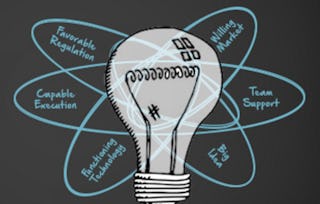
The Cycle explains how great art and strong marketing can create a family of supporters, who in turn help the organization produce the revenue required to support even more great art the next year. The Institute has seen the Cycle work in performing and presenting organizations, as well as museums, arts schools, and other nonprofit endeavors like service organizations, historical societies, public libraries, university programs, advocacy organizations, botanical gardens, and zoos.
By taking this course, you will learn:
• the importance of bold, exciting, and mission-driven programming in an organization;
• how long-term artistic planning can help an organization produce this work;
• how an organization can aggressively market that programming and the institution behind it to develop a family of supporters - including ticket buyers, board members, donors, trustees and volunteers;
• how an organization can cultivate and steward this family to build a healthy base of earned and contributed income; and
• how an organization can reinvest that income into increasingly ambitious programming year after year.
All course material is available upon enrollment for self-paced learners. New scheduled sessions begin each month.
For more information about the DeVos Institute's work, visit www.DeVosInstitute.umd.edu.
Welcome! This first week you will be introduced to the course structure and learn the key principles of the Cycle, a management theory which supports thriving arts and cultural organizations and which serves as the framework for the course. The Cycle proposes that: When bold art is marketed aggressively, an organization attracts a family of energized ticket-buyers and patrons. The income produced by this family is reinvested in more art that, when marketed well, builds a larger, even more diverse family. When this cycle repeats year after year, the organization incrementally and sustainably builds capacity, presence, and health. Following the introductory lectures, you will learn more about the Cycle by reading the executive summary, reviewing answers to frequently asked questions, and completing an introductory quiz. As a reminder, if you are taking this course as a student or enthusiast not affiliated with a specific organization, we recommend you select an organization of your choosing to reference as you make your way through the course!
What's included
14 videos7 readings1 assignment
Show info about module content
14 videos•Total 75 minutes
Watch: Welcome to the Course!•4 minutes
Watch: Introduction to the Cycle Part 1 - Two Challenges Facing the Arts•5 minutes
Watch: Introduction to the Cycle Part 2 - What makes a healthy organization?•4 minutes
Watch: Introduction to the Cycle Part 3 - Example from the Alvin Ailey American Dance Theater•12 minutes
Watch: Introduction to the Cycle Part 4 - Family and Conclusion•4 minutes
Watch: Frequently Asked Questions: The Cycle•7 minutes
Watch: Case Study: Introduction to the Cycle with Dance Place (Washington, DC)•3 minutes
Watch: Case Study: Introduction to the Cycle: MACLA/Movimiento de Arte y Cultura Latino Americana (San Jose, California)•5 minutes
Watch: Case Study: Introduction to the Cycle at Pregones (New York, New York)•11 minutes
Watch: Case Study: Introduction to the Cycle with Mexican Center for Music and Sonic Arts (Morelia, Mexico)•2 minutes
Watch: Case Study: Introduction to the Cycle with Anna Lindh Foundation (Alexandria, Egypt)•8 minutes
Watch: Case Study: Introduction to the Cycle with the Estonian Philharmonic Chamber Choir (Tallinn, Estonia)•3 minutes
Watch: Case Study: Introduction to the Cycle with AS220 (Providence, Rhode Island)•5 minutes
Watch: Review of The Cycle and Preparing for Next Week•2 minutes
7 readings•Total 87 minutes
Meet Your Instructors•5 minutes
Activity: Introductory Questionnaire•5 minutes
Recommended Reading: The Cycle: Introduction (Pages 1-5)•5 minutes
Review: The Cycle and Annotated Cycle•2 minutes
Optional Activity for Students or Learners Not Affiliated with an Organization•30 minutes
Read: The Cycle: Executive Summary•30 minutes
Read: Selected Blog Posts: Introduction to the Cycle•10 minutes
1 assignment•Total 4 minutes
Introduction to the Cycle•4 minutes
Long-Term Artistic Planning
Module 2•2 hours to complete
Module details
This week, you will learn the benefits of planning your programs further in advance and learn strategies for planning your organizations programs over a five-year time frame. The Cycle proposes that each organization has a rolling, 3-5 year programming plan that is bold, mission-driven, and occasionally surprising. Further, it asks that each organization's programming is the best example of its kind in its environment that forms the basis for aggressive marketing, successful fundraising, and incremental growth in institutional capacity. Following the series of lectures, answers to frequently asked questions, and case studies, you will have the opportunity to apply the principles of long-term artistic planning to your organization using the planning activity provided.
What's included
10 videos5 readings1 assignment
Show info about module content
10 videos•Total 79 minutes
Watch: Introduction to Long-Term Artistic Planning•9 minutes
Watch: Benefits of Long-Term Artistic Planning•12 minutes
Watch: Case Study: Long-Term Artistic Planning at Dance Place (Washington, DC)•3 minutes
Watch: Case Study: Long-Term Artistic Planning at Penumbra Theatre (Saint Paul, Minnesota, USA)•13 minutes
Watch: Case Study: Long-Term Artistic Planning at Cornerstone Theater Company (Los Angeles, California)•7 minutes
Watch: Case Study: Long-Term Artistic Planning at Is Sanat Concert Hall (Istanbul, Turkey)•6 minutes
Watch: Case Study: Long-Term Artistic Planning at Lush Productions (Karachi, Pakistan)•3 minutes
Watch: Review of Long-Term Artistic Planning and Preparing for Next Week•2 minutes
5 readings•Total 37 minutes
Recommended Reading: The Cycle: Chapter One (Pages 6-23)•18 minutes
Review: Example 5-Year Program Plan•2 minutes
Read: 10 Truths about Artistic Planning•2 minutes
Read: Selected Blog Posts: Long-Term Artistic Planning•5 minutes
Activity: 5-Year Program Plan•10 minutes
1 assignment•Total 4 minutes
Long-Term Artistic Planning•4 minutes
Institutional Marketing
Module 3•2 hours to complete
Module details
This week introduces institutional marketing, one of two marketing perspectives that is used to aggressively compete for audience attention and loyalty. Institutional marketing is the creative use of organizational assets to create spikes in awareness, energy, and enthusiasm around an organization, beginning with the presentation of transformational art itself and continuing through activities that heighten awareness about the people, process, and other institutional assets behind that art. Following the series of lectures, answers to frequently asked questions, and case studies, you will have the opportunity to apply the principles of institutional marketing to your organization using the planning activity provided.
What's included
8 videos5 readings1 assignment
Show info about module content
8 videos•Total 34 minutes
Watch: Introduction to Institutional Marketing Part 1•4 minutes
Watch: Introduction to Institutional Marketing Part 2•7 minutes
Watch: Introduction to Institutional Marketing Part 3•4 minutes
Watch: Introduction to Institutional Marketing Part 4•1 minute
Programmatic marketing is the second marketing perspective that the Cycle describes. Programmatic marketing can be defined as the tactics used to identify and target potential audiences for each attraction, create awareness and demand, and drive a sale (of tickets, classes, services, or other experiences). Effective programmatic marketing extends beyond the transaction to contextualize each offering, ensure a high-quality experience, and lay the groundwork for a long-term relationship with the buyer. Following the series of lectures, answers to frequently asked questions, and case studies, you will have the opportunity to apply the principles of programmatic marketing to your organization using the planning activity provided.
What's included
9 videos4 readings1 assignment
Show info about module content
9 videos•Total 34 minutes
Watch: Programmatic Marketing Part 1: What are We Selling?•4 minutes
Watch: Programmatic Marketing Part 2: How Are We Selling It?•4 minutes
Watch: Programmatic Marketing Part 3: To Whom Are We Selling?•5 minutes
Watch: Programmatic Marketing Part 4: At What Price?•4 minutes
Watch: Programmatic Marketing Part 5: With Which Media?•4 minutes
Watch: Case Study: Programmatic Marketing at Suzanne Dellal Center (Tel Aviv, Israel)•4 minutes
Watch: Case Study: Programmatic Marketing at Ciudad Cultural Konex (Buenos Aires, Argentina)•2 minutes
Watch: Review of Programmatic Marketing and Preparing for Next Week•1 minute
4 readings•Total 55 minutes
Recommended Reading: The Cycle: Chapter Two (Pages 24-46)•23 minutes
Read: 10 Truths for Programmatic Marketing•2 minutes
Read: Selected Blog Posts: Programmatic Marketing•10 minutes
Activity: Marketing Summary for One Program or Event•20 minutes
1 assignment•Total 4 minutes
Programmatic Marketing•4 minutes
Family and Boards
Module 5•2 hours to complete
Module details
An organization’s family makes up the third aspect of the Cycle. The family is an energized, enthusiastic group of ticket-buyers, board members, donors, trustees, and volunteers that anchors an organization’s financial health through its commitment of time, talent, connections, and financial resources. The heart of the family consists of a joyous, engaged, and excited board of directors. If your organization has a board, you will have the opportunity to apply the principles to your organization's board following the lectures and case studies.
What's included
11 videos4 readings1 assignment
Show info about module content
11 videos•Total 60 minutes
Watch: Introduction to Boards•7 minutes
Watch: Board Projects•3 minutes
Watch: Board Meetings•4 minutes
Watch: Board Culture Change•3 minutes
Watch: Frequently Asked Questions: The Family and Boards•18 minutes
Watch: Case Study: Board Engagement at Dance Place (Washington, DC)•4 minutes
Watch: Case Study: Board Engagement at MACLA (San Jose, California)•4 minutes
Watch: Case Study: Family at Bronx Documentary Center (New York, NY)•6 minutes
Watch: Case Study: Family at British Council (Belgrade, Serbia)•4 minutes
Watch: Case Study: Family at AGORA Arts & Culture (Alexandria, Egypt)•6 minutes
Watch: Review of Family and Boards and Preparing for Next Week•1 minute
4 readings•Total 47 minutes
Read: Board Audit•2 minutes
Recommended Reading: The Cycle: Chapters 4 and 5 (Pages 79-103)•25 minutes
Read: Selected Blog Posts: Family and Boards•10 minutes
Activity: Board Audit•10 minutes
1 assignment•Total 4 minutes
The Family and Boards•4 minutes
Fundraising and Course Summary
Module 6•3 hours to complete
Module details
Fundraising, the final aspect of the Cycle, consists of a strategy for sustainable growth that joins long-term artistic goals, and energized family, and logical options for investment to build organizational resources donor by donor, week by week, month by month, and year by year. Effective fundraising pairs each family member with a logical, financial action in support of the organization’s mission. Following the series of lectures, answers to frequently asked questions, and case studies, you will have the opportunity to apply the principles of fundraising to your organization by developing, or evaluating, your membership program, major donor program, or targeted campaign.
What's included
9 videos14 readings1 assignment
Show info about module content
9 videos•Total 64 minutes
Watch: Introduction to Fundraising•6 minutes
Watch: Three Essential Fundraising Mechanisms•5 minutes
The University of Maryland, College Park is the state's flagship university and one of the nation's preeminent public research universities. A global leader in research, entrepreneurship and innovation, the university is home to more than 40,700 students, 14,000 faculty and staff, and nearly 400,000 alumni. The university’s faculty includes two Nobel laureates, 10 Pulitzer Prize winners, 69 members of the national academies and scores of Fulbright scholars. Located just outside Washington, D.C., the University of Maryland is committed to social entrepreneurship as the nation’s first “Do Good” campus, and discovers and shares new knowledge every day through research and programs in academics, the arts, and athletics.
"To be able to take courses at my own pace and rhythm has been an amazing experience. I can learn whenever it fits my schedule and mood."
Jennifer J.
Learner since 2020
"I directly applied the concepts and skills I learned from my courses to an exciting new project at work."
Larry W.
Learner since 2021
"When I need courses on topics that my university doesn't offer, Coursera is one of the best places to go."
Chaitanya A.
"Learning isn't just about being better at your job: it's so much more than that. Coursera allows me to learn without limits."
Learner reviews
4.8
738 reviews
5 stars
85.77%
4 stars
11.51%
3 stars
2.43%
2 stars
0.13%
1 star
0.13%
Showing 3 of 738
R
RS
5·
Reviewed on May 19, 2018
The Cycle was an eye-opener in many ways. I always thought Arts Management required more artistic intuition than management knowledge, but this framework gave me a whole new perspective.
M
MO
5·
Reviewed on Jan 16, 2021
This course has really changed the way I look at arts organization management. I feel much more confident and eager to try the methodology taught in The Cycle.
M
MS
5·
Reviewed on Apr 15, 2018
Excellent. We are a small but mighty museum that needs long range planning. We are going to use the Cycle as the foundation. Thank you, thank you.
When will I have access to the lectures and assignments?
To access the course materials, assignments and to earn a Certificate, you will need to purchase the Certificate experience when you enroll in a course. You can try a Free Trial instead, or apply for Financial Aid. The course may offer 'Full Course, No Certificate' instead. This option lets you see all course materials, submit required assessments, and get a final grade. This also means that you will not be able to purchase a Certificate experience.
What will I get if I purchase the Certificate?
When you purchase a Certificate you get access to all course materials, including graded assignments. Upon completing the course, your electronic Certificate will be added to your Accomplishments page - from there, you can print your Certificate or add it to your LinkedIn profile.
Is financial aid available?
Yes. In select learning programs, you can apply for financial aid or a scholarship if you can’t afford the enrollment fee. If fin aid or scholarship is available for your learning program selection, you’ll find a link to apply on the description page.