• For Individuals
  • For Businesses
  • For Universities
  • For Governments
Log In
Join for Free
  • Browse
  • Biomedical

Biomedical Courses

Biomedical courses can help you learn human anatomy, genetics, medical imaging, and biostatistics. You can build skills in laboratory techniques, data analysis, and clinical trial design. Many courses introduce tools like statistical software, imaging technologies, and bioinformatics platforms, that support analyzing biological data and conducting research. You'll also explore applied areas such as drug development, disease modeling, and health informatics, equipping you with practical knowledge to address real-world health challenges.


Popular Biomedical Courses and Certifications


  • Status: Preview
    Preview
    U

    University of Glasgow

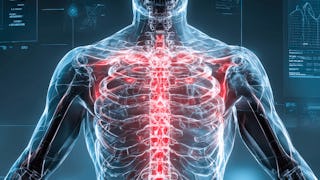
    Biomedical Visualisation

    Skills you'll gain: 3D Modeling, 3D Assets, Scientific Visualization, Biomedical Engineering, Medical Terminology, Augmented and Virtual Reality (AR/VR), Anatomy, Animations, Image Analysis, Physiology, Biology, Medical Imaging

    4.6
    Rating, 4.6 out of 5 stars
    ·
    528 reviews

    Intermediate · Course · 1 - 4 Weeks

  • Status: Free Trial
    Free Trial
    I

    Indian Institute of Science

    Sensor Technologies for Biomedical Applications

    Skills you'll gain: Engineering Documentation, Biomedical Technology, Biomedical Engineering, Medical Devices, Medical Equipment and Technology, Electronics, Electronics Engineering, Vital Signs, Technical Documentation, Engineering Plans And Specifications, Chemistry, Technical Communication, Semiconductors, ISO 13485 Standard, Materials science, Electronic Systems, Chemical and Biomedical Engineering, Internet Of Things, Analytical Chemistry, Electronic Components

    4.8
    Rating, 4.8 out of 5 stars
    ·
    20 reviews

    Beginner · Specialization · 3 - 6 Months

  • Status: New
    New
    Status: Free Trial
    Free Trial
    E

    Empower School of Health

    Technological advancement in Healthcare

    Skills you'll gain: Health Technology, Healthcare Ethics, Data Ethics, Telehealth, Medical Privacy, Health Informatics, Responsible AI, Clinical Research Ethics, Emerging Technologies, Healthcare Industry Knowledge, Digital Transformation, Health Systems, Health Disparities, Health Care, Health Equity, Information Privacy, Blockchain, Cloud Storage, Robotic Process Automation, Artificial Intelligence and Machine Learning (AI/ML)

    Intermediate · Specialization · 1 - 3 Months

  • Status: Preview
    Preview
    D

    Duke University

    Introductory Human Physiology

    Skills you'll gain: Physiology, Pulmonology, Respiration, Anatomy, Endocrinology, Cardiology, Human Musculoskeletal System, Kinesiology, Nephrology, Biology, Vital Signs, Blood Pressure, Neurology, Urinalysis

    4.8
    Rating, 4.8 out of 5 stars
    ·
    5.3K reviews

    Beginner · Course · 1 - 3 Months

  • Status: Preview
    Preview
    J

    Johns Hopkins University

    Foundations of Healthcare Systems Engineering

    Skills you'll gain: Health Systems, Systems Engineering, Medical Devices, Health Technology, Health Informatics, Healthcare Industry Knowledge, Systems Integration, Systems Analysis, System Requirements, System Testing, Solution Design

    4.7
    Rating, 4.7 out of 5 stars
    ·
    298 reviews

    Mixed · Course · 1 - 4 Weeks

  • Status: Preview
    Preview
    M

    MathWorks

    Medical Image Processing

    Skills you'll gain: Medical Imaging, Magnetic Resonance Imaging, Image Analysis, X-Ray Computed Tomography, Data Import/Export, Biomedical Engineering, Matlab, Computer Vision, Deep Learning, Software Visualization, Machine Learning

    4.9
    Rating, 4.9 out of 5 stars
    ·
    24 reviews

    Beginner · Course · 1 - 4 Weeks

What brings you to Coursera today?

  • Status: Free Trial
    Free Trial
    J

    Johns Hopkins University

    Cancer Biology

    Skills you'll gain: Oncology, Medical Imaging, Patient Education And Counseling, Diagnostic Radiology, Radiation Therapy, Molecular Biology, Diagnostic Tests, Clinical Trials, Pain Management, Preventative Care, Treatment Planning, Urology, Patient Treatment, Immunology, Epidemiology, Surgery, Cell Biology, Care Management, Biology, Pathology

    4.8
    Rating, 4.8 out of 5 stars
    ·
    9.8K reviews

    Beginner · Specialization · 3 - 6 Months

  • Status: Preview
    Preview
    U

    University of Manchester

    Industrial Biotechnology

    Skills you'll gain: Biotechnology, Sustainable Technologies, Process Engineering, Molecular Biology, Chemical Engineering, Sustainable Engineering, Life Sciences, Biochemistry, Pharmaceuticals, Biomedical Engineering, Materials science, Scalability

    4.7
    Rating, 4.7 out of 5 stars
    ·
    3.6K reviews

    Beginner · Course · 1 - 3 Months

  • Status: Free Trial
    Free Trial
    R

    Rice University

    Medical Terminology

    Skills you'll gain: Medical Terminology, Medical History Documentation, Pulmonology, Cardiology, Electronic Medical Record System, Medical Records, Endocrinology, Human Musculoskeletal System, Orthopedics, Obstetrics And Gynecology, Neurology, Gynecology, Urology, Hematology, Anatomy, Immunology, Diagnostic Tests, Patient Treatment, Physiology, Communication

    4.9
    Rating, 4.9 out of 5 stars
    ·
    965 reviews

    Beginner · Specialization · 3 - 6 Months

  • Status: Free Trial
    Free Trial
    U

    University of Michigan

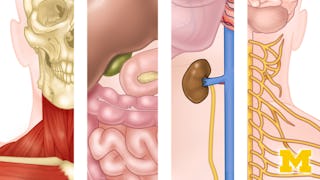
    Anatomy

    Skills you'll gain: Human Musculoskeletal System, Anatomy, Endocrinology, Pulmonology, Cardiology, Respiration, Gynecology, Hematology, Obstetrics And Gynecology, Orthopedics, Neurology, Urology, Nephrology, Kinesiology, Physiology, Medical Imaging, Sports Medicine, Biology, Medical Terminology, Cell Biology

    4.8
    Rating, 4.8 out of 5 stars
    ·
    4K reviews

    Beginner · Specialization · 3 - 6 Months

  • Status: Free Trial
    Free Trial
    I

    Icahn School of Medicine at Mount Sinai

    Systems Biology and Biotechnology

    Skills you'll gain: Matlab, Bioinformatics, Quantitative Research, Unsupervised Learning, Data Synthesis, Research, Mathematical Modeling, Molecular Biology, Pharmacology, Science and Research, Cell Biology, Biotechnology, Biomedical Technology, Scientific Methods, Physiology, Differential Equations, Computational Logic, Biochemistry, Network Analysis, Biology

    4.4
    Rating, 4.4 out of 5 stars
    ·
    986 reviews

    Intermediate · Specialization · 3 - 6 Months

  • Status: Free Trial
    Free Trial
    I

    Indian Institute of Science

    Sensors and Systems for Biomedical Applications

    Skills you'll gain: Biomedical Technology, Biomedical Engineering, Medical Devices, Medical Equipment and Technology, Vital Signs, Chemistry, ISO 13485 Standard, Materials science, Analytical Chemistry, Diagnostic Tests, Molecular Biology, Biology, Electocardiography, Neurology, Electronics, Artificial Intelligence, Oncology

    4.9
    Rating, 4.9 out of 5 stars
    ·
    9 reviews

    Intermediate · Course · 1 - 3 Months

Searches related to biomedical

biomedical engineering
biomedical sciences
biomedical visualisation
sensors and systems for biomedical applications
sensor technologies for biomedical applications
ai for energy and biomedical applications
1234…14

In summary, here are 10 of our most popular biomedical courses

  • Biomedical Visualisation: University of Glasgow
  • Sensor Technologies for Biomedical Applications: Indian Institute of Science
  • Technological advancement in Healthcare: Empower School of Health
  • Introductory Human Physiology: Duke University
  • Foundations of Healthcare Systems Engineering: Johns Hopkins University
  • Medical Image Processing: MathWorks

  • Cancer Biology: Johns Hopkins University
  • Industrial Biotechnology: University of Manchester
  • Medical Terminology: Rice University
  • Anatomy: University of Michigan

Frequently Asked Questions about Biomedical

Biomedical is often used as a signifier to describe the study of medical, biological, and physical sciences. It can be used to describe breakthroughs in biomedicine, which applies physiological and biological principles to medical science to create new life-saving methods and solutions to illnesses.

Researchers who work in biomedical science study medical conditions in humans, like diabetes, stress, hepatitis, cancer, aging, and other elements to support the analysis, diagnosis, and treatment of human illnesses and diseases.‎

Learning about biomedical research and the study of human illnesses leads to breakthroughs in modern medicine. When you learn about biomedical advances in science, you are learning about how the human body resists illnesses and diseases and what types of drugs and medicines can provide answers to people. The knowledge of biomedical science can also help you learn how cells in our body can be used to create artificial muscles, or how humans react to stress and anxiety, and what treatments can offset these conditions.‎

The types of careers that are in the biomedical field include medical researchers, biomedical scientists, biotechnologists, forensic scientists, microbiologists, medical physicists, and other similar occupations. Gaining a degree in biomedicine can lead to an exciting career in a wide range of fields, not just clinical work. Your biomedical career might take you into business and industry, healthcare, government work, and environmental sciences.

When you work in the biomedical profession, you may find work in the study of biochemical and physiological functions, epidemiology, anatomy, and pharmacology. You’ll gain knowledge about illnesses, bodily functions, nutrition, and the study of immunology.‎

Taking online courses in biomedical topics can help you learn how to better understand the biochemistry within our bodies, and help you better understand how to make a difference in the study of living beings and their health.

You can also learn how laboratory research on both humans and animals can assist in overall biomedical knowledge. When you take online courses on biomedical research, you may gain new insights into the infectious virus COVID-19 and learn how advances in science can serve to stop the disease in its tracks.‎

Online Biomedical courses offer a convenient and flexible way to enhance your existing knowledge or learn new Biomedical skills. With a wide range of Biomedical classes, you can conveniently learn at your own pace to advance your Biomedical career skills.‎

When looking to enhance your workforce's skills in Biomedical, it's crucial to select a course that aligns with their current abilities and learning objectives. Our Skills Dashboard is an invaluable tool for identifying skill gaps and choosing the most appropriate course for effective upskilling. For a comprehensive understanding of how our courses can benefit your employees, explore the enterprise solutions we offer. Discover more about our tailored programs at Coursera for Business here.‎

This FAQ content has been made available for informational purposes only. Learners are advised to conduct additional research to ensure that courses and other credentials pursued meet their personal, professional, and financial goals.

Other topics to explore

Arts and Humanities
338 courses
Business
1095 courses
Computer Science
668 courses
Data Science
425 courses
Information Technology
145 courses
Health
471 courses
Math and Logic
70 courses
Personal Development
137 courses
Physical Science and Engineering
413 courses
Social Sciences
401 courses
Language Learning
150 courses

Coursera Footer

Skills

  • Artificial Intelligence (AI)
  • Cybersecurity
  • Data Analytics
  • Digital Marketing
  • English Speaking
  • Generative AI (GenAI)
  • Microsoft Excel
  • Microsoft Power BI
  • Project Management
  • Python

Certificates & Programs

  • Google Cybersecurity Certificate
  • Google Data Analytics Certificate
  • Google IT Support Certificate
  • Google Project Management Certificate
  • Google UX Design Certificate
  • IBM Data Analyst Certificate
  • IBM Data Science Certificate
  • Machine Learning Certificate
  • Microsoft Power BI Data Analyst Certificate
  • UI / UX Design Certificate

Industries & Careers

  • Business
  • Computer Science
  • Data Science
  • Education & Teaching
  • Engineering
  • Finance
  • Healthcare
  • Human Resources (HR)
  • Information Technology (IT)
  • Marketing

Career Resources

  • Career Aptitude Test
  • Examples of Strengths and Weaknesses for Job Interviews
  • High-Income Skills to Learn
  • How Does Cryptocurrency Work?
  • How to Highlight Duplicates in Google Sheets
  • How to Learn Artificial Intelligence
  • Popular Cybersecurity Certifications
  • Preparing for the PMP Certification
  • Signs You Will Get the Job After an Interview
  • What Is Artificial Intelligence?

Coursera

  • About
  • What We Offer
  • Leadership
  • Careers
  • Catalog
  • Coursera Plus
  • Professional Certificates
  • MasterTrack® Certificates
  • Degrees
  • For Enterprise
  • For Government
  • For Campus
  • Become a Partner
  • Social Impact
  • Free Courses
  • Share your Coursera learning story

Community

  • Learners
  • Partners
  • Beta Testers
  • Blog
  • The Coursera Podcast
  • Tech Blog

More

  • Press
  • Investors
  • Terms
  • Privacy
  • Help
  • Accessibility
  • Contact
  • Articles
  • Directory
  • Affiliates
  • Modern Slavery Statement
  • Do Not Sell/Share
Learn Anywhere
Download on the App Store
Get it on Google Play
Logo of Certified B Corporation
© 2025 Coursera Inc. All rights reserved.
  • Coursera Facebook
  • Coursera Linkedin
  • Coursera Twitter
  • Coursera YouTube
  • Coursera Instagram
  • Coursera TikTok