Civil Engineering Courses
Civil engineering courses can help you learn structural analysis, fluid mechanics, geotechnical engineering, and transportation systems. You can build skills in project management, site assessment, and environmental impact evaluation. Many courses introduce tools like AutoCAD for drafting designs, MATLAB for simulations, and GIS for spatial analysis, showing how these skills are applied in real-world projects.
Popular Civil Engineering Courses and Certifications
 Status: Free Trial
L&T EduTech
Skills you'll gain: Architectural Drawing, Blueprint Reading, Structural Engineering, Structural Analysis, Engineering Drawings, Building Design, Engineering Documentation, Civil and Architectural Engineering, Design Specifications, Building Codes, Civil Engineering, Engineering Practices, Engineering Calculations
 Status: Free Trial
Dartmouth College
Skills you'll gain: Structural Analysis, Structural Engineering, Building Design, Vibrations, Architectural Engineering, Civil Engineering, Engineering, Engineering Calculations, Construction, Architecture and Construction, SketchUp (3D Modeling Software), Mechanics, Engineering Analysis, Materials science, Mathematical Modeling, Prototyping, Failure Analysis, Engineering Design Process, Design, 3D Modeling
 Status: Preview
National Taiwan University
Skills you'll gain: Building Information Modeling, Data Modeling, 3D Modeling, Computer-Aided Design, Engineering Practices, Construction Management, Civil Engineering, Mechanical Engineering, Information Management
 Status: Free Trial
L&T EduTech
Skills you'll gain: Autodesk Revit, Building Information Modeling, Autodesk, Collaborative Software, Drafting and Engineering Design, Computer-Aided Design, Engineering Documentation, Engineering Drawings, Building Design, Architectural Design, 3D Modeling, Civil Engineering, Structural Engineering, Technical Standard, HVAC, Electrical Systems, Plumbing, User Interface (UI)
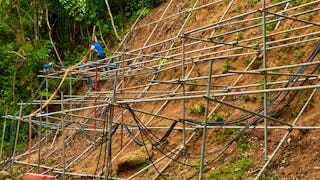 Status: Preview
The Hong Kong University of Science and Technology
Skills you'll gain: Civil Engineering, Hazard Analysis, Land Management, Failure Analysis, Engineering Analysis, Risk Control, Physical Science, Mechanics, Augmented and Virtual Reality (AR/VR), Experimentation
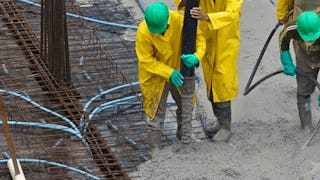 Status: Free Trial
L&T EduTech
Skills you'll gain: Construction Engineering, Laboratory Testing, Construction, Construction Inspection, Production Process, Manufacturing and Production, Construction Management, Manufacturing Operations, Plant Operations and Management, Manufacturing Processes, Civil Engineering, General Construction and Construction Labor, Safety Standards, Process Validation, Product Testing, Engineering Plans And Specifications, Chemical Engineering, Materials science, Drafting and Engineering Design, Structural Engineering
What brings you to Coursera today?
 Status: Free Trial
Skills you'll gain: Traffic Flow Optimization, Construction Inspection, Building Codes, Construction Engineering, Construction, Construction Management, Civil Engineering, Stormwater Management, General Construction and Construction Labor, Structural Engineering, Hydrology, Hydraulics, Grading (Landscape), Public Works, Design Specifications, Structural Analysis, Materials science, Engineering Plans And Specifications, Engineering Practices, Failure Analysis
 Status: Free Trial
L&T EduTech
Skills you'll gain: Engineering Calculations, Structural Engineering, Structural Analysis, Construction Engineering, Civil Engineering, Construction, Engineering Analysis, Engineering Practices, Building Codes, Construction Inspection, Materials science, Civil and Architectural Engineering, Conceptual Design, Engineering Design Process, Engineering, Design Specifications, Maintenance, Repair, and Facility Services, Stormwater Management, Facility Repair And Maintenance, Finite Element Methods
 Status: Free Trial
L&T EduTech
Skills you'll gain: Building Codes, Construction, Laboratory Testing, Structural Engineering, Structural Analysis, Laboratory Experience, Construction Engineering, General Construction and Construction Labor, Civil Engineering, Engineering Analysis, Experimentation, Research Reports, Analytical Testing, Engineering Practices, Failure Analysis, Test Equipment, Finite Element Methods, Engineering Design Process, Engineering Calculations, Design Specifications
 Status: Free Trial
L&T EduTech
Skills you'll gain: Civil Engineering, Construction Engineering, Land Development, Building Information Modeling, Construction, Construction Management, Capacity Management, Construction Inspection, Aerospace Basic Quality System Standards, Capacity Planning, Building Design, Building Services Engineering, Facility Management, Facility Repair And Maintenance, Landscape Architecture, Construction Estimating, Engineering Plans And Specifications, Architectural Design, Environmental Engineering, Security Strategy
 Status: Free Trial
Johns Hopkins University
Skills you'll gain: Traffic Flow Optimization, Architectural Design, Sustainable Development, Stormwater Management, Building Codes, Community Development, Sustainable Systems, Land Development, Public Works, Sustainable Architecture, Landscape Architecture, Transportation Operations, Civil Engineering, Case Studies, Environmental Engineering, Building Design, Land Management, Sustainable Design, Environmental Science, Environment
 Status: Free Trial
Dartmouth College
Skills you'll gain: Structural Engineering, Structural Analysis, Construction, Civil Engineering, Architecture and Construction, Engineering Analysis, Building Design, Engineering Design Process, Mechanics, Applied Mathematics
In summary, here are 10 of our most popular civil engineering courses
- Design Basics of RCC Buildings: L&T EduTech
- The Engineering of Structures Around Us: Dartmouth College
- BIM Fundamentals for Engineers: National Taiwan University
- BIM Fundamentals for Engineers: L&T EduTech
- Slope Engineering: The Hong Kong University of Science and Technology
- Mastering Concrete Techniques: L&T EduTech
- Highway Planning, Pavement Design and Construction: L&T EduTech
- Bridge Infrastructure Design: L&T EduTech
- Geotechnical Foundation Design: L&T EduTech
- Airport Infrastructure Development: L&T EduTech










