Cours en Apprentissage automatique
Les cours en apprentissage automatique peuvent vous aider à comprendre comment construire, entraîner et analyser des modèles prédictifs. Vous pouvez développer des compétences en préparation des données, choix d'algorithmes, optimisation et évaluation. De nombreux cours utilisent des bibliothèques courantes pour tester des modèles.
Cours et certificats populaires en Apprentissage automatique
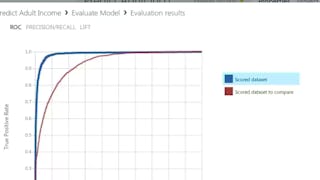
Skills you'll gain: Model Deployment, Decision Tree Learning, Applied Machine Learning, Predictive Modeling, Machine Learning Software, Microsoft Azure, No-Code Development, Machine Learning, Data Preprocessing, Predictive Analytics, Model Training, Cloud Deployment, Feature Engineering, Machine Learning Algorithms, Model Evaluation, Data Science, Data Analysis, Classification Algorithms
Skills you'll gain: Pandas (Python Package), Data Analysis, Data Manipulation, Python Programming
Skills you'll gain: PyTorch (Machine Learning Library), Model Evaluation, Convolutional Neural Networks, Transfer Learning, Image Analysis, Model Training, Deep Learning, Python Programming
Skills you'll gain: Microsoft Azure, Artificial Intelligence and Machine Learning (AI/ML), Image Analysis, Computer Vision, AI Enablement, Applied Machine Learning, Artificial Intelligence, Cloud Services, AI Integrations, Authentications, Cloud API, Cloud Computing, Cloud Applications, Application Programming Interface (API), Software Development
Skills you'll gain: Exploratory Data Analysis, NumPy, Data Visualization, Data Analysis, Plot (Graphics), Seaborn, Matplotlib, Statistical Visualization, Cloud Computing, Jupyter, Dimensionality Reduction, Data Science, Unsupervised Learning, Scikit Learn (Machine Learning Library), Machine Learning Methods, Numerical Analysis, Python Programming, Data Manipulation

What brings you to Coursera today?
Skills you'll gain: PyTorch (Machine Learning Library), Model Training, Fine-tuning, Image Analysis, Convolutional Neural Networks, Computer Vision, Transfer Learning, Model Evaluation, Deep Learning, Data Preprocessing
Skills you'll gain: Model Optimization, Model Evaluation, Scikit Learn (Machine Learning Library), Regression Analysis, Fine-tuning, Applied Machine Learning, Machine Learning, Data Analysis
Skills you'll gain: Generative Adversarial Networks (GANs), Generative AI, PyTorch (Machine Learning Library), Generative Model Architectures, Deep Learning, Convolutional Neural Networks, Model Training, Python Programming

Skills you'll gain: Simulation and Simulation Software, Engineering Analysis, Finite Element Methods, Simulations, Engineering, Computer-Aided Design, Cloud Technologies, Engineering Design Process, Cloud Computing

Skills you'll gain: Model Training, Data Import/Export, Model Evaluation, No-Code Development, Exploratory Data Analysis, Predictive Modeling, Applied Machine Learning, Data Pipelines, Machine Learning Software, Data Preprocessing, Data Analysis, Machine Learning, Predictive Analytics

Coursera
Skills you'll gain: Interviewing Skills, Follow Through, Communication, Business Writing
Skills you'll gain: Recurrent Neural Networks (RNNs), Tensorflow, Model Optimization, Python Programming, Model Training, Natural Language Processing, Data Preprocessing, Applied Machine Learning, Artificial Neural Networks, Text Mining, Machine Learning Algorithms, Deep Learning, Classification Algorithms, Machine Learning
What brings you to Coursera today?
Best free Machine Learning courses
High-quality free Machine Learning courses you can start today.
- Machine Learning Pipelines with Azure ML StudioCourseraBeginnerLess Than 2 HoursFree
- Deep Learning with PyTorch : Image SegmentationCourseraIntermediateLess Than 2 HoursFree
- Build a computer vision app with Azure Cognitive ServicesMicrosoftIntermediateLess Than 2 HoursFree
Best Machine Learning courses from Coursera
Top-rated Machine Learning courses offered by Coursera on Coursera.
- Mastering Data Analysis with PandasCourseraBeginnerLess Than 2 HoursCoursera
- Principal Component Analysis with NumPyCourseraIntermediateLess Than 2 HoursCoursera
- Deep Learning with PyTorch : Object LocalizationCourseraIntermediateLess Than 2 HoursCoursera
Best Machine Learning courses for beginners
Top-rated beginner-friendly Machine Learning courses with no prerequisites.
- ML Parameters Optimization: GridSearch, Bayesian, RandomCourseraBeginnerLess Than 2 HoursNo prerequisites
- Computational Fluid Mechanics - Airflow Around a SpoilerCourseraBeginnerLess Than 2 HoursNo prerequisites
- Build your first Machine Learning Pipeline using DataikuCourseraBeginnerLess Than 2 HoursNo prerequisites
Best short Machine Learning courses
Quick Machine Learning courses you can complete in a few hours or less.
- Deep Learning with PyTorch : Generative Adversarial NetworkCourseraIntermediateLess Than 2 HoursQuick completion
- Preparation for Job InterviewsCourseraBeginnerLess Than 2 HoursQuick completion
- Tweet Emotion Recognition with TensorFlowCourseraIntermediateLess Than 2 HoursQuick completion










