Portuguese Courses
Portuguese courses can help you learn conversational skills, grammar, vocabulary, and pronunciation. You can build skills in writing essays, engaging in discussions, and understanding cultural contexts. Many courses introduce tools like language apps and online dictionaries that enhance your learning experience and support daily practice. Key topics often include Brazilian and European Portuguese variations, idiomatic expressions, and practical scenarios for travel or business communication.
Popular Portuguese Courses and Certifications

Universidade Estadual de Campinas
Skills you'll gain: Oral Comprehension, Language Competency, Literacy, Vocabulary, Culture, Language Learning, Cultural Diversity, Intercultural Competence, Diversity Awareness, Multilingualism, Grammar

University of California, Davis
Skills you'll gain: Peer Review, Spanish Language, Oral Expression, Grammar, Language Learning, Culture, Bilingual (Spanish/English), Language Competency, Writing and Editing, Vocabulary, Oral Comprehension, Research, Writing

Skills you'll gain: Quality Management, Project Closure, Scope Management, Team Management, Project Management Life Cycle, Product Quality (QA/QC), Sprint Retrospectives, Project Management, Project Planning, Agile Project Management, Quality Assessment, Quality Assurance, Backlogs, Team Leadership, Project Scoping, Agile Software Development, Stakeholder Communications, Change Management, Web Presence, Interviewing Skills

Shanghai Jiao Tong University
Skills you'll gain: Oral Comprehension, Language Learning, Culture, Vocabulary, Language Competency, Grammar, Cultural Sensitivity
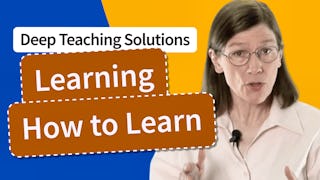
Deep Teaching Solutions
Skills you'll gain: Learning Strategies, Lifelong Learning, Time Management, Learning Theory, Productivity, Growth Mindedness, Mental Concentration, Creativity, Self-Awareness, Habit Formation, Adaptability

What brings you to Coursera today?

Università di Napoli Federico II
Skills you'll gain: English Language, Language Competency, Language Learning, Vocabulary, Oral Comprehension, Grammar
Universidade de São Paulo
Skills you'll gain: Recurrent Neural Networks (RNNs), Natural Language Processing, Artificial Neural Networks, Tensorflow, Python Programming, Embeddings, Machine Learning Methods, Applied Machine Learning, Classification Algorithms, Model Training, Model Optimization

University of Houston
Skills you'll gain: Multilingualism, Language Competency, Language Learning, Non-Verbal Communication, Neurology, Human Development, Psychology, Science and Research, Experimentation

Universidade Estadual de Campinas
Skills you'll gain: Health Equity, Health Assessment, Health Disparities, Health Care, Research, Health Systems, Epidemiology, Public Health, Medical Science and Research, Research Design, Clinical Research, Scientific Methods, Research Methodologies, Clinical Trials, Statistical Analysis

Universidade de São Paulo
Skills you'll gain: Economics, Financial Policy, Financial Systems, Financial Market, International Finance, Business Economics, Tax, Economic Development, Fiscal Management, Investments, Policy Analysis, Market Dynamics, Analysis, Supply And Demand, Consumer Behaviour, Expectation Management

Fundação Instituto de Administração
Skills you'll gain: Virtual Teams, Negotiation, Global Marketing, Diversity Marketing, Intercultural Competence, Cultural Responsiveness, International Relations, Cultural Diversity, Conflict Management, Culture, Consumer Behaviour, Cultural Sensitivity, Communication Strategies, Marketing Management, Relationship Building, Team Management, Marketing, Diplomacy, World History, International Finance

Skills you'll gain: Kubernetes, Google Cloud Platform, Cloud Development, Containerization, Cloud Infrastructure, Cloud Applications, Prompt Engineering Tools, Generative AI, CI/CD, Cloud-Native Computing, Cloud Storage, Identity and Access Management, Infrastructure As A Service (IaaS), Prompt Engineering, Cloud Engineering, Cloud Platforms, Data Persistence, Scalability, Continuous Deployment, Application Deployment
What brings you to Coursera today?
In summary, here are 10 of our most popular portuguese courses
- Pluralidades em Português Brasileiro: Universidade Estadual de Campinas
- Learn Spanish: Basic Spanish Vocabulary: University of California, Davis
- Google Project Management: Google
- Learn Mandarin Chinese: Shanghai Jiao Tong University
- Learning How to Learn: Powerful mental tools to help you master tough subjects: Deep Teaching Solutions
- English Lower Intermediate B1.1: Università di Napoli Federico II
- Processamento Neural de Linguagem Natural em Português I: Universidade de São Paulo
- The Bilingual Brain: University of Houston
- Saúde Baseada em Evidências: Universidade Estadual de Campinas
- Introdução à Análise Macroeconômica: Universidade de São Paulo










