Unconscious Bias Courses
Unconscious bias courses can help you learn about implicit bias, its impact on decision-making, and strategies for fostering inclusivity. You can build skills in recognizing personal biases, implementing fair hiring practices, and promoting equitable team dynamics. Many courses introduce tools like bias assessment frameworks and feedback mechanisms that help you apply these skills in workplace settings, enhancing collaboration and innovation.
Popular Unconscious Bias Courses and Certifications
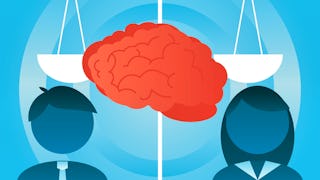
University of California, Irvine
Skills you'll gain: Workplace inclusivity, Self-Awareness, Personal Development, Empathy, Decision Making, Communication Strategies, Psychology, Communication

Alex Genadinik
Skills you'll gain: Recruitment, Interviewing Skills, Emotional Intelligence, Self-Awareness, Decision Making
Skills you'll gain: Prompt Engineering, Apache Spark, Large Language Modeling, Retrieval-Augmented Generation, PyTorch (Machine Learning Library), Computer Vision, Unsupervised Learning, Generative Model Architectures, Generative AI, Model Optimization, Keras (Neural Network Library), Supervised Learning, LLM Application, Generative AI Agents, Model Evaluation, Vector Databases, Fine-tuning, Machine Learning, Python Programming, Data Science
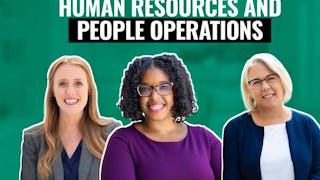
Skills you'll gain: Human Resources, Recruitment, Talent Recruitment, Recruitment Strategies, Employee Engagement, Human Resources Management and Planning, Employee Relations, Talent Acquisition, Human Resource Management, Compensation and Benefits, Compensation Management, Human Resources Software, Training and Development, Full Cycle Recruitment, Employee Surveys, Employee Retention, Human Resource Policies, Experience Design, Employee Training, Workplace inclusivity
What brings you to Coursera today?

Skills you'll gain: Health Disparities, Diversity Training, Clinical Trials, Clinical Research, Diversity Awareness

University of Cambridge
Skills you'll gain: Human Learning, Child Development, Psychology, Teaching, Decision Making, Instructional Strategies, Pedagogy, Learning Strategies, Empathy, Magnetic Resonance Imaging, Autism Spectrum Disorders, Differentiated Instruction, Research Methodologies, Non-Verbal Communication, Neurology, Learning Theory, Research, Mental Health Diseases and Disorders, Anatomy, Physiology

Skills you'll gain: Statistics, Descriptive Statistics, Logistic Regression, Decision Tree Learning, Advanced Analytics, Probability & Statistics, Probability Distribution, Statistical Inference, Applied Machine Learning, Data-Driven Decision-Making, Supervised Learning, Workflow Management, Statistical Methods, Statistical Programming, Data Cleansing, Data Manipulation, Data Structures, Interviewing Skills, NumPy, Google Gemini

Multiple educators
Skills you'll gain: Unsupervised Learning, Supervised Learning, Artificial Intelligence and Machine Learning (AI/ML), Model Training, Applied Machine Learning, Machine Learning Algorithms, Transfer Learning, Machine Learning, Machine Learning Methods, Decision Tree Learning, Model Evaluation, Responsible AI, Tensorflow, Scikit Learn (Machine Learning Library), Artificial Intelligence, NumPy, Predictive Modeling, Classification Algorithms, Reinforcement Learning, Random Forest Algorithm

Skills you'll gain: Workplace inclusivity, Workplace Bullying Intervention, Diversity Training, Diversity and Inclusion, Diversity Equity and Inclusion Initiatives, Intercultural Competence, Active Listening, Diversity Awareness, Conflict Management, Relationship Building, Cultural Diversity, Empathy, Interpersonal Communications, Empowerment, Team Collaboration, Overcoming Objections, Self-Awareness, Mitigation, Cultural Sensitivity, Communication

Skills you'll gain: Prompt Engineering, Unit Testing, Large Language Modeling, LangChain, Generative AI, Retrieval-Augmented Generation, Data Wrangling, Responsible AI, Exploratory Data Analysis, Unsupervised Learning, Model Evaluation, Generative Model Architectures, PyTorch (Machine Learning Library), LLM Application, Keras (Neural Network Library), Supervised Learning, Generative AI Agents, Vector Databases, Fine-tuning, Python Programming



Skills you'll gain: Behavioral Economics, Investments, Portfolio Management, Financial Market, Bayesian Statistics, Finance, Investment Management, Portfolio Risk, Decision Making, Market Dynamics, Market Analysis, Financial Analysis, Psychology, Risk Mitigation, Analysis, Risk Analysis, Probability, Go To Market Strategy, Performance Analysis, Mitigation
Best Unconscious Bias courses from Coursera
Top-rated Unconscious Bias courses offered by Coursera on Coursera.
- Unpacking Unconscious Bias in the WorkplaceCourseraBeginnerCoursera
- Building Diverse, Inclusive, and Safe WorkplacesCourseraBeginner1 - 3 MonthsCoursera
Best Unconscious Bias certificate programs
Earn a certificate in Unconscious Bias from top universities and companies.
- IBM AI EngineeringIBMIntermediate3 - 6 MonthsProfessional Certificate
- Human Resources and People OperationsMadecraftIntermediate3 - 6 MonthsSpecialization
- The science of mind and decision makingUniversity of CambridgeBeginner3 - 6 MonthsSpecialization
Best Unconscious Bias courses for beginners
Top-rated beginner-friendly Unconscious Bias courses with no prerequisites.
- Overcoming BiasUniversity of California, IrvineBeginner1 - 4 WeeksNo prerequisites
- Uncovering Unconscious Bias While Hiring And RecruitingAlex GenadinikBeginner1 - 3 MonthsNo prerequisites
- Representation in Clinical TrialsNovartisBeginner1 - 4 WeeksNo prerequisites










