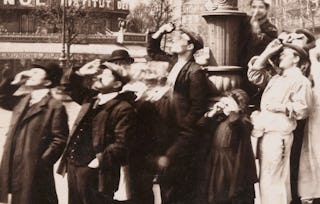
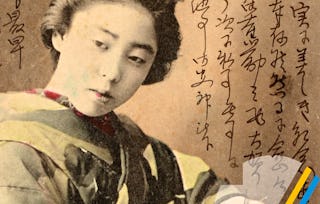
This course is a short taster on the topic of the use of Images, Film, and their use in historical interpretation in the 20th century. It is primarily provided for those who have a general interest in history that draws on photojournalism as primary evidence, and films based on historical events.
Once you have completed this course we hope you will be equipped to:
Appreciate the significance of photographs as historical evidence in the twentieth century.
Understand the limitations of the medium, and how we can attribute meaning to these individual records of 'one moment in time' while taking into account the circumstances in which any particular image was taken.
Understand how individuals and institutions have looked to manipulate images to their own ends – through alteration and/or censorship – and what that meant to contemporary interpretation, as well as subsequent historical interpretation.
Put individual images into a wider context, and in particular with reference to history written, or portrayed, beyond academia: public history.
Do be aware that part of the contents of this course regard images and depiction of war. Real wars and real images.
We will explore the issues associated with the use of images as a source for historical research and consider a number of examples where image manipulation has been uncovered
What's included
7 videos8 readings1 assignment1 discussion prompt
Show info about module content
7 videos•Total 40 minutes
Introduction•1 minute
Use of Images•7 minutes
Manipulation•2 minutes
The Image in Politics•5 minutes
Advertising•5 minutes
Reportage (Reporting the News)•5 minutes
Optional Extra Material - other forms of images - Guernica•15 minutes
8 readings•Total 80 minutes
The Camera Never Lies - Course Information•10 minutes
Aims and Objectives•10 minutes
The Use of Images•10 minutes
Manipulation•10 minutes
The Image in Politics•10 minutes
Advertising•10 minutes
Reportage•10 minutes
Optional Extra Information - Guernica•10 minutes
1 assignment•Total 30 minutes
Week 1 Quiz•30 minutes
1 discussion prompt•Total 10 minutes
Week 1 - Reflective Task•10 minutes
Images and History in the Twentieth Century
Module 2•3 hours to complete
Module details
We will review a number of cases studies where images have either shaped our opinion of events or have been suppressed from the public at the time, to avoid adverse or negative reaction.
Optional Extra Material - The London Riots 2011•11 minutes
6 readings•Total 60 minutes
Adolf Hitler•10 minutes
The Boer War•10 minutes
The US Civil Rights Movement•10 minutes
Vietnam•10 minutes
The Blitz•10 minutes
Optional Extra Reading - The London Riots 2011•10 minutes
1 assignment•Total 30 minutes
Week 2 Quiz•30 minutes
2 discussion prompts•Total 20 minutes
Week 2: Reflective Task 1•10 minutes
Week 2: Reflective Task 2•10 minutes
The Air-Brushing of History: Stalin and Falsification
Module 3•3 hours to complete
Module details
The cause célèbre' of historical manipulation - Joseph Stalin. The 'air brushing' of historical records, and in this case the literal airbrushing of Soviet images in the 1930s and 1940s
Optional Extra Material - Films with historical themes•8 minutes
Optional Extra Material: Film - The Damned United•12 minutes
Optional Extra Material: Film - In the Name of the Father•10 minutes
Optional Extra Material: Final Thoughts•12 minutes
4 readings•Total 40 minutes
Introduction•10 minutes
The Soviet and Stalin Lectures•10 minutes
Falsification•10 minutes
Optional Extra Material: Films with historical themes•10 minutes
1 assignment•Total 30 minutes
Week 3 Quiz•30 minutes
2 discussion prompts•Total 20 minutes
Week 3: Reflective Task•10 minutes
Conclusion - Reflective Task•10 minutes
Photojournalism, Authenticity and Matters of Public Acceptability: The Battle of Mogadishu
Module 4•7 hours to complete
Module details
With respect to Reportage and the use of images as a evidential record, should we condemn Stalin in the last 20th and early 21th century? We use an example from 1993 to illustrate this point.
Black Hawk Down and 9/11 Media Reportage•4 minutes
Black Hawk Down - The Website•8 minutes
The Image•17 minutes
Interview•11 minutes
UN and the USA in Somalia: Historical Context•7 minutes
The Somalian Civil War: Historical Context•8 minutes
Optional Extra Material - Interview with Niko: Real-Time Editorial Decision – The Boston Marathon Bombing•13 minutes
Optional Extra Material - Image in the Context of Gender Studies•8 minutes
11 readings•Total 110 minutes
Introduction Information - Photojournalism, Authenticity and Matters of Public Acceptability: The Battle of Mogadishu•10 minutes
Death of Margaret Thatcher - Information•10 minutes
Black Hawk Down – Information•10 minutes
The Day of the Ranger: Aftermath - Information•10 minutes
Media Reportage - Images and information•10 minutes
Black Hawk Down: The Website - Information•10 minutes
The Image - Information•10 minutes
Interview - Information•10 minutes
The UN and the USA in Somalia: Historical Context•10 minutes
The Somalian Civil War: Historical Context - Information•10 minutes
Optional Extra Reading: Interview with Niko: Real-Time Editorial Decision: The Boston Marathon Bombing - Information•10 minutes
1 assignment•Total 30 minutes
Week 4 Quiz•30 minutes
1 peer review•Total 120 minutes
Week 4: Peer Assessment •120 minutes
3 discussion prompts•Total 30 minutes
Week 4: Reflective Task 1•10 minutes
Reflective Task•10 minutes
Week 4: Reflective Task 2•10 minutes
The Power of the Image: Mount Suribachi, 1945
Module 5•4 hours to complete
Module details
The photograph of the raising of the flag at Mt. Suribachi was a Pulitzer Prize winning image, and the base of the film 'The Flag of our Fathers'. We will explore the use of the still and the motion picture to influence our opinion.
The University of London is a federal University which includes 17 world leading Colleges. With extensive experience in distance learning since 1858, University of London has enriched the lives of thousands of students, delivering high quality degrees across the globe. Today, University of London is a global leader in flexible study, offering degree programmes to over 45,000 students in over 190 countries, delivering world-leading research across the world. To find out more about University of London, visit www.london.ac.uk
Royal Holloway, University of London, is ranked in the top 30 universities in the UK (Times & Sunday Times Good University Guide, 2018) and the top 200 universities in the world (Times Higher Education World University Rankings, 2017-18).
The university was founded by two social reformers who pioneered the ideal of education and knowledge for all who could benefit. Their vision lives on today. As one of the UK’s leading research-intensive universities Royal Holloway is home to some of the world’s foremost authorities in the sciences, arts, business, economics and law.
"To be able to take courses at my own pace and rhythm has been an amazing experience. I can learn whenever it fits my schedule and mood."
Jennifer J.
Learner since 2020
"I directly applied the concepts and skills I learned from my courses to an exciting new project at work."
Larry W.
Learner since 2021
"When I need courses on topics that my university doesn't offer, Coursera is one of the best places to go."
Chaitanya A.
"Learning isn't just about being better at your job: it's so much more than that. Coursera allows me to learn without limits."
Learner reviews
4.6
394 reviews
5 stars
69.28%
4 stars
23.60%
3 stars
4.06%
2 stars
1.01%
1 star
2.03%
Showing 3 of 394
J
JJ
4·
Reviewed on Mar 23, 2021
An informative course that made me think about the use of images in everything from newspapers to propaganda shorts to history books. Would highly recommend.
D
DT
5·
Reviewed on May 18, 2021
It is a very informative course for history enthusiasts. It encourages critical thinking and interpretation of history in a unique way. I enjoyed and learned a lot in the 6 weeks.
J
JM
4·
Reviewed on Oct 18, 2020
My only concern is that some reading materials are not accessible, but other than that, everything is great.
When will I have access to the lectures and assignments?
To access the course materials, assignments and to earn a Certificate, you will need to purchase the Certificate experience when you enroll in a course. You can try a Free Trial instead, or apply for Financial Aid. The course may offer 'Full Course, No Certificate' instead. This option lets you see all course materials, submit required assessments, and get a final grade. This also means that you will not be able to purchase a Certificate experience.
What will I get if I purchase the Certificate?
When you purchase a Certificate you get access to all course materials, including graded assignments. Upon completing the course, your electronic Certificate will be added to your Accomplishments page - from there, you can print your Certificate or add it to your LinkedIn profile.
Is financial aid available?
Yes. In select learning programs, you can apply for financial aid or a scholarship if you can’t afford the enrollment fee. If fin aid or scholarship is available for your learning program selection, you’ll find a link to apply on the description page.