Decision Making Courses
Decision making courses can help you learn analytical thinking, risk assessment, strategic planning, and effective communication techniques. You can build skills in evaluating options, forecasting outcomes, and making data-driven choices. Many courses introduce tools like decision trees, SWOT analysis, and cost-benefit analysis, which assist in structuring your thought process and improving clarity in complex situations.
Popular Decision Making Courses and Certifications
 Status: Free Trial
University of California, Irvine
Skills you'll gain: Creative Thinking, Performance Measurement, Teamwork, Performance Metric, Open Mindset, Organizational Strategy, Team Collaboration
 Status: Free Trial
University of Cambridge
Skills you'll gain: Childhood Education and Development, Human Learning, Child Development, Psychology, Empathy & Emotional Intelligence, Sensory Systems Analysis, Teaching, Decision Making, Learning Theory, Instructional Strategies, K-12 pedagogy, Pedagogy, Learning Strategies, Developmental Disabilities, Empathy, Neurology, Magnetic Resonance Imaging, Electrophysiology, Human Development, Decision Intelligence
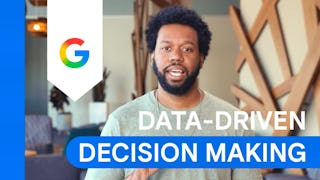 Status: Free Trial
Skills you'll gain: Data Visualization, Data Ethics, Dashboard Creation, Data Presentation, Performance Measurement, Data Analysis, Tableau Software, Data Integrity, Stakeholder Engagement, Data Storytelling, Analysis, Communication Strategies, Prompt Patterns, Statistical Methods, Analytics, Data Infrastructure, Stakeholder Communications, Visual Design, Spreadsheet Software, Verbal Communication Skills
 Status: NewStatus: Free Trial
Creo Incubator
Skills you'll gain: Critical Thinking, Critical Thinking and Problem Solving, Analytical Skills, Analysis, Problem Solving, Decision Making, Habit Formation, Curiosity, Complex Problem Solving, Open Mindset, Gap Analysis
 Status: Free Trial
Duke University
Skills you'll gain: Strategic Decision-Making, Dealing With Ambiguity, Performance Metric, Decisiveness, Performance Analysis, Performance Measurement, Adaptability, Customer Demand Planning, Decision Making, Strategic Prioritization, Dashboard, Data-Driven Decision-Making, Market Opportunities, Data Strategy, Business Analytics, Data Science, Data Analysis, Operational Efficiency, Risk Management, Change Management
 Status: NewStatus: Free Trial
Arizona State University
Skills you'll gain: Problem Solving, Decision Making, Creative Thinking, Root Cause Analysis, Creative Problem-Solving, Data Collection, Brainstorming, Curiosity, Strategic Decision-Making, Business Ethics, Creativity, Ethical Standards And Conduct, Complex Problem Solving, Independent Thinking, Risk Analysis, Design Thinking, Analysis, Data Synthesis, Strategic Thinking, Collaboration
What brings you to Coursera today?
 Status: Free Trial
American Psychological Association
Skills you'll gain: Decision Making, Decision Intelligence, Psychology, Critical Thinking, Social Sciences, Interpersonal Communications, Diversity Awareness, Persuasive Communication
 Status: Free Trial
Dartmouth College
Skills you'll gain: Decision Making, Creativity, Talent Management, Communication, Innovation, Creative Thinking, Personal Development, Interpersonal Communications, Curiosity, People Development, Professional Networking, Collaboration, Leadership Development, Leadership and Management, Leadership Studies, Self-Awareness, Strategic Leadership, Business Leadership, Emotional Intelligence, Critical Thinking
 Status: Free Trial
Arizona State University
Skills you'll gain: Decision Making, Decisiveness, Complex Problem Solving, Problem Solving, Critical Thinking and Problem Solving, Creative Problem-Solving, Ethical Standards And Conduct, Risk Analysis, Social Impact, Risk Management, Analysis
 Status: Free Trial
Dartmouth College
Skills you'll gain: Decision Making, Self-Awareness, Emotional Intelligence, Critical Thinking, Behavioral Economics, Problem Solving, Leadership Development, Analysis, Goal Setting, Strategic Leadership, Business Strategy, Overcoming Obstacles, Mitigation
 Status: Free Trial
Skills you'll gain: Analytics, Business Analytics, Data Analysis, Data-Driven Decision-Making, Data Literacy, Big Data, Analytical Skills, Data Analysis Software, Data Visualization, Statistical Programming, Statistical Analysis, Exploratory Data Analysis, Microsoft Excel, Data Visualization Software, Decision Making, Data Collection, Unstructured Data, Case Studies
 Status: NewStatus: Free Trial
Alex Genadinik
Skills you'll gain: Decision Making, Strategic Decision-Making, Decisiveness, Logical Reasoning, Emotional Intelligence, Data-Driven Decision-Making, Strategic Thinking, Critical Thinking, Business Leadership, Analytical Skills, Leadership, Case Studies, Microsoft Excel, Entrepreneurship
In summary, here are 10 of our most popular decision making courses
- Effective Problem-Solving and Decision-Making: University of California, Irvine
- The science of mind and decision making: University of Cambridge
- Google Data-Driven Decision Making: Google
- Critical Thinking for Decision Making: Creo Incubator
- Data-Driven Decision-Making for Agile Organizations: Duke University
- Professional Skills: Decision-Making and Problem-Solving: Arizona State University
- The Psychology of Decision Making: American Psychological Association
- Strategic Leadership: Impact, Change, and Decision-Making: Dartmouth College
- Decision-Making: Arizona State University
- Decision-Making: Blending Art & Science: Dartmouth College










