Chemical Engineering Courses
Chemical engineering courses can help you learn process design, thermodynamics, fluid mechanics, and reaction engineering. You can build skills in optimizing production processes, conducting safety analyses, and managing chemical processes efficiently. Many courses introduce tools like Aspen Plus for process simulation, MATLAB for data analysis, and various laboratory techniques for experimentation, showing how these skills are applied in practical work to improve efficiency and sustainability in chemical production.
Popular Chemical Engineering Courses and Certifications
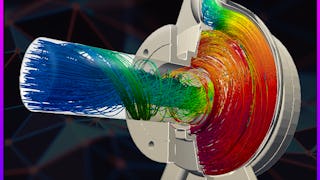
Skills you'll gain: Simulation and Simulation Software, Simulations, Engineering Design Process, Finite Element Methods, Engineering Analysis, Cloud Engineering, Hydraulics, Verification And Validation
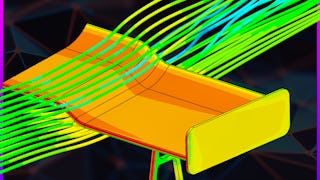
Skills you'll gain: Simulation and Simulation Software, Engineering Analysis, Finite Element Methods, Simulations, Engineering, Computer-Aided Design, Cloud Technologies, Engineering Design Process, Cloud Computing
Skills you'll gain: Computer-Aided Design, AutoCAD, Design Software, Drafting and Engineering Design, Product Design, Product Development, Technical Drawing, Design

Skills you'll gain: Generative AI, No-Code Development, Prompt Engineering Tools, AI literacy, LLM Application, Personalized Campaigns, Prompt Engineering, Application Development, Social Media Campaigns, Marketing Automation, ChatGPT, Social Media Content, Content Development and Management, Automation, User Interface (UI), Constructive Feedback, Branding
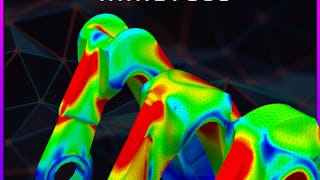
Skills you'll gain: Finite Element Methods, Engineering Analysis, Simulation and Simulation Software, Simulations, Mechanical Design, Mathematical Modeling, Structural Engineering, Structural Analysis, 3D Modeling

What brings you to Coursera today?

SkillsBooster Academy
Skills you'll gain: Prompt Engineering, Prompt Engineering Tools, Videography, Multimodal Prompts, Video Production, Prompt Patterns, AI powered creativity, Visual Storytelling, Photo/Video Production and Technology, Generative AI, Artificial Intelligence, Google Gemini, Cinematography, Gemini, Artificial Intelligence and Machine Learning (AI/ML), Content Creation, Google Workspace
Skills you'll gain: Prompt Engineering, OpenAI API, Education Software and Technology, Generative AI, AI Integrations, OpenAI, Scripting, Scripting Languages, Python Programming, Application Programming Interface (API), Application Development, Machine Learning, Software Engineering

Skills you'll gain: Django (Web Framework), Web Applications, Web Development, Expense Reports, Back-End Web Development, Expense Management, Application Development, Database Application, Data Visualization, Business Process Automation, Chart.js, Data Modeling, Business Logic, Development Environment, Data Security, GitHub, Javascript, Project Documentation, Git (Version Control System)
Skills you'll gain: Finite Element Methods, Simulation and Simulation Software, Engineering Analysis, Simulations, Engineering, Verification And Validation

Skills you'll gain: Web Content Accessibility Guidelines, Usability, Web Design, Information Architecture, Web Development Tools, Test Tools, Web Development, Customer Service
Skills you'll gain: Dynamic Host Configuration Protocol (DHCP), Virtual Networking, Network Administration, System Configuration, Network Security, TCP/IP, Computer Networking, General Networking, Virtual Environment, Network Routers, Networking Hardware, Network Engineering, Simulations, Configuration Management, Information Technology, Verification And Validation, System Testing
Skills you'll gain: Angular, Authorization (Computing), JavaScript Frameworks, Application Programming Interface (API), TypeScript, Javascript, Web Development
What brings you to Coursera today?
Best free Chemical Engineering courses
High-quality free Chemical Engineering courses you can start today.
- CFD Simulation Through a Centrifugal PumpCourseraBeginnerLess Than 2 HoursFree
- Computational Fluid Mechanics - Airflow Around a SpoilerCourseraBeginnerLess Than 2 HoursFree
- FEM - Linear, Nonlinear Analysis & Post-ProcessingCourseraIntermediateLess Than 2 HoursFree
Best Chemical Engineering courses from Coursera
Top-rated Chemical Engineering courses offered by Coursera on Coursera.
- Product Development using AutoCADCourseraBeginnerLess Than 2 HoursCoursera
- Promptly for Beginners: Build a Generative AI AppCourseraBeginnerLess Than 2 HoursCoursera
- Prompt Engineering with GPT: Programming for Custom ContentCourseraIntermediateLess Than 2 HoursCoursera
Best Chemical Engineering courses for beginners
Top-rated beginner-friendly Chemical Engineering courses with no prerequisites.
- Create Your First AI VideoSkillsBooster AcademyBeginnerLess Than 2 HoursNo prerequisites
- Finite Element Analysis Convergence and Mesh IndependenceCourseraBeginnerLess Than 2 HoursNo prerequisites
- Test Accessibility of Your Design with WAVECourseraBeginnerLess Than 2 HoursNo prerequisites
Best short Chemical Engineering courses
Quick Chemical Engineering courses you can complete in a few hours or less.
- Build an expense tracker app in DjangoCourseraIntermediateLess Than 2 HoursQuick completion
- Configure and Test Basic Network ConnectivityCourseraIntermediateLess Than 2 HoursQuick completion
- Learn Angular Routing by building a Cocktails ApplicationCourseraAdvancedLess Than 2 HoursQuick completion










