Statistics Courses
Statistics courses can help you learn data analysis, probability theory, hypothesis testing, and regression techniques. You can build skills in interpreting data sets, making informed predictions, and conducting surveys. Many courses introduce tools like R, Python, and Excel, that support performing statistical analyses and visualizing results. You'll also explore key topics such as descriptive statistics, inferential statistics, and experimental design, equipping you with the knowledge to tackle real-world data challenges.
Popular Statistics Courses and Certifications
Coursera
Skills you'll gain: Correlation Analysis, Probability & Statistics, Statistical Methods, Statistics, Statistical Analysis, Data Analysis, Sampling (Statistics), Data Science, Probability Distribution, Descriptive Statistics, Statistical Inference

Coursera
Skills you'll gain: Portfolio Risk, Investment Management, Risk Management, Financial Analysis, Financial Management, Risk Modeling, Risk Analysis, Portfolio Management, Financial Market, Investments, Statistics
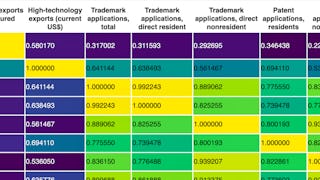
Skills you'll gain: Exploratory Data Analysis, Plot (Graphics), Box Plots, Correlation Analysis, Data Visualization, Scatter Plots, Data Cleansing, Statistical Visualization, Data Preprocessing, Data Manipulation, Statistical Hypothesis Testing, Descriptive Statistics, Statistical Analysis, Data Analysis, Probability & Statistics, Statistical Methods, Python Programming
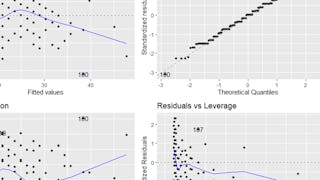
Skills you'll gain: Exploratory Data Analysis, Statistical Modeling, Regression Analysis, Data Visualization, Model Evaluation, Data Analysis, Statistical Methods, Scatter Plots, Statistical Software, R Programming, Statistical Analysis, Plot (Graphics), R (Software), Predictive Modeling, Ggplot2, Statistical Programming

Skills you'll gain: Portfolio Risk, Portfolio Management, Risk Management, Financial Market, Investments, Correlation Analysis, Analysis, Statistics

What brings you to Coursera today?

Skills you'll gain: Portfolio Management, Portfolio Risk, Finance, Financial Modeling, Return On Investment, Correlation Analysis, Investment Management, Financial Analysis, Asset Management, Mathematical Modeling, Investments, Risk Modeling, Equities, Model Optimization
Skills you'll gain: Descriptive Statistics, Statistical Programming, R Programming, R (Software), Statistical Reporting, Data Quality, Data Preprocessing, Data Cleansing, Statistics, Data Processing, Statistical Methods, Statistical Software, Data Analysis Software, Statistical Analysis, Data Import/Export
Skills you'll gain: Google Sheets, Data Visualization, Spreadsheet Software, Data Presentation, Plot (Graphics), Statistical Visualization, Data Analysis, Business Analytics, Descriptive Analytics, Productivity Software, Business Analysis, Data Manipulation, Google Workspace, Analytics, Descriptive Statistics, Statistics, Data Cleansing
Skills you'll gain: Descriptive Statistics, Data Analysis, Exploratory Data Analysis, Quantitative Research, R Programming, Statistical Analysis, Histogram, R (Software), Statistical Methods, Statistical Programming, Probability & Statistics, Descriptive Analytics, Statistics, Statistical Software, Data Science

Skills you'll gain: Dashboard, Microsoft Excel, Microsoft 365, Microsoft Office, Spreadsheet Software, Data Visualization, Document Management, Trend Analysis, Data Analysis

Skills you'll gain: Model Evaluation, Forecasting, Trend Analysis, Statistical Visualization, Spreadsheet Software, Regression Analysis, Time Series Analysis and Forecasting, Statistical Methods, Statistical Analysis, Plot (Graphics), Predictive Modeling, Data-Driven Decision-Making, Data Analysis

Skills you'll gain: Blogs, Content Performance Analysis, Google Analytics, Web Analytics, Promotional Strategies, Customer Engagement, Social Media Marketing, Social Media Analytics, Social Media, Customer Relationship Building, Content Marketing, Content Creation, Content Management Systems, Marketing
What brings you to Coursera today?
Best free Statistics courses
High-quality free Statistics courses you can start today.
- Investment Risk ManagementCourseraIntermediateLess Than 2 HoursFree
- Portfolio Diversification using Correlation MatrixCourseraIntermediateLess Than 2 HoursFree
- Portfolio Optimization using Markowitz ModelCourseraIntermediateLess Than 2 HoursFree
Best Statistics courses from Coursera
Top-rated Statistics courses offered by Coursera on Coursera.
- Statistics For Data ScienceCourseraBeginnerLess Than 2 HoursCoursera
- Basic Statistics in Python (Correlations and T-tests)CourseraBeginnerLess Than 2 HoursCoursera
- Building Statistical Models in R: Linear RegressionCourseraBeginnerLess Than 2 HoursCoursera
Best Statistics courses for beginners
Top-rated beginner-friendly Statistics courses with no prerequisites.
- Using Descriptive Statistics to Analyze Data in RCourseraBeginnerLess Than 2 HoursNo prerequisites
- Introduction to Business Analysis Using Spreadsheets: BasicsCourseraBeginnerLess Than 2 HoursNo prerequisites
- Calculating Descriptive Statistics in RCourseraBeginnerLess Than 2 HoursNo prerequisites
Best short Statistics courses
Quick Statistics courses you can complete in a few hours or less.
- Create Charts and Dashboards Using Microsoft ExcelCourseraIntermediateLess Than 2 HoursQuick completion
- Predicción de Ventas Pronosticando TendenciasCourseraIntermediateLess Than 2 HoursQuick completion
- Creating a Free Business Page with BloggerCourseraBeginnerLess Than 2 HoursQuick completion










