Isn’t it time to end the loss of life from preventable medical errors?
Each year 100,000 patients die from preventable errors in the U.S. How can you help to change this intractable problem? Knowledge is power, and this course will provide you with a deep understanding of the problems and the solutions. You can become part of the solution.
100,000 patients die annually as a consequence of preventable medical errors, and over 1 million patients suffer life-changing injuries. Despite the calls to action medical errors continue at the rate of 1 out of 10 patients. How can those of us who help to deliver care and those of us that receive care help to prevent harm? There are 5 fundamental areas each of us needs to understand and use to fix healthcare delivery: 1. Apply the principles of high performing manufacturers and athletic teams to continually improve our processes. 2.We all need to learn how lead and be part of multidisciplinary teams that include patients and coordinate the care they receive. 3.The human brain continually makes errors. Certain conditions increase the likelihood of errors, and these need to be avoided. Systems can be designed that force the right behavior, and second checks can help caregivers provide the right care at the right time and in the right place. 4.We all need to become effective leaders. Most importantly we must practice adaptive leadership, that is, leadership that promotes a true change in the way things are done. 5.Finally we all can utilize the campaign methods of successful politicians and advocacy groups to change the attitudes of our fellow caregivers and patients, and thereby change the culture of our healthcare systems. During this 8-module course you will be provided with the tools to accomplish all 5 of these goals, and as an individual you can truly make a difference.
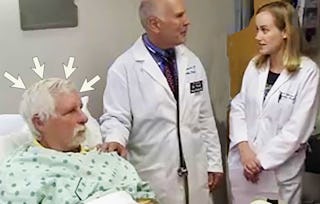
Why do we need to understand about systems? How do we evaluate a system and as a patient or provider what characteristics do you think are important? How does quality relate to safety? These are important questions that we all need to have answers to as we learn how to improve how we deliver and receive healthcare. The personal consequences of distracted physicians and defective systems are illustrated in Mary's frightening hospital experience.
What's included
6 videos1 reading1 assignment
Show info about module content
6 videos•Total 44 minutes
Why Should You Take This Course?•2 minutes
Who is Caring for Mary Overview•3 minutes
Introduction•8 minutes
Who was Caring for Mary?•16 minutes
Quality, Safety and Healthcare Delivery Systems•11 minutes
Systems and Quality•4 minutes
1 reading•Total 10 minutes
Module 1 Reading list•10 minutes
1 assignment•Total 30 minutes
Who is Caring for Mary•30 minutes
Applying Manufacturing Principles to Improve Healthcare
Module 2•1 hour to complete
Module details
In this module we will be discussing the manufacturing principles of the Toyota Production System. The concept of value stream or work flow diagrams will be introduced. The well known 80/20 rule in manufacturing will be applied to patient care. The 8 ways waste can be reduced in health care will be explored, and finally the problem of push medicine and how patients can guard against this all too common problem will be covered.
What's included
5 videos1 reading1 assignment
Show info about module content
5 videos•Total 43 minutes
Applying Manufacturing Principles to Improve Healthcare Overview (3:17)•3 minutes
Lessons We Can Learn From Industry, Part I•5 minutes
Value Streams Digging Deeper•9 minutes
Lessons We Can Learn from Industry Part II•14 minutes
Lessons We Can Learn From Industry, Part III•12 minutes
1 reading•Total 10 minutes
Module 2 Reading•10 minutes
1 assignment•Total 30 minutes
Applying Manufacturing Principles to Improve Healthcare•30 minutes
Healthcare Requires Teamwork
Module 3•2 hours to complete
Module details
Teamwork is critical in modern healthcare. We will explore the state of healthcare teamwork in most healthcare systems. The 5 resources required for effective teams will be reviewed, and we will discuss how athletic principles can be used to encourage teamwork, improve efficiency and increase the quality of patient care. We will review how to launch and coach a team, and how to manage the complex dynamics of teams. Finally we will discuss how to create a self-improving team.
What's included
5 videos1 reading1 assignment
Show info about module content
5 videos•Total 62 minutes
Healthcare Requires Teamwork Overview•3 minutes
Teamwork in Healthcare: How well do we work in teams?•15 minutes
Athletic Principles in Healthcare•15 minutes
Launching and Coaching Healthcare Teams•16 minutes
Overview of TeamSTEPPS•13 minutes
1 reading•Total 10 minutes
Module 3 Reading•10 minutes
1 assignment•Total 30 minutes
Healthcare Requires Teamwork•30 minutes
Understanding and Preventing Human Error Part I
Module 4•3 hours to complete
Module details
This module will be discussing the consequences of medical errors, and you will learn from Sorrel King's loss of her daughter, Josie, and from my personal experience that preventable injuries not only cause death but also can lead to permanent life changing injuries. Sitting around and doing nothing is not an option. However we all need to understand and use three key tools to determine the causes of medical errors and to fix them, Root cause analysis, Driver Diagrams, and PDSA cycles. Finally we will discuss the issue of small errors and our tendency to ignore and workaround them. Unfortunately this approach to small problems is one of leading causes for the continued high rate of preventable injuries and deaths in our hospitals and clinics. It is time to fix the little things.
What's included
5 videos1 reading1 assignment1 peer review
Show info about module content
5 videos•Total 50 minutes
Understanding and Preventing Human Error Part I Overview•2 minutes
Medical Errors the Human Toll•12 minutes
To Err Is Human•12 minutes
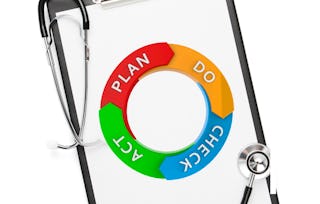
Plan-Do-Study-Act•16 minutes
Little Problems Workarounds•8 minutes
1 reading•Total 10 minutes
Module 4 Reading•10 minutes
1 assignment•Total 30 minutes
Understanding and Preventing Human Error Part I•30 minutes
1 peer review•Total 120 minutes
Peer Review •120 minutes
Understanding and Preventing Human Error Part II
Module 5•1 hour to complete
Module details
This module introduces you to the famous W. Edwards Deming red bead experiment that illustrates the tyranny of random variation, and introduce the use of run charts to differentiate random or common cause from specific cause variation. Next we will introduce you the concept of reliability and will illustrate why we need to dramatically improve the reliability in health care. Strategies for reducing human errors are reviewed, and the effectiveness hierarchy of different interventions discussed. We end with a discussion of how health systems and providers should be treating patients and families who they have inadvertently harmed.
What's included
7 videos1 reading1 assignment
Show info about module content
7 videos•Total 43 minutes
Understanding and Preventing Human Error Part II Overview•2 minutes
How Do We Know if a Change is an Improvement, Part I•4 minutes
Run Charts•7 minutes
How Do We Know if a Change is an Improvement, Part II•4 minutes
How Reliable is Healthcare?•7 minutes
How Can We Reduce Human Error?•11 minutes
What Happens When a Patient is Harmed?•7 minutes
1 reading•Total 10 minutes
Module 5 Reading•10 minutes
1 assignment•Total 30 minutes
Understanding and Preventing Human Error Part II•30 minutes
We All Can Lead: Becoming an Adaptive Leader
Module 6•1 hour to complete
Module details
In this module, we will be discussing the need in healthcare for distributive leadership that is adaptive. The complexity of healthcare prevents one leader from micromanaging a healthcare system, and leadership must be encouraged on the front lines of care. Effective leaders are good listeners, empathetic, follow their principles (North Star) and are courageous. Adaptive or innovative leaders are a necessity for improving the quality and safety of healthcare. The strategies for controlling emotional disequilbrium will be addressed, and specific analogies presented to assist students in understanding how to practice leadership that will bring about change.
What's included
4 videos1 reading1 assignment
Show info about module content
4 videos•Total 28 minutes
We All Can Lead: Becoming an Adaptive Leader Overview•2 minutes
Who Should Lead?•11 minutes
Adaptive Leaders: A Necessity for Fixing Healthcare Delivery•8 minutes
Practice Adaptive Leadership•8 minutes
1 reading•Total 10 minutes
Module 6 Reading•10 minutes
1 assignment•Total 30 minutes
We All Can Lead: Becoming an Adaptive Leader•30 minutes
How Organizing People can Drive Change in Healthcare Delivery
Module 7•1 hour to complete
Module details
Change requires those on the front lines to embrace new approaches to care and to work across department barriers. This session will use our Founding Father Samuel Adams to exemplify the approaches that have been used for decades to encourage others to come together to bring about change. Samuel Adams campaign led to United States independence from Great Britain and these methods if applied throughout the world can lead to a revolution in healthcare delivery. One-one techniques, personal narrative, creation of leadership teams, and the creation of effective strategies and tactics to bring about action will all be covered. You can make a difference.
What's included
5 videos1 reading1 assignment
Show info about module content
5 videos•Total 49 minutes
How Organizing People can Drive Change in Healthcare Delivery Overview•3 minutes
What can Samuel Adams Teach Us About Fixing Healthcare Delivery?•12 minutes
Organizing in Healthcare: The Early Phase•12 minutes
How Organizing People can Drive Change in Healthcare Delivery•30 minutes
Immunity to Change, Examples of Successful Patient Care Initiatives, and Final Summary
Module 8•1 hour to complete
Module details
In this final module we will review why many of us fail to change our viewpoints and behavior. We will discuss how you can overcome your natural immunity to change. Next we will review the key points from each of the past 7 module, and then outline a general plan of action that will allow you to create your personal plan to fix one component of your healthcare system. Your learning has just begun. Now you will be able to apply what you learned, you will achieve greater and greater understanding by doing.
What's included
4 videos1 reading1 assignment
Show info about module content
4 videos•Total 31 minutes
Immunity to Change, Examples of Successful Patient Care Initiatives, and Final Summary Overview•3 minutes
Immunity to Change•8 minutes
Summing it all up•13 minutes
What can I do?•6 minutes
1 reading•Total 10 minutes
Module 8 Reading•10 minutes
1 assignment•Total 30 minutes
Immunity to Change, Examples of Successful Patient Care Initiatives, and Final Summary•30 minutes
The University of Florida (UF) is recognized nationally and internationally as a leader in academic excellence, both on campus and online. Ranked in the top 10 of Public Universities, the University of Florida is the state’s oldest university and has a long established tradition of academic excellence.
When will I have access to the lectures and assignments?
To access the course materials, assignments and to earn a Certificate, you will need to purchase the Certificate experience when you enroll in a course. You can try a Free Trial instead, or apply for Financial Aid. The course may offer 'Full Course, No Certificate' instead. This option lets you see all course materials, submit required assessments, and get a final grade. This also means that you will not be able to purchase a Certificate experience.
What will I get if I purchase the Certificate?
When you purchase a Certificate you get access to all course materials, including graded assignments. Upon completing the course, your electronic Certificate will be added to your Accomplishments page - from there, you can print your Certificate or add it to your LinkedIn profile.
Is financial aid available?
Yes. In select learning programs, you can apply for financial aid or a scholarship if you can’t afford the enrollment fee. If fin aid or scholarship is available for your learning program selection, you’ll find a link to apply on the description page.