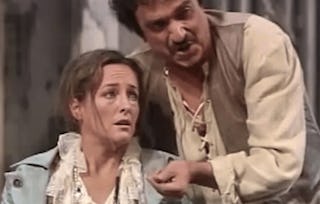
This course will focus on the historical and cultural background, literary aesthetics, music, and performance of Kunqu, China’s classical opera. After viewing the lecture videos presented by scholars and renowned maestros in the field of Kunqu, students’ understanding and appreciation of Chinese performing arts, classical literature and traditional culture will be enhanced.
Welcome to The Beauty of Kunqu Opera! The following lecture videos will give you some ideas of the historical background and characteristics of Kunqu, China’s classical opera that originated more than 600 years ago and blossomed during the late Ming and early Qing dynasties (around 16th – 17th centuries). The introduction is followed by excerpts and analysis of The Peony Pavilion, Kunqu’s masterpiece. The poetic artistry shown in the arias, dialogues and dance movement of the characters exemplifies the aesthetic achievement of Kunqu.
What's included
5 videos1 assignment
Show info about module content
5 videos•Total 45 minutes
1.1. A brief introduction to Kunqu•4 minutes
1.2. High points of Kunqu during the late Ming and early Qing dynasties•5 minutes
1.3. The socio-historical background of Kunqu in 16th- and 17th-century China•7 minutes
1.4.The Peony Pavilion, its poetry and performance•20 minutes
1.5. From page to stage: The Peony Pavilion as masterpiece•9 minutes
1 assignment•Total 30 minutes
Week 1•30 minutes
The Beauty of Kunqu Music
Module 2•1 hour to complete
Module details
Kunqu means music/song (qu) that originated from the district of Kunshan, Jiangsu province. The word itself shows the fundamental role played by music in this Chinese classical opera. This week, Prof. Lindy Li Mark from the California State University, East Bay will talk about the musical aspect of Kunqu. What are the musical features of Kunqu melodies? What is tune-type and what does a traditional score of Kunqu look like? How is the music of Kunqu different from that of the Western operas? What instruments are used in a Kunqu ensemble? Answers to these questions can be found in the lecture videos.
What's included
5 videos1 assignment
Show info about module content
5 videos•Total 45 minutes
2.1. A brief introduction to Kunqu music•6 minutes
2.2. Musical features of Kunqu melodies•8 minutes
2.3. Analytical definition of tune-type: qupai•18 minutes
2.4. Contrasts between Western opera and Kunqu opera•7 minutes
2.5. Traditional instruments of Kunqu ensemble: changmian•6 minutes
1 assignment•Total 30 minutes
Week 2•30 minutes
The Art of Kunqu Performance: the Male Role-Types
Module 3•2 hours to complete
Module details
Just like other genres of Chinese opera, Kunqu has a broad range of role-types, such as male (sheng), female (dan), painted face (jing) and comic (chou). From this week on, legendary performing artists who have devoted their whole lives to Kunqu will talk about the role-types they specialize in and their facial makeup, costume, singing, speaking and movements. In addition, they will demonstrate some of the very important repertoires in Kunqu and share with us the characteristics of each of them.
This week, Maestros Yue Meiti and Cai Zhengren will talk about one of the most important role-types of Kunqu, the male role-type. Classical plays such as The Jade Hairpin, The Shepherd, and The Palace of Eternal Life will be introduced as well.
What's included
6 videos1 assignment
Show info about module content
6 videos•Total 85 minutes
3.1. Comparison between the young scholar and the official role-types•11 minutes
3.2.1. Singing and speaking of the young scholar role-type•11 minutes
3.2.2. Foot work and hand gestures of the young scholar role-type•12 minutes
3.2.3. Hand, eye,body, and step combined: "Repartee of Zithers", a scene from The Jade Hairpin•17 minutes
3.3. Demostration of the young official role-type: "Looking Homeward", a scene from The Shepherd•15 minutes
3.4. Demostration of the great official role-type: "Lamenting before the Statue", a scene from The Palace of Eternal Life•20 minutes
1 assignment•Total 30 minutes
Week 3•30 minutes
The Art of Kunqu Performance: the Female Role-Type
Module 4•2 hours to complete
Module details
The female role-type is another prominent role-type of Kunqu and can be divided into a number of subtypes. In this week lively lectures and demonstration by Maestros Zhang Jingxian (mature female), Zhang Jiqing (young noble lady), Liang Guyin (vivacious young female) and Wang Zhiquan (martial female) will show us the charisma of the diversified female characters on the Kunqu stage from Chinese classics such as The Lute, The Peony Pavilion and Journey to the West.
What's included
9 videos1 assignment
Show info about module content
9 videos•Total 95 minutes
4.1.1. Categories of female role-types in Kunqu•7 minutes
4.2.1. Demonstration of the mature female role-type•6 minutes
4.3.1."Search for the Dream", a scene from The Peony Pavilion: imaging the romantic mindset of a young woman•19 minutes
4.3.2. "Search for the Dream", a scene from The Peony Pavilion: disappointment•14 minutes
4.4.1. Benefiting from many masters: Liang Guyin studies "Earthly Desires"•6 minutes
4.4.2. Focus on critical points: using eye movement and acting distracted as she recites•15 minutes
4.4.3. Pantomime, song, and dance combined: "counting arhats" and escaping down the mountain•10 minutes
4.5.1. Equal demands of singing and martial arts in “Borrowing the Plantain Leaf Magic Fan”, a scene from The Journey to the West•9 minutes
4.5.2. Innovation in the scene: "belly pain"•10 minutes
1 assignment•Total 30 minutes
Week 4•30 minutes
The Art of Kunqu Performance: Integration of the Painted Face and Warrior Role-Types
Module 5•1 hour to complete
Module details
The colorful and complex facial makeup of the painted face role-type is probably the most noticeable feature in the eyes of the audience. But what does facial makeup mean and how is it done? This week, Maestro Hou Shaokui will unfold the mysteries for us. He will also share with us his portrayal of Lord Guan, a well-known household character based on the most famous Chinese historical novel Romance of the Three Kingdoms. What is more, this unique character combines the essence of both the painted face and warrior role-types.
What's included
5 videos1 assignment
Show info about module content
5 videos•Total 51 minutes
5.1. Face paint patterns and costumes various painted face roles•12 minutes
5.2. Use of the beard and eyes in the enactment of Lord Guan•12 minutes
5.3. Importance of singing in "Into the Enemy Camp Alone"•12 minutes
5.4. Importance of speech and recitation•7 minutes
5.5. Movement and facial expression•8 minutes
1 assignment•Total 30 minutes
Week 5•30 minutes
The Art of Kunqu Performance: the Comic Role-Type
Module 6•1 hour to complete
Module details
When appreciating the well written script and the beautiful melody of Kunqu, sometimes audiences just want a good laugh in the theatre. This cannot be done without the contribution of the comic role-type. This week, Maestro Zhang Mingrong will explain the characteristics of the different subtypes of the comic role-type, namely young chou, fu chou and martial/acrobatic chou. From Maestro Zhang’s demonstration we will also see that mastering the comic role-type requires much more skill than just natural talent.
What's included
4 videos1 assignment
Show info about module content
4 videos•Total 33 minutes
6.1. Categories of male comic role-types in Kunqu•12 minutes
6.2. Demonstration of two monks in "Escape from the Monastery" (young chou) and "Touring the Prayer Hall" (fu chou)•8 minutes
6.3. Acrobatic action with lyrical singing: "Shi Qian Steals the Armor"•4 minutes
6.4. Agility within logic and surprise: excerpt from "Shi Qian Steals the Armor"•10 minutes
1 assignment•Total 30 minutes
Week 6•30 minutes
The New Aesthetics of Kunqu: Tradition and Modernity
Module 7•1 hour to complete
Module details
Drawing examples from the production of The Peony Pavilion (Young Lover’s Edition) and The Jade Hairpin (New Edition), Prof. Kenneth Hsien-yung Pai will illustrate how Kunqu today can attract the younger generation by adding modern elements in stagecraft while preserving the basic aesthetics of Kunqu.
What's included
4 videos1 assignment
Show info about module content
4 videos•Total 31 minutes
7.1. Kunqu and Chinese traditional aesthetics•3 minutes
7.2. The Young Lovers' Edition Peony Pavilion and The New Edition Jade Hairpin: connecting tradition and modernity•8 minutes
7.3. The Young Lovers' Edition Peony Pavilion: innovations in stagecraft•10 minutes
7.4. The New Edition Jade Hairpin: return to classicism, synthesis of graphic and calligraphic arts•10 minutes
1 assignment•Total 30 minutes
Week 7•30 minutes
Instructors
Instructor ratings
Instructor ratings
We asked all learners to give feedback on our instructors based on the quality of their teaching style.
Founded in 1963, The Chinese University of Hong Kong (CUHK) is a forward looking comprehensive research university with a global vision and a mission to combine tradition with modernity, and to bring together China and the West. CUHK teachers and students hail from all corners of the world. CUHK graduates are connected worldwide through an expansive alumni network.
"To be able to take courses at my own pace and rhythm has been an amazing experience. I can learn whenever it fits my schedule and mood."
Jennifer J.
Learner since 2020
"I directly applied the concepts and skills I learned from my courses to an exciting new project at work."
Larry W.
Learner since 2021
"When I need courses on topics that my university doesn't offer, Coursera is one of the best places to go."
Chaitanya A.
"Learning isn't just about being better at your job: it's so much more than that. Coursera allows me to learn without limits."
Learner reviews
4.8
206 reviews
5 stars
86.89%
4 stars
10.19%
3 stars
1.94%
2 stars
0.48%
1 star
0.48%
Showing 3 of 206
H
HC
4·
Reviewed on Sep 8, 2016
A general introduction for people who have watched Kunqu yet also would like to know "how to appreciate Kunqu". The part that those masters presenting the acting, singing, etc. is always the best.
S
SK
4·
Reviewed on Dec 22, 2017
Unexpected but I really loved it!! Super interesting!!
L
LH
5·
Reviewed on May 2, 2020
After taking this course, i start to know how to appreciate Kunqu. Now i love Kunqu very much. Hope that more people can learn how to appreciate the beauty of Kunqu through this amazing course.
When will I have access to the lectures and assignments?
To access the course materials, assignments and to earn a Certificate, you will need to purchase the Certificate experience when you enroll in a course. You can try a Free Trial instead, or apply for Financial Aid. The course may offer 'Full Course, No Certificate' instead. This option lets you see all course materials, submit required assessments, and get a final grade. This also means that you will not be able to purchase a Certificate experience.
What will I get if I purchase the Certificate?
When you purchase a Certificate you get access to all course materials, including graded assignments. Upon completing the course, your electronic Certificate will be added to your Accomplishments page - from there, you can print your Certificate or add it to your LinkedIn profile.
Is financial aid available?
Yes. In select learning programs, you can apply for financial aid or a scholarship if you can’t afford the enrollment fee. If fin aid or scholarship is available for your learning program selection, you’ll find a link to apply on the description page.