Biomedical Engineering Courses
Biomedical engineering courses can help you learn about medical imaging, biomaterials, and tissue engineering, as well as the principles of biomechanics and rehabilitation technologies. You can build skills in designing medical devices, conducting experiments, and analyzing biological data. Many courses introduce tools like CAD software for designing prosthetics, MATLAB for data analysis, and simulation software for modeling biological systems, all of that support applying your knowledge in practical settings.
Popular Biomedical Engineering Courses and Certifications
 Status: Preview
Johns Hopkins University
Skills you'll gain: Verification And Validation, Health Systems, Systems Engineering, Healthcare Industry Knowledge, Health Care, Systems Integration, Requirements Analysis, Enterprise Architecture, Application Deployment
 Status: Free Trial
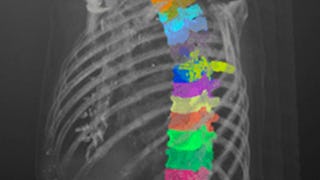
Indian Institute of Science
Skills you'll gain: Engineering Documentation, Biomedical Technology, Biomedical Engineering, Medical Devices, Chemical and Biomedical Engineering, Medical Equipment and Technology, Electronics, Vital Signs, Technical Documentation, Engineering, Scientific, and Technical Instruments, Electronic Systems, Electronic Components, Electronics Engineering, Electronic Hardware, Technical Communication, Semiconductors, Materials science, Health Technology, Analytical Testing, Biochemistry
 Status: Preview
MathWorks
Skills you'll gain: Medical Imaging, Magnetic Resonance Imaging, Image Analysis, Data Import/Export, Image Quality, Matlab, Deep Learning, Software Visualization
 Status: Free Trial
Skills you'll gain: Prompt Engineering, Prompt Patterns, ChatGPT, Generative AI, Model Evaluation
 Status: Preview
University of Glasgow
Skills you'll gain: 3D Modeling, Biomedical Technology, Scientific Visualization, 3D Assets, Anatomy, Virtual Reality, Web Content Accessibility Guidelines, Medical Terminology, Data Visualization, Medical Imaging, Augmented and Virtual Reality (AR/VR), Software Visualization, Disabilities, Augmented Reality, Animations, Technical Communication, Computer Graphic Techniques, Visual Design, Virtual Environment, Simulations
 Status: Preview
Yale University
Skills you'll gain: Clinical Trials, Software Development Life Cycle, Medical Devices, Software Quality Assurance, Usability, Software Development, Medical Privacy, Software Quality (SQA/SQC), Verification And Validation, Human Factors, Biomedical Engineering, Risk Management, User Interface (UI), Software Design, Regulatory Compliance, Health Technology, Machine Learning, Software Testing, Entrepreneurship, User Research
What brings you to Coursera today?
 Status: Free Trial
Vanderbilt University
Skills you'll gain: Prompt Engineering, ChatGPT, Prompt Patterns, LLM Application, AI literacy, AI Enablement, AI powered creativity, Artificial Intelligence, Large Language Modeling, Generative AI Agents
 Status: Free Trial
Khalifa University
Skills you'll gain: Environmental Management Systems, Environment Health And Safety, Environmental Monitoring, Accident Reporting, Fire And Life Safety, Accident Prevention, Hazardous Waste Operations And Emergency Response Standard (HAZWOPER), Environmental Regulations, Safety Assurance, Health And Safety Standards, Environmental Engineering, Environmental Laws, Environmental Resource Management, Risk Management, Risk Management Framework, Environmental Engineering and Restoration, Risk Analysis, Environment and Resource Management, Engineering Management, Engineering
 Status: Free Trial
Skills you'll gain: Prompt Engineering, Apache Spark, Large Language Modeling, Retrieval-Augmented Generation, PyTorch (Machine Learning Library), Computer Vision, Unsupervised Learning, Generative Model Architectures, Prompt Patterns, Generative AI, PySpark, Keras (Neural Network Library), Supervised Learning, LLM Application, Generative AI Agents, Vector Databases, Fine-tuning, Machine Learning, Python Programming, Data Science
 Status: Free Trial
The Hong Kong University of Science and Technology
Skills you'll gain: Differential Equations, Linear Algebra, Matlab, Engineering Analysis, Numerical Analysis, Integral Calculus, Mathematical Software, Calculus, Engineering Calculations, electromagnetics, Algebra, Applied Mathematics, Mathematical Modeling, Engineering, Simulation and Simulation Software, Advanced Mathematics, Geometry, Computational Thinking, Mechanics, Scripting
 Status: Free Trial
Indian Institute of Science
Skills you'll gain: Biomedical Engineering, Medical Devices, Medical Equipment and Technology, Vital Signs, Engineering, Scientific, and Technical Instruments, Materials science, Health Technology, Analytical Testing, Laboratory Testing, Analytical Chemistry, Biochemistry, Diagnostic Tests, Molecular Biology, Sensory Systems Analysis, Electrophysiology, AI Personalization, Electocardiography, Neurology, Electronics, Oncology
 Status: Free Trial
Northwestern University
Skills you'll gain: Robotics, Machine Controls, Control Systems, Mathematical Modeling, Mathematical Software, Simulation and Simulation Software, Engineering, Mechanics, Mechanical Engineering, Applied Mathematics, Numerical Analysis, Simulations, Process Control, Virtual Environment, Torque (Physics), Graph Theory, Matlab, Algorithms, Engineering Calculations, Physics
In summary, here are 10 of our most popular biomedical engineering courses
- Foundations of Healthcare Systems Engineering: Johns Hopkins University
- Sensor Technologies for Biomedical Applications: Indian Institute of Science
- Medical Image Processing: MathWorks
- Generative AI: Prompt Engineering Basics: IBM
- Biomedical Visualization: University of Glasgow
- Introduction to Medical Software: Yale University
- Prompt Engineering for ChatGPT: Vanderbilt University
- Health, Safety, and Environmental (HSE) Engineering: Khalifa University
- IBM AI Engineering: IBM
- Mathematics for Engineers: The Hong Kong University of Science and Technology










