Medicinal Chemistry Courses
Medicinal chemistry courses can help you learn drug design, chemical synthesis, and pharmacology principles. You can build skills in structure-activity relationships, molecular modeling, and analytical techniques like chromatography and spectroscopy. Many courses introduce tools such as computational chemistry software and laboratory equipment, that support analyzing compounds and optimizing drug formulations.
Popular Medicinal Chemistry Courses and Certifications
 Status: Free Trial
University of Michigan
Skills you'll gain: Pre-Clinical Development, Clinical Research, Drug Development, Clinical Trials, Medical Science and Research, Biomedical Technology, Pharmaceuticals, Laboratory Research, Science and Research, General Science and Research, Health Policy, Research, Biology, Biochemistry, Scientific Methods, Research Methodologies
 Status: Free Trial
University of Minnesota
Skills you'll gain: Drug Interaction, Meditation & Breathwork, Contraindication, Patient Education And Counseling, Mindfulness, Patient Referral, Pharmacology, Treatment Planning, Health Care Procedure and Regulation, Pain Management, Manual Therapy, Patient Safety, Health Assessment, Patient Education and Support, Clinical Practices, Nursing Practices, Patient Evaluation, Pharmacotherapy, Nurse Education, Patient-centered Care
 Status: Free Trial
University of Michigan
Skills you'll gain: Institutional Review Board (IRB), Clinical Trials, Clinical Research, Clinical Research Ethics, Good Clinical Practices (GCP), Medical Science and Research, Drug Development, Research, Clinical Practices, Health Policy, Pharmaceuticals
 Status: Preview
University of Geneva
Skills you'll gain: Precision Medicine, Medical Science and Research, Data Ethics, Healthcare Ethics, Pharmacology, Health Informatics, Bioinformatics, Clinical Research, Biomedical Technology, Primary Care, Biotechnology, Clinical Research Ethics, General Medicine, Oncology, Pharmaceuticals, Health Policy, Pharmacotherapy, Molecular Biology, Diagnostic Tests, Patient Education And Counseling
 Status: Free Trial
Icahn School of Medicine at Mount Sinai
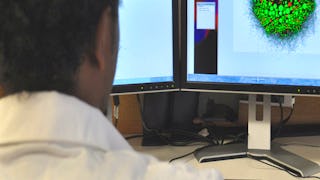
Skills you'll gain: Matlab, Bioinformatics, Mathematical Software, Quantitative Research, Electrophysiology, Unsupervised Learning, Data Synthesis, Research, Mathematical Modeling, Molecular Biology, Simulation and Simulation Software, Pharmacology, Science and Research, Cell Biology, Biotechnology, Laboratory Research, Molecular, Cellular, and Microbiology, General Science and Research, Network Analysis, Biology
 Status: Preview
Universidad Nacional Autónoma de México
Skills you'll gain: Institutional Review Board (IRB), Clinical Research Ethics, Medical Science and Research, Healthcare Ethics, Informed Consent, Clinical Research, Scientific Methods, Statistical Methods, Sampling (Statistics), Statistical Analysis, Quantitative Research, Science and Research, Responsible AI, Biostatistics, Technical Writing, Sample Size Determination, Statistical Inference, Statistical Hypothesis Testing
 Status: Preview
Universitat de Barcelona
Skills you'll gain: Precision Medicine, Oncology, Pathology, Patient Education And Counseling, Molecular Biology, Diagnostic Tests, Clinical Trials, Immunology, Treatment Planning, Molecular, Cellular, and Microbiology, Pharmacotherapy, Patient Treatment, Medical Science and Research, Pharmacology, Gynecology
 Status: Free Trial
Imperial College London
Skills you'll gain: Intellectual Property, Presentations, Public Speaking, Innovation, Organizational Structure, Persuasive Communication, Healthcare Industry Knowledge, Entrepreneurship, Grant Applications, Entrepreneurial Finance, Commercialization, Fundraising, Public Health
 Status: Free Trial
Rice University
Skills you'll gain: Medical History Documentation, Medical Terminology, Pulmonology, Cardiology, Electronic Medical Record System, Medical Records, Endocrinology, Respiratory Care, Respiration, Hematology, Anatomy, Immunology, Diagnostic Tests
 Status: Free Trial
Imperial College London
Skills you'll gain: Immunology, Hematology, Chronic Diseases, Respiration, Pulmonology, Physiology, General Medicine, Infectious Diseases, Patient Treatment, Pathology
In summary, here are 10 of our most popular medicinal chemistry courses
- Translating Basic Research into Research for Humans: University of Michigan
- Integrative Health and Medicine: University of Minnesota
- Translating Research to Patients: University of Michigan
- Precision Medicine: University of Geneva
- Systems Biology and Biotechnology: Icahn School of Medicine at Mount Sinai
- Protocolo de investigación médica: diseño y desarrollo: Universidad Nacional Autónoma de México
- Molecular Tumor Board 2021-22: Universitat de Barcelona
- Healthcare Entrepreneurship: Taking Ideas to Market: Imperial College London
- Medical Terminology II: Rice University
- Immunology: Autoimmunity, Allergy, and Transplants: Imperial College London










