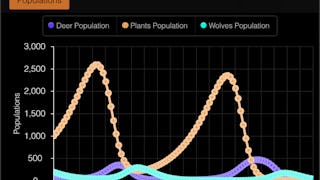
Biology courses can help you learn cellular processes, genetics, ecology, and evolutionary theory. You can build skills in laboratory techniques, data analysis, and critical thinking through hands-on experiments and field studies. Many courses introduce tools like microscopes, DNA sequencers, and statistical software, that support conducting research and analyzing biological data.

Skills you'll gain: Simulations, Simulation and Simulation Software, Systems Thinking, Data Sharing, Environmental Science, Mathematical Modeling, Interactive Data Visualization, Biology, Storytelling, Life Sciences
★ 4.7 (209) · Beginner · Guided Project · Less Than 2 Hours

Coursera
Skills you'll gain: Simulation and Simulation Software, Simulations, Microbiology, Network Model, Biology, Mathematical Modeling, Programming Principles, Computer Programming
★ 4.2 (59) · Intermediate · Guided Project · Less Than 2 Hours

Skills you'll gain: Bioinformatics, R (Software), R Programming, Molecular, Cellular, and Microbiology, Molecular Biology, Data Manipulation, Programming Principles, File I/O, Scripting Languages, Data Processing
Beginner · Guided Project · Less Than 2 Hours

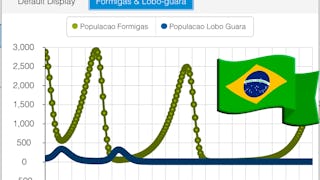
Skills you'll gain: Simulation and Simulation Software, Simulations, Data Sharing, Mathematical Modeling, Agentic systems, System Configuration, Systems Development, Biology, Life Sciences

★ 4.7 (12) · Beginner · Guided Project · Less Than 2 Hours
High-quality free Biology courses you can start today.
Biology is the study of living organisms, including how life functions, evolves, interacts, and adapts. It connects many areas of science, from genes and cells to anatomy, ecosystems, biodiversity, and disease processes. On Coursera, biology courses include broad introductions such as General Biology and Biology Everywhere, as well as focused options like Cancer Biology, Molecular and Cell Biology, and Introduction to Genetics and Evolution. Exploring these courses can help you build a foundation and decide which area of biology you want to study next.
Biology is used in jobs connected to health care, laboratory research, biotechnology, conservation, education, public health, and life science communication. People who study biology may apply concepts such as genetics, cell biology, anatomy, ecology, evolution, or cancer biology depending on their role and interests. Courses like Anatomy, Cancer Biology, and Introduction to Evolutionary Biology: Genes to Behaviour can help you understand how different biology topics connect to real-world work. Coursera’s biology selection can support learners exploring academic, professional, or personal learning goals.
Before learning biology, it helps to be comfortable with basic science vocabulary, reading graphs, and thinking carefully about evidence. Some biology topics also use chemistry, basic math, statistics, and scientific reasoning, especially in genetics, molecular biology, and ecology. You do not need an advanced background to begin with introductory options such as General Biology, Biology Everywhere, or Introduction to Biology: Ecology, Evolution, & Biodiversity. Starting with a broad course can help you build confidence before moving into more focused topics like cancer biology or molecular and cell biology.
Skills that complement biology include chemistry, data analysis, statistics, scientific writing, research methods, and critical thinking. Depending on your interests, anatomy can pair well with health-related study, ecology can pair well with environmental science, and genetics can pair well with biotechnology or data-focused learning. Courses such as Molecular and Cell Biology, Introduction to Genetics and Evolution, and Anatomy show how biology connects with other scientific fields. Building complementary skills can help you understand biological systems from multiple perspectives and choose a more focused learning path.
A good way to start learning biology is to begin with a broad introductory course and then choose a focused area that interests you. Courses such as Biology Everywhere, General Biology, and Introduction to Biology: Ecology, Evolution, & Biodiversity can introduce key ideas about life, organisms, ecosystems, and scientific thinking. From there, you might move into genetics, evolution, anatomy, cancer biology, or molecular and cell biology. Coursera’s course selection lets you start with foundational topics and gradually build toward more specialized biology knowledge.
Yes. You can start learning biology on Coursera for free in two ways:
If you want to keep learning, earn a certificate in biology, or unlock full course access after the preview or trial, you can upgrade or apply for financial aid.
The best beginner biology courses are usually broad, introductory options that explain core concepts before moving into specialized topics. On this page, courses such as General Biology, Biology Everywhere, and Introduction to Biology: Ecology, Evolution, & Biodiversity are good starting points for learners who want a wide foundation. Introduction to Genetics and Evolution may also suit beginners who are especially interested in heredity, adaptation, and evolutionary ideas. After building basics, you can continue with more focused courses such as Anatomy, Cancer Biology, or Molecular and Cell Biology.
Biology courses typically cover cells, genes, evolution, ecology, anatomy, biodiversity, organisms, and how living systems function. Some courses focus on broad foundations, while others concentrate on specific areas such as cancer biology, molecular and cell biology, genetics, or evolutionary behavior. The courses listed on this page include topics from ecology and biodiversity to anatomy, genes, cells, and disease processes. Comparing course titles and descriptions on Coursera can help you choose whether to begin with general biology or study a more specialized subject first.