CAD Courses
CAD courses can help you learn 2D and 3D modeling, technical drawing, and design visualization. You can build skills in creating detailed schematics, understanding material properties, and applying design principles to various projects. Many courses introduce tools like AutoCAD, SolidWorks, and SketchUp, that support drafting and prototyping in fields such as architecture, engineering, and product design. By mastering these tools, you can effectively communicate your ideas and bring your designs to life.
Popular CAD Courses and Certifications
Skills you'll gain: Architectural Drawing, AutoCAD, Drafting and Engineering Design, Technical Drawing, Engineering Drawings, Technical Communication, Building Design, Architecture and Construction, Computer-Aided Design, Plot (Graphics), Blueprinting, Technical Documentation, Engineering Plans And Specifications, Engineering Documentation
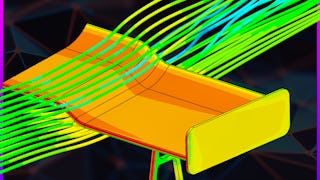
Skills you'll gain: Simulation and Simulation Software, Engineering Analysis, Finite Element Methods, Simulations, Engineering, Computer-Aided Design, Cloud Technologies, Engineering Design Process, Cloud Computing
Skills you'll gain: 3D Modeling, SketchUp (3D Modeling Software), Computer Graphics, Visualization (Computer Graphics), Design Software, Product Design, Graphic Design
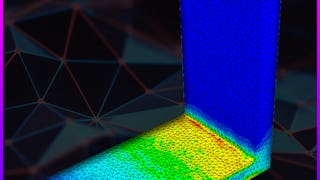
Skills you'll gain: Finite Element Methods, Simulation and Simulation Software, Engineering Analysis, Simulations, Engineering, Verification And Validation
Skills you'll gain: Computer-Aided Design, AutoCAD, Design Software, Drafting and Engineering Design, Product Design, Product Development, Technical Drawing, Design

What brings you to Coursera today?
Skills you'll gain: Finite Element Methods, Engineering Analysis, Simulation and Simulation Software, Simulations, Mechanical Design, Mathematical Modeling, Structural Engineering, Structural Analysis, 3D Modeling
Skills you'll gain: Canva (Software), Graphics Software, Graphic Design, Graphical Tools, Graphic and Visual Design Software, Graphic and Visual Design, 3D Modeling, Web Presence

Coursera
Skills you'll gain: Animations, Adobe Express, Content Creation, Design Elements And Principles, Adobe Creative Cloud, Creative Design, Graphic and Visual Design, Graphic Design, Design, Digital Design, Design Software, Typography
Coursera
Skills you'll gain: Data Visualization, Interactive Data Visualization, Visualization (Computer Graphics), JSON, Plot (Graphics), Data Mapping, Javascript
Skills you'll gain: Simulation and Simulation Software, Simulations, Engineering Analysis, Computer-Aided Design, Pump Stations, Virtual Environment, Hydraulics, Cloud Computing

Coursera
Skills you'll gain: Simulation and Simulation Software, Computer-Aided Design, Simulations, General Networking, User Interface (UI), Engineering Analysis
Skills you'll gain: Graphic and Visual Design, Graphic Design, Graphic and Visual Design Software, Design, Adobe Photoshop, Creative Design, Typography, 3D Modeling, 3D Assets, Graphical Tools, Color Theory, Visualization (Computer Graphics), Computer Graphics, Computer Graphic Techniques, Adobe Creative Cloud
What brings you to Coursera today?
Best free Cad courses
High-quality free Cad courses you can start today.
- Computational Fluid Mechanics - Airflow Around a SpoilerCourseraBeginnerLess Than 2 HoursFree
- SketchUp: how to start modelling simple 3D objectsCourseraBeginnerLess Than 2 HoursFree
- Finite Element Analysis Convergence and Mesh IndependenceCourseraBeginnerLess Than 2 HoursFree
Best Cad courses from Coursera
Top-rated Cad courses offered by Coursera on Coursera.
- AutoCAD for beginners: Drafting blueprints and schematicsCourseraBeginnerLess Than 2 HoursCoursera
- Product Development using AutoCADCourseraBeginnerLess Than 2 HoursCoursera
- FEM - Linear, Nonlinear Analysis & Post-ProcessingCourseraIntermediateLess Than 2 HoursCoursera
Best Cad courses for beginners
Top-rated beginner-friendly Cad courses with no prerequisites.
- Graphic design: pop your Linkedin with 3D effect using CanvaCourseraBeginnerLess Than 2 HoursNo prerequisites
- Getting Started with Adobe SparkCourseraBeginnerLess Than 2 HoursNo prerequisites
- Strömungsimulation einer KreiselpumpeCourseraBeginnerLess Than 2 HoursNo prerequisites
Best short Cad courses
Quick Cad courses you can complete in a few hours or less.
- Introduction to D3.jsCourseraIntermediateLess Than 2 HoursQuick completion
- CFD Simulation um einen SpoilerCourseraBeginnerLess Than 2 HoursQuick completion
- 3D Models with Adobe Photoshop: Design a Pickleball PaddleCourseraIntermediateLess Than 2 HoursQuick completion










