Engineering Courses
Engineering courses can help you learn design principles, project management, systems analysis, and problem-solving techniques. You can build skills in technical drawing, materials selection, and prototyping, along with understanding regulatory standards and sustainability practices. Many courses introduce tools such as CAD software for design, simulation programs for testing, and project management platforms to streamline workflows.
Popular Engineering Courses and Certifications
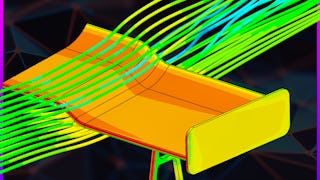
Skills you'll gain: Simulation and Simulation Software, Engineering Analysis, Finite Element Methods, Simulations, Engineering, Computer-Aided Design, Cloud Technologies, Engineering Design Process, Cloud Computing
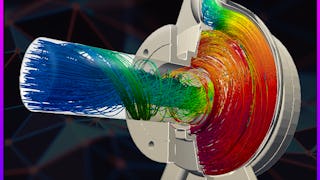
Skills you'll gain: Simulation and Simulation Software, Simulations, Engineering Design Process, Finite Element Methods, Engineering Analysis, Cloud Engineering, Hydraulics, Verification And Validation
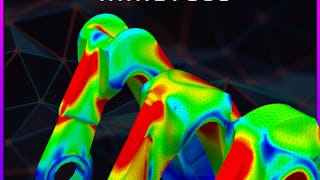
Skills you'll gain: Finite Element Methods, Engineering Analysis, Simulation and Simulation Software, Simulations, Mechanical Design, Mathematical Modeling, Structural Engineering, Structural Analysis, 3D Modeling
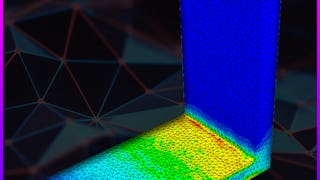
Skills you'll gain: Finite Element Methods, Simulation and Simulation Software, Engineering Analysis, Simulations, Engineering, Verification And Validation
Skills you'll gain: No-Code Development, Mobile Development, Google Sheets, Application Development, Mobile Development Tools, Google Workspace, Application Design, Application Deployment, Development Testing, Spreadsheet Software, Data Structures, User Interface (UI), User Accounts, Persona (User Experience), Authentications, User Feedback, Web Development, Marketing

What brings you to Coursera today?
Skills you'll gain: Computer-Aided Design, AutoCAD, Design Software, Drafting and Engineering Design, Product Design, Product Development, Technical Drawing, Design
Skills you'll gain: Simulations, Simulation and Simulation Software, Systems Thinking, Data Sharing, Environmental Science, Mathematical Modeling, Interactive Data Visualization, Biology, Storytelling, Life Sciences
Skills you'll gain: Prompt Engineering, OpenAI API, Education Software and Technology, Generative AI, AI Integrations, OpenAI, Scripting, Scripting Languages, Python Programming, Application Programming Interface (API), Application Development, Machine Learning, Software Engineering

Skills you'll gain: Gap Analysis, Change Management, Organizational Change, Strategic Planning, Business Process Reengineering, Project Management, Personal Development, Business Process, Process Mapping, Organizational Strategy, Business Strategies, Business Strategy
Skills you'll gain: Competitive Analysis, Business Strategy, Market Dynamics, Market Analysis, Market Opportunities, Market Intelligence, Strategic Thinking, Entrepreneurship, Market Research, New Business Development, Business Analysis Tools, Innovation
Skills you'll gain: Market Opportunities, Product Strategy, Competitive Analysis, Business Strategy, Product Planning, New Business Development, Business Solutions, Market Analysis, Business Analysis, Product Development, Business Planning, Entrepreneurship, Growth Strategies, Innovation

SkillsBooster Academy
Skills you'll gain: Prompt Engineering, Prompt Engineering Tools, Videography, Multimodal Prompts, Video Production, Prompt Patterns, AI powered creativity, Visual Storytelling, Photo/Video Production and Technology, Generative AI, Artificial Intelligence, Google Gemini, Cinematography, Gemini, Artificial Intelligence and Machine Learning (AI/ML), Content Creation, Google Workspace
What brings you to Coursera today?
Best free Engineering courses
High-quality free Engineering courses you can start today.
- Computational Fluid Mechanics - Airflow Around a SpoilerCourseraBeginnerLess Than 2 HoursFree
- CFD Simulation Through a Centrifugal PumpCourseraBeginnerLess Than 2 HoursFree
- FEM - Linear, Nonlinear Analysis & Post-ProcessingCourseraIntermediateLess Than 2 HoursFree
Best Engineering courses from Coursera
Top-rated Engineering courses offered by Coursera on Coursera.
- Finite Element Analysis Convergence and Mesh IndependenceCourseraBeginnerLess Than 2 HoursCoursera
- Build a mobile app with Google Sheets on Glide and no codingCourseraBeginnerLess Than 2 HoursCoursera
- Product Development using AutoCADCourseraBeginnerLess Than 2 HoursCoursera
Best Engineering courses for beginners
Top-rated beginner-friendly Engineering courses with no prerequisites.
- Building an Ecosystem model with Insight MakerCourseraBeginnerLess Than 2 HoursNo prerequisites
- Analyzing Market Attractiveness Using CreatelyCourseraBeginnerLess Than 2 HoursNo prerequisites
- Create Your First AI VideoSkillsBooster AcademyBeginnerLess Than 2 HoursNo prerequisites
Best short Engineering courses
Quick Engineering courses you can complete in a few hours or less.
- Prompt Engineering with GPT: Programming for Custom ContentCourseraIntermediateLess Than 2 HoursQuick completion
- Change Leadership: Developing Strategic Gap Analysis in MiroCourseraIntermediateLess Than 2 HoursQuick completion
- Analyzing Product Opportunities with CreatelyCourseraIntermediateLess Than 2 HoursQuick completion










