Data Collection Courses
Data collection courses can help you learn survey design, sampling techniques, data cleaning, and statistical analysis. You can build skills in qualitative and quantitative research methods, data visualization, and ethical considerations in data handling. Many courses introduce tools like Excel for data manipulation, R for statistical analysis, and software like Qualtrics for survey creation, showing how these skills are applied in real-world research settings.
Popular Data Collection Courses and Certifications
University of Michigan
Skills you'll gain: Sampling (Statistics), Sample Size Determination, Surveys, Survey Creation, Data Synthesis, Research Methodologies, Statistical Analysis, Data Analysis Software, Data Collection, Statistical Software, Interviewing Skills, Research Design, STATA (Software), R (Software), Data Integration, Data Validation, Data Ethics, Data Analysis, Statistical Programming, R Programming

University of Michigan
Skills you'll gain: Surveys, Survey Creation, Interviewing Skills, Data Collection, Sampling (Statistics), Research Methodologies, Research Design, Data Quality, Social Media Analytics
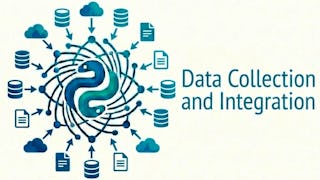
University of Colorado Boulder
Skills you'll gain: Web Scraping, Data Integration, Data Cleansing, Data Import/Export, Data Quality, Data Preprocessing, Data Processing, Data Collection, SQL, Databases, Query Languages, Extensible Markup Language (XML), Pandas (Python Package), Application Programming Interface (API)
University of Michigan
Skills you'll gain: JSON, Data Processing, Data Wrangling, Restful API, Data Manipulation, Data Access, Application Programming Interface (API), Python Programming, Data Import/Export, Data Transformation, Data Structures, File I/O, Data Collection

Skills you'll gain: Data Management, Data Presentation, Data Storytelling, Data Collection, Data Governance, Data Analysis, Information Privacy, Data Quality, Data Storage, Data Storage Technologies, Data Security, Exploratory Data Analysis, Data-Driven Decision-Making, Data Architecture, Data Visualization Software, Big Data, Applied Machine Learning, Machine Learning Methods, Machine Learning

What brings you to Coursera today?

Skills you'll gain: Microsoft Excel, Excel Formulas, Pivot Tables And Charts, Data Analysis, Data Manipulation, Microsoft Office, Data Mining

University of Maryland, College Park
Skills you'll gain: Surveys, Research Methodologies, Data Collection, Survey Creation, Research Design, Data Quality, Data Processing, Data Analysis, Analysis, Data Validation, Data Management
Coursera
Skills you'll gain: Exploratory Data Analysis, Data Analysis, Business Analytics, Descriptive Analytics, Descriptive Statistics, Analytics, Analytical Skills, Statistical Analysis, Statistical Visualization, Data Visualization, Correlation Analysis, Histogram, Box Plots, Statistical Methods, Plot (Graphics), Scatter Plots, Statistics, Data Presentation, Graphing
Skills you'll gain: Data Quality, Data Cleansing, Data Pipelines, Data Processing, Data Integrity, Data Integration, Data Validation, Data Transformation, Extract, Transform, Load, Data Preprocessing, Data Mapping, Problem Management, Exploratory Data Analysis, Analysis, Data Import/Export, Continuous Monitoring, Systems Analysis, Debugging, Dependency Analysis, Risk Modeling

University of Amsterdam
Skills you'll gain: Qualitative Research, Interviewing Skills, Social Sciences, Research, Science and Research, Research Methodologies, Scientific Methods, Data Collection, Research Design, Research Reports, Report Writing, Ethical Standards And Conduct

Skills you'll gain: Root Cause Analysis, Correlation Analysis, Regression Analysis, Statistical Methods, Statistics, Data Collection, Descriptive Statistics, Statistical Hypothesis Testing, Data Literacy, Probability & Statistics, Statistical Analysis, Process Analysis, Six Sigma Methodology, Lean Six Sigma, Quantitative Research, Business Process Improvement, Data Analysis, Process Improvement, Statistical Inference, Operational Efficiency

Skills you'll gain: Amazon Web Services, AWS Kinesis, Amazon DynamoDB, Amazon S3, AWS Identity and Access Management (IAM), Data Infrastructure, Dataflow, Data Storage Technologies, Data Storage, Big Data, Cloud Storage, Real Time Data, Internet Of Things, Data Processing, Cloud Computing, Operational Databases, Data Security, Data Collection, Scalability
What brings you to Coursera today?
In summary, here are 10 of our most popular data collection courses
- Survey Data Collection and Analytics: University of Michigan
- Data Collection: Online, Telephone and Face-to-face: University of Michigan
- Data Collection and Integration: University of Colorado Boulder
- Data Collection and Processing with Python: University of Michigan
- Introduction to Data Management: Meta
- Introduction to Data Analysis using Microsoft Excel: Coursera
- Framework for Data Collection and Analysis: University of Maryland, College Park
- Data Analysis and Exploration: Coursera
- Data Quality Monitoring and Prevention: Coursera
- Qualitative Research Methods: University of Amsterdam










