Nuclear Courses
Nuclear courses can help you learn radiation safety, reactor design, nuclear physics, and energy policy. You can build skills in risk assessment, regulatory compliance, and energy management. Many courses introduce tools like simulation software for reactor modeling, radiation detection equipment, and data analysis platforms that support decision-making in energy production and safety protocols.
Popular Nuclear Courses and Certifications

Universidad Nacional Autónoma de México
Skills you'll gain: Energy and Utilities, Equipment Design, Radiation Protection, Waste Minimization, Plant Operations and Management, Thermal Management, Materials science, Production Process, Manufacturing Processes, Process Engineering, Chemical Engineering, Engineering Design Process, Process Control, Facility Management, Engineering Calculations, Control Systems, Environmental Engineering, Cost Estimation, Chemistry, Natural Resource Management
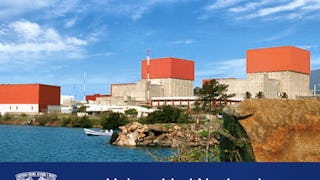
Universidad Nacional Autónoma de México
Skills you'll gain: Radiation Protection, Plant Operations and Management, Safety Standards, Safety Assurance, Engineering, Physics, Engineering Analysis, Energy and Utilities, Chemistry, Thermal Management, Materials science, Engineering Calculations, Physical Science
Skills you'll gain: Plant Operations and Management, Radiation Protection, Energy and Utilities, Electrical Power, Electric Power Systems, Mechanical Engineering, Safety Assurance, Thermal Management, Engineering, Safety Standards, Oil and Gas, Process Engineering, Control Systems, Equipment Design, Environmental Engineering
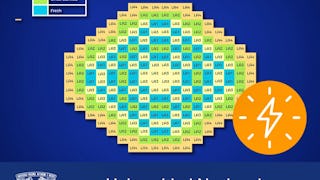
Universidad Nacional Autónoma de México
Skills you'll gain: Equipment Design, Energy and Utilities, Engineering Design Process, Process Control, Engineering Calculations, Control Systems, Cost Estimation, Mathematical Modeling, Simulation and Simulation Software
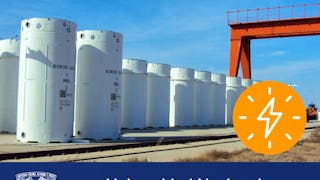
Universidad Nacional Autónoma de México
Skills you'll gain: Radiation Protection, Waste Minimization, Plant Operations and Management, Energy and Utilities, Thermal Management, Facility Management, Chemical Engineering, Materials science, Environmental Engineering, Engineering Calculations, Safety Standards, Chemistry
What brings you to Coursera today?
Universidad Nacional Autónoma de México
Skills you'll gain: Energy and Utilities, Materials science, Production Process, Manufacturing Processes, Process Engineering, Chemical Engineering, Engineering Calculations, Chemistry, Natural Resource Management
University of Colorado Boulder
Skills you'll gain: Energy and Utilities, Electric Power Systems, Electrical Power, Electrical Systems, Basic Electrical Systems, Electrical Equipment, Plant Operations and Management, Sustainable Technologies, Reliability, Capacity Planning, Market Opportunities, Market Dynamics, Capacity Management, Case Studies, Customer Demand Planning, Forecasting, Wholesaling, Demand Planning

Special Competitive Studies Project
Skills you'll gain: International Relations, Energy and Utilities, Economics, Policy, and Social Studies, Regulatory Affairs, Electrical Power, Economics, Public Safety and National Security, Emerging Technologies, General Finance, Competitive Analysis, Commercialization
Birla Institute of Technology & Science, Pilani
Skills you'll gain: Physics, Mechanics, Thermal Management, Engineering, Vibrations, Physical Science, Engineering Analysis, General Science and Research, electromagnetics, Experimentation, Mathematical Theory & Analysis, Problem Solving, Science and Research, Analytical Skills, Computer Science, Critical Thinking and Problem Solving, Logical Reasoning, Research, Software Development, Critical Thinking
Skills you'll gain: Electrical Power, Electric Power Systems, Electrical Systems, Control Systems, Electrical Substation, Energy and Utilities, Plant Operations and Management, Electrical Equipment, Three-Phase, Machine Controls, Power Electronics, Automation Engineering, High Voltage, Electrical Engineering, Process Control, Basic Electrical Systems, Thermal Management

Skills you'll gain: Oil and Gas, Petroleum Industry, Energy and Utilities, Climate Change Mitigation, International Relations, Environmental Issue, Electric Power Systems, Environment and Resource Management, Economic Development, Natural Resource Management, Environmental Policy, Economics, Political Sciences, Economics, Policy, and Social Studies, Social Studies, Sustainable Technologies, Market Dynamics, Sustainable Development


Duke University
Skills you'll gain: Scientific Methods, Chemistry, General Science and Research, Science and Research, Systems Of Measurement, Physical Science, Analytical Chemistry, Experimentation
Best free Nuclear courses
High-quality free Nuclear courses you can start today.
- Politics and Economics of International EnergySciences PoBeginner1 - 3 MonthsFree
- Introduction to Chemistry: Reactions and RatiosDuke UniversityBeginner1 - 3 MonthsFree
Best Nuclear courses from Universidad Nacional Autónoma de México
Top-rated Nuclear courses offered by Universidad Nacional Autónoma de México on Coursera.
- Nuclear fuel management: a practical approachUniversidad Nacional Autónoma de MéxicoIntermediate3 - 6 MonthsUniversidad Nacional Autónoma de México
- Ingeniería nuclear para principiantesUniversidad Nacional Autónoma de MéxicoBeginner1 - 4 WeeksUniversidad Nacional Autónoma de México
- In core nuclear fuel managementUniversidad Nacional Autónoma de MéxicoAdvanced1 - 3 MonthsUniversidad Nacional Autónoma de México
Best Nuclear courses for beginners
Top-rated beginner-friendly Nuclear courses with no prerequisites.
- Renewable Power and Electricity SystemsUniversity of Colorado BoulderBeginner1 - 3 MonthsNo prerequisites
- Fusion Explained: The Geopolitics and Future of EnergySpecial Competitive Studies ProjectBeginner1 - 4 WeeksNo prerequisites
- General PhysicsBirla Institute of Technology & Science, PilaniBeginner1 - 3 MonthsNo prerequisites










