Web Server Courses
Web server courses can help you learn how to configure servers, manage web traffic, implement security measures, and optimize performance. You can build skills in troubleshooting server issues, deploying applications, and understanding HTTP protocols. Many courses introduce tools like Apache, Nginx, and Microsoft IIS, showing how these platforms are used to host websites and applications effectively. You'll also explore concepts such as load balancing and caching to enhance user experience and server efficiency.
Popular Web Server Courses and Certifications
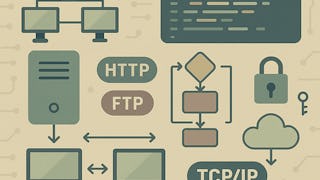
Birla Institute of Technology & Science, Pilani
Skills you'll gain: Web Servers, Distributed Computing, Network Troubleshooting, Server Side, Web Applications, Middleware, Servers, Network Monitoring, Network Architecture, System Programming, Network Protocols, Systems Architecture, Systems Design, TCP/IP, Computer Networking, Network Performance Management, System Design and Implementation, Microservices, Software Development, Application Programming Interface (API)

Skills you'll gain: Apache, PHP (Scripting Language), Web Development, Development Testing, Program Development, Web Servers, Full-Stack Web Development, Verification And Validation, Development Environment, Integration Testing, Web Design and Development, Server Side, Web Components, Code Reusability, Web Applications, Frontend Integration, Email Automation
Skills you'll gain: Nginx, API Gateway, Kubernetes, Linux Administration, Proxy Servers, Web Servers, Cloud-Native Computing, Performance Tuning, Network Routing, Load Balancing, Linux Commands, Infrastructure Security, Security Controls, Network Troubleshooting, Public Key Infrastructure, Network Security, Role-Based Access Control (RBAC), DevOps, System Configuration, Computer Networking

Skills you'll gain: Hypertext Markup Language (HTML), Cascading Style Sheets (CSS), PHP (Scripting Language), Responsive Web Design, HTML and CSS, Web Design and Development, Typography, Server Side, Secure Coding, Web Content Accessibility Guidelines, Web Design, Web Development, Code Reusability, Front-End Web Development, Back-End Web Development, Web Applications, Web Frameworks, Web Servers, Web Development Tools, Data Validation
Logical Operations
Skills you'll gain: Responsive Web Design, Cascading Style Sheets (CSS), Hypertext Markup Language (HTML), HTML and CSS, Web Development Tools, Web Development, Javascript, JavaScript Frameworks, Web Content, Frontend Performance, Web Servers, Software Development Tools, Web Design and Development, Web Design, Front-End Web Development, Web Applications, Apache, Development Environment, Semantic Web, Software Development

What brings you to Coursera today?

Skills you'll gain: Email Security, File Management, Control Panels, Web Analytics and SEO, MySQL, Apache, User Provisioning, Cloud Hosting, Public Key Infrastructure, User Accounts, Security Controls, Data Security, Key Management, Encryption, Database Management, Web Servers, Email Automation, System Configuration, Server Administration, Databases
Packt
Skills you'll gain: Nginx, Web Servers, Apache, Ansible, Server Administration, Proxy Servers, Linux Servers, Application Servers, Docker (Software), System Configuration, PHP (Scripting Language), Containerization, Cloud Infrastructure, Software Installation, Configuration Management, Performance Tuning, Scalability

Skills you'll gain: Nginx, Load Balancing, Performance Tuning, Scalability, Web Servers, Proxy Servers, Web Applications, Security Controls, Authentications, Back-End Web Development, Server Administration, Application Servers, Servers, Linux Administration, Software Installation

Skills you'll gain: Node.JS, Restful API, Server Side, Back-End Web Development, Full-Stack Web Development, JavaScript Frameworks, JSON, Web Servers, Authentications, Web Applications, API Design, Web Development, Postman API Platform, Package and Software Management, Model View Controller, Application Programming Interface (API), Web Services, Authorization (Computing), Javascript, Computer Science

Skills you'll gain: PHP (Scripting Language), Server Side, Secure Coding, Web Development, Code Reusability, Back-End Web Development, Web Applications, Data Structures, Scripting Languages, Web Servers, Scripting, Application Security, Programming Principles, Web Content, Web Development Tools, Data Validation, Debugging, Data Cleansing, Development Environment

University of Michigan
Skills you'll gain: HTML and CSS, PHP (Scripting Language), Hypertext Markup Language (HTML), MySQL, Web Applications, Web Development, Secure Coding, Cascading Style Sheets (CSS), Development Environment, Back-End Web Development, Database Development, Web Servers, Scripting Languages, Programming Principles, Network Protocols, Software Installation, Data Validation

Skills you'll gain: Rust (Programming Language), Authentications, Back-End Web Development, Web Servers, Databases, Server Side, Web Applications, Restful API, Application Programming Interface (API), System Programming, Data Sharing, Data Structures, Memory Management
What brings you to Coursera today?
Best Web Server courses from EDUCBA
Top-rated Web Server courses offered by EDUCBA on Coursera.
- Build & Deploy PHP Tutorial Sites with Apache Web ServerEDUCBABeginner1 - 4 WeeksEDUCBA
- cPanel Web Hosting Management MasteryEDUCBABeginner1 - 3 MonthsEDUCBA
- Implement NGINX Web Servers and Reverse Proxy SolutionsEDUCBABeginner1 - 4 WeeksEDUCBA
Best Web Server certificate programs
Earn a certificate in Web Server from top universities and companies.
- NGINX Essentials: Web Server to Cloud-NativeKodeKloudBeginner3 - 6 MonthsSpecialization
- Web Development with HTML, CSS, and PHPEdurekaBeginner1 - 3 MonthsSpecialization
- Web Development with HTML5, CSS, and JavaScriptLogical OperationsBeginner3 - 6 MonthsSpecialization
Best Web Server courses for beginners
Top-rated beginner-friendly Web Server courses with no prerequisites.
- Network Programming and Client-Server ProgrammingBirla Institute of Technology & Science, PilaniBeginner1 - 3 MonthsNo prerequisites
- NGINX HTTP ServerPacktBeginner1 - 3 MonthsNo prerequisites
- Building Dynamic Websites with PHPEdurekaBeginner1 - 4 WeeksNo prerequisites










