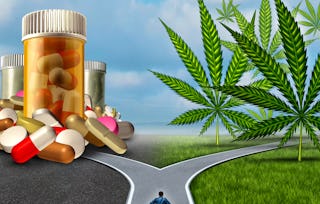
While prescription opioids serve an invaluable role for the treatment of cancer pain and pain at the end of life, their overuse for acute and chronic non-cancer pain as well as the increasing availability of heroin and illicit fentanyl, have contributed to the highest rates of overdose and opioid addiction in U.S. history. Evidence-informed solutions are urgently needed to address these issues and to promote high-quality care for those with pain. This course and the report it is based on are a response to that need. They offer timely information and a path forward for all who are committed to addressing injuries and deaths associated with opioids in the United States.
This module reviews the data available about opioid use disorders in the United States. Information about general trends in opioid overdose, and some limitations of current data systems are discussed. This module draws from section 6 of the "The Opioid Epidemic" report (2017).
What's included
7 videos1 reading1 assignment
Show info about module content
7 videos•Total 57 minutes
Introduction to America's Opioid Epidemic: From Evidence to Impact•9 minutes
Improving Surveillance•2 minutes
Why Data? To Assess Trends•15 minutes
Why Data? To Understand Causes•9 minutes
Why Data? To Develop and Evaluate Solutions•12 minutes
Why Data? To Stay at the Cutting Edge of Challenge•5 minutes
Data Recommendations•6 minutes
1 reading•Total 30 minutes
America’s Opioid Epidemic Report•30 minutes
1 assignment•Total 5 minutes
Data Quiz•5 minutes
Prescription Drug Monitoring Programs (PDMPs)
Module 2•1 hour to complete
Module details
This module provides an overview of Prescription Drug Monitoring Programs (PDMPs). Explanations of how PDMPs are used to reduce the supply of prescription opioids likely to be misused are discussed. A review of the research about PDMPs is also included. This module draws from section one of the "The Opioid Epidemic" report (2017).
What's included
1 video1 assignment
Show info about module content
1 video•Total 26 minutes
Prescription Drug Monitoring Programs (PDMPs)•26 minutes
1 assignment•Total 5 minutes
Prescription Drug Monitoring Programs (PDMPs) Quiz•5 minutes
Clinical Guidelines
Module 3•1 hour to complete
Module details
This module reviews prescribing guidelines as an intervention for reducing high risk opioid prescribing. A conversation between the course instructors and representatives from CDC’s National Center for Injury Prevention and Control about CDC’s Guideline for Prescribing Opioids for Chronic Pain provides insight into the process of developing and disseminating one guideline. This module aligns with section two of of the "The Opioid Epidemic" report (2017).
What's included
3 videos1 assignment
Show info about module content
3 videos•Total 35 minutes
Introduction to Standardizing Clinical Guidelines•4 minutes
Standardizing Clinical Guidelines•25 minutes
Clinical Guidelines Recommendations•5 minutes
1 assignment•Total 5 minutes
Clinical Guidelines Quiz•5 minutes
Pharmacy Benefit Managers
Module 4•12 minutes to complete
Module details
This module provides an overview of the role of pharmacy benefit managers and pharmacies in the supply of prescription opioids. Opportunities to monitor high risk prescribing through PBMs and pharmacies are also discussed. This module draws from section three of the "The Opioid Epidemic" report (2017).
What's included
1 video1 assignment
Show info about module content
1 video•Total 7 minutes
Engaging Pharmacy Benefit Managers and Pharmacies•7 minutes
1 assignment•Total 5 minutes
Pharmacy Benefit Managers•5 minutes
Engineering Strategies
Module 5•27 minutes to complete
Module details
This module introduces the idea that redesigning opioid medications and the pill vials they are prescribed in is one strategy to reduce unintentional opioid poisonings and diversion. The module features a discussion of a prototype design for a pill vial engineered to dispense a specified amount of medication at programmed intervals to authorized users. This module aligns with section four of the "The Opioid Epidemic" report (2017).
Case Study of Innovative Engineering Application: Designing a Tamper-Resistant New Pill Dispenser•13 minutes
Engineering Strategies Recommendations•7 minutes
1 assignment•Total 5 minutes
Engineering Strategies•5 minutes
Engaging Patients and the General Public
Module 6•14 minutes to complete
Module details
This module reviews strategies for communicating with patients and the public about opioid use disorders. Safe storage and disposal strategies are also discussed. This module draws from section five of the "The Opioid Epidemic" report (2017).
What's included
1 video1 assignment
Show info about module content
1 video•Total 9 minutes
Engaging Patients and the General Public•9 minutes
1 assignment•Total 5 minutes
Engaging Patients and the Public Quiz•5 minutes
Treating Opioid Use Disorders
Module 7•1 hour to complete
Module details
This module discusses addiction as a disease and medication as treatment. Consideration of known risk factors for disease are also reviewed. This module aligns with section seven of the "The Opioid Epidemic" report (2017).
What's included
8 videos1 assignment
Show info about module content
8 videos•Total 80 minutes
Introduction to Treating Opioid Use Disorders•1 minute
Opioid Addiction and Its Treatment: A Primer for Public Health Professionals, Background (Olsen)•11 minutes
How Does Opioid Addiction Develop?•14 minutes
Why Are Methadone or Buprenorphine Different? What about Naltrexone?•16 minutes
Frequently Asked Questions•6 minutes
Treating Opioid Use Disorders•1 minute
Interview with Dr. Nicole Alexander-Scott•24 minutes
Treating Opioid Use Disorders Recommendations•6 minutes
1 assignment•Total 5 minutes
Treatment Quiz•5 minutes
Naloxone
Module 8•1 hour to complete
Module details
This module describes naloxone, a medication that effectively reverses an opioid overdose, and how access to naloxone has increased. The role of government agencies in disseminating naloxone prescriptions is also highlighted. This module draws from section eight of the "The Opioid Epidemic" report (2017).
What's included
4 videos1 assignment2 plugins
Show info about module content
4 videos•Total 9 minutes
Improving Naloxone Access and Use, Part I•4 minutes
First Responders and Naxolone•2 minutes
Improving Naloxone Access and Use, Part II•1 minute
Naxolone Recommendations•2 minutes
1 assignment•Total 5 minutes
Naloxone Quiz•5 minutes
2 plugins•Total 30 minutes
NIDA’s Dr. Phil Skolnick discusses intranasal naloxone•15 minutes
How to Get Naloxone•15 minutes
Harm Reduction
Module 9•1 hour to complete
Module details
This module provides an overview of harm reduction in the context of opioid use disorders. Examples of harm reduction strategies are provided, and the available evidence discussed. This module aligns with section nine of the "The Opioid Epidemic" report (2017).
What's included
7 videos1 assignment
Show info about module content
7 videos•Total 62 minutes
Introduction to Expanding Harm Reduction Strategies•2 minutes
What Is Harm Reduction?•19 minutes
Safe Consumption: Setting the Stage•9 minutes
Safe Consumption Space (SCS)•16 minutes
Safe Consumption Spaces (SCS) in the US Context•6 minutes
Safe Consumption Spaces (SCS) in Charm City•8 minutes
Harm Reduction Recommendations•1 minute
1 assignment•Total 5 minutes
Harm Reduction Quiz•5 minutes
Stigma
Module 10•28 minutes to complete
Module details
This module discusses the stigma surrounding drug use and treatment. Strategies for combatting stigma by providing alternatives to stigmatizing language are discussed. This module draws from section 10 of the "The Opioid Epidemic" report (2017).
What's included
4 videos1 assignment
Show info about module content
4 videos•Total 23 minutes
Introduction to Combatting Stigma•1 minute
Stigma on Opioid Use Disorders and Its Treatment•15 minutes
Combatting Stigma with Dr. Beth McGinty and Chief Tom Synan•5 minutes
Stigma Recommendations•2 minutes
1 assignment•Total 5 minutes
Stigma Quiz•5 minutes
Instructor
Instructor ratings
Instructor ratings
We asked all learners to give feedback on our instructors based on the quality of their teaching style.
The mission of The Johns Hopkins University is to educate its students and cultivate their capacity for life-long learning, to foster independent and original research, and to bring the benefits of discovery to the world.
"To be able to take courses at my own pace and rhythm has been an amazing experience. I can learn whenever it fits my schedule and mood."
Jennifer J.
Learner since 2020
"I directly applied the concepts and skills I learned from my courses to an exciting new project at work."
Larry W.
Learner since 2021
"When I need courses on topics that my university doesn't offer, Coursera is one of the best places to go."
Chaitanya A.
"Learning isn't just about being better at your job: it's so much more than that. Coursera allows me to learn without limits."
Learner reviews
4.7
51 reviews
5 stars
80.39%
4 stars
11.76%
3 stars
5.88%
2 stars
0%
1 star
1.96%
Showing 3 of 51
I
IA
5·
Reviewed on May 22, 2020
Amazing course! I have learned so much from the wide array of lecturers and I am now planning on specialising on this subject through my MPH next year
K
KR
5·
Reviewed on Mar 13, 2023
A wealth of information. I enjoyed this course and would be very interested in taking similar courses.
A
AA
5·
Reviewed on Aug 23, 2022
This course was very helpful in understanding the extent of the problem and the kind of solutions that can be there. It will help me to look at the issue in a different light.
When will I have access to the lectures and assignments?
To access the course materials, assignments and to earn a Certificate, you will need to purchase the Certificate experience when you enroll in a course. You can try a Free Trial instead, or apply for Financial Aid. The course may offer 'Full Course, No Certificate' instead. This option lets you see all course materials, submit required assessments, and get a final grade. This also means that you will not be able to purchase a Certificate experience.
What will I get if I purchase the Certificate?
When you purchase a Certificate you get access to all course materials, including graded assignments. Upon completing the course, your electronic Certificate will be added to your Accomplishments page - from there, you can print your Certificate or add it to your LinkedIn profile.
Is financial aid available?
Yes. In select learning programs, you can apply for financial aid or a scholarship if you can’t afford the enrollment fee. If fin aid or scholarship is available for your learning program selection, you’ll find a link to apply on the description page.