Chemical Engineering Courses
Chemical engineering courses can help you learn process design, thermodynamics, fluid mechanics, and reaction engineering. You can build skills in optimizing production processes, conducting safety analyses, and managing chemical processes efficiently. Many courses introduce tools like Aspen Plus for process simulation, MATLAB for data analysis, and various laboratory techniques for experimentation, showing how these skills are applied in practical work to improve efficiency and sustainability in chemical production.
Popular Chemical Engineering Courses and Certifications
 Status: Preview
Korea Advanced Institute of Science and Technology(KAIST)
Skills you'll gain: Energy and Utilities, Chemical Engineering, Chemistry, Chemical and Biomedical Engineering, Engineering, Process Engineering, Environmental Issue, Sustainable Engineering, Biological Engineering, Engineering Analysis, Physics, Physical Science, Process Analysis, Mathematical Modeling
 Status: Free Trial
University of California, Davis
Skills you'll gain: Chemical Engineering, Hazard Analysis, Process Engineering, Occupational Hygiene, Hazard Communication (HazCom), Fire And Life Safety, Chemical and Biomedical Engineering, Safety Assurance, Occupational Health, Health And Safety Standards, Risk Management, Safety Standards, Environment Health And Safety, Failure Analysis, Risk Analysis, Accident Prevention, Safety Training, Job Safety Analysis, Electrical Safety, Risk Mitigation
 Status: Free Trial
University of California, Davis
Skills you'll gain: Chemical Engineering, Hazard Analysis, Process Engineering, Safety Assurance, Risk Management, Safety Standards, Failure Analysis, Accident Prevention, Risk Analysis, Job Safety Analysis, Risk Control, Reliability, Process Analysis
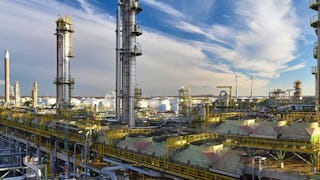 Status: Free Trial
L&T EduTech
Skills you'll gain: Engineering Drawings, Construction Engineering, Mechanical Drawings, Structural Analysis, Design Specifications, Hydraulics, Mechanical Design, Petroleum Industry, Building Codes, Technical Drawing, Process Flow Diagrams, Civil Engineering, Oil and Gas, Construction Inspection, Construction, Engineering Analysis, Engineering Calculations, Mechanical Engineering, Chemical Engineering, Process Engineering
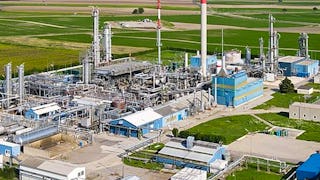 Status: Free Trial
L&T EduTech
Skills you'll gain: Oil and Gas, Petroleum Industry, Energy and Utilities, Process Engineering, Chemical Engineering, Production Process, Pump Stations, Safety Standards, Hydraulics, Equipment Design, Thermal Management, Facility Repair And Maintenance
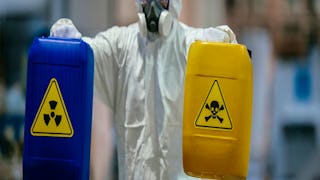 Status: Free Trial
University of California, Davis
Skills you'll gain: Chemical Engineering, Process Engineering, Occupational Hygiene, Hazard Communication (HazCom), Hazard Analysis, Occupational Health, Health And Safety Standards, Environment Health And Safety, Safety Assurance, Chemistry, Safety Standards, Accident Prevention, Equipment Design, Risk Management
What brings you to Coursera today?
 Status: Free Trial
L&T EduTech
Skills you'll gain: Oil and Gas, Petroleum Industry, Environmental Engineering, Environmental Issue, Chemical Engineering, Automation Engineering, Engineering Analysis, Geostatistics, Water Resources, Production Process, Process Engineering, Control Systems, Hydraulics, Geospatial Mapping, Process Analysis, Microbiology
 Status: Preview
Korea Advanced Institute of Science and Technology(KAIST)
Skills you'll gain: Chemical Engineering, Energy and Utilities, Chemical and Biomedical Engineering, Chemistry, Engineering, Process Engineering, Environmental Engineering, Biological Engineering, Sustainable Engineering, Engineering Calculations, Engineering Analysis, Mathematical Modeling
 Status: Preview
University of Manchester
Skills you'll gain: Biotechnology, Biological Engineering, Sustainable Technologies, Process Engineering, Molecular Biology, Chemical Engineering, Sustainable Engineering, Life Sciences, Biochemistry, Pharmaceuticals, Manufacturing and Production, Materials science, Drug Development, Scalability
 Status: Free Trial
Arizona State University
Skills you'll gain: Materials science, Chemical Engineering, Chemistry, Engineering, Physical Science
 Status: Free Trial
Skills you'll gain: Oil and Gas, Hazard Analysis, Safety Standards, Environmental Resource Management, Energy and Utilities, Safety Assurance, Safety Training, Environmental Regulations, Environment and Resource Management, Petroleum Industry, Environment Health And Safety, Environmental Science, Environmental Engineering, Environmental Engineering and Restoration, Plant Operations and Management, Waste Minimization, Fire And Life Safety, Chemical Engineering, Risk Analysis, Natural Resource Management
 Status: Free Trial
University of Colorado Boulder
Skills you'll gain: Chemical Engineering, Chemistry, Thermal Management, Mechanics, Mechanical Engineering, Engineering Calculations, Mathematical Software, Process Engineering, Analytical Chemistry, Numerical Analysis, Vibrations, Differential Equations, Engineering, Physics, Applied Mathematics, Integral Calculus, Probability Distribution, Mathematical Modeling, Materials science, Physical Science
In summary, here are 10 of our most popular chemical engineering courses
- Chemical Engineering Thermodynamics 1: Korea Advanced Institute of Science and Technology(KAIST)
- Chemical Hazards and Process Safety: University of California, Davis
- Introduction to Process Safety and Risk Analysis: University of California, Davis
- Design of Industrial Piping Systems: L&T EduTech
- Natural Gas Production and Processing: L&T EduTech
- Chemical Hazards: Toxicology & Reactivity: University of California, Davis
- Hydrocarbon Exploration and Production: L&T EduTech
- Chemical Engineering Thermodynamics 2: Korea Advanced Institute of Science and Technology(KAIST)
- Industrial Biotechnology: University of Manchester
- Introduction to Materials Science: Arizona State University










