Discrete Optimization Courses
Discrete optimization courses can help you learn linear programming, integer programming, and combinatorial optimization techniques. You can build skills in problem formulation, algorithm design, and solution analysis. Many courses introduce tools such as MATLAB, Python libraries like PuLP and SciPy, and optimization software like CPLEX, showing how these skills are applied to logistics, resource allocation, and scheduling challenges.
Popular Discrete Optimization Courses and Certifications

The Chinese University of Hong Kong
Skills you'll gain: Operations Research, Model Optimization, Applied Mathematics, Mathematical Modeling, Problem Solving, Process Modeling, Mathematical Software, Combinatorics, Graph Theory, Computational Logic, Computational Thinking, Data Structures

The Chinese University of Hong Kong
Skills you'll gain: Operations Research, Model Optimization, Computational Logic, Combinatorics, Algorithms, Applied Mathematics, Mathematical Modeling, Mathematical Software, Computational Thinking, Decision Support Systems, Data Transformation, Theoretical Computer Science, Performance Tuning, Linear Algebra
National Taiwan University
Skills you'll gain: Operations Research, Mathematical Modeling, Report Writing, Network Model, Applied Mathematics, Business Modeling, Industrial Engineering, Research Reports, Model Optimization, Linear Algebra, Numerical Analysis, Operational Analysis, Statistical Machine Learning, Inventory Control, Case Studies, Process Optimization, Algorithms, Project Design, Machine Learning, Business Analytics

The Chinese University of Hong Kong
Skills you'll gain: Model Optimization, Debugging, Mathematical Modeling, Operations Research, Computational Logic, Code Reusability, Algorithms, Geometry
Birla Institute of Technology & Science, Pilani
Skills you'll gain: Data Analysis, Computational Logic, Integral Calculus, Trigonometry, Linear Algebra, Engineering Analysis, Logical Reasoning, Deductive Reasoning, Probability & Statistics, Statistical Analysis, Calculus, Statistical Methods, Analysis, Advanced Mathematics, Bayesian Statistics, Statistical Inference, Theoretical Computer Science, Mathematics and Mathematical Modeling, Numerical Analysis, Descriptive Analytics

What brings you to Coursera today?

Northeastern University
Skills you'll gain: Operations Research, Applied Mathematics, Mathematical Software, Operational Analysis, Linear Algebra, Numerical Analysis, Mathematical Modeling, Algorithms, Model Optimization, Algebra

University of Colorado Boulder
Skills you'll gain: Artificial Intelligence, Generative AI, Decision Intelligence, Machine Learning Algorithms, Mathematical Theory & Analysis
National Taiwan University
Skills you'll gain: Operations Research, Linear Algebra, Numerical Analysis, Applied Mathematics, Model Optimization, Algorithms, Program Implementation, Mathematical Software, Mathematical Modeling, Industrial Engineering, Calculus, Business Analytics
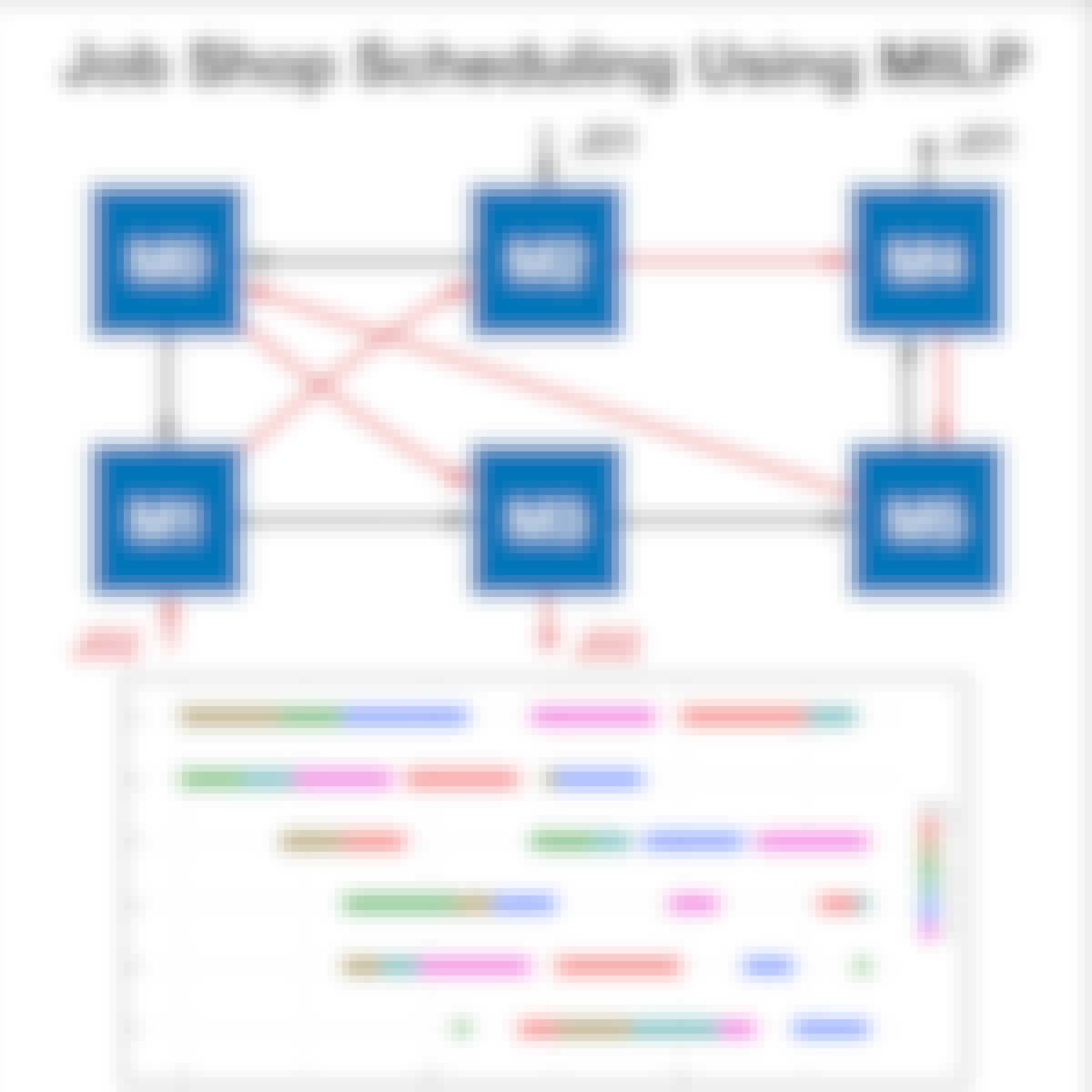
Skills you'll gain: R Programming, Model Optimization, R (Software), Analysis, Mathematical Software, Data Analysis

University of Glasgow
Skills you'll gain: LLM Application, Model Optimization, AI Enablement, Artificial Intelligence and Machine Learning (AI/ML), AI Workflows, Operations Research, Combinatorics, Mathematical Modeling, System Configuration, Algorithms, Performance Tuning, Performance Analysis, Data Visualization

Skills you'll gain: Data Analysis Expressions (DAX), Power BI, Data Visualization, Interactive Data Visualization, Debugging, AI Workflows, Model Optimization, Business Logic, Performance Tuning, Text Mining, AI Integrations, Complex Problem Solving, Context Management, Data Modeling, Dependency Analysis, Data Analysis, Analytical Skills, Business Analysis, Business Metrics, Business Operations

Skills you'll gain: Web Analytics and SEO, Search Engine Optimization, Generative Engine Optimization (GEO), Content Marketing, Web Analytics, Blogs, Content Optimization, Search Engine Marketing, Content Creation, MarTech, Marketing Strategy and Techniques, Content Performance Analysis, Content Development and Management, Digital Marketing Tools, Digital Marketing, Growth Strategies, Content Strategy, Market Research, Customer Engagement
What brings you to Coursera today?
In summary, here are 10 of our most popular discrete optimization courses
- Basic Modeling for Discrete Optimization: The Chinese University of Hong Kong
- Solving Algorithms for Discrete Optimization: The Chinese University of Hong Kong
- Operations Research: National Taiwan University
- Advanced Modeling for Discrete Optimization: The Chinese University of Hong Kong
- Mathematics for Engineering: Birla Institute of Technology & Science, Pilani
- Industrial Optimization: Models & Linear Programming: Northeastern University
- Discrete-Time Markov Chains and Monte Carlo Methods: University of Colorado Boulder
- Operations Research (2): Optimization Algorithms: National Taiwan University
- Job Shop Scheduling Using MILP Optimization on RStudio: Coursera
- Advanced Intelligent Optimization and its Applications: University of Glasgow










