• For Individuals
  • For Businesses
  • For Universities
  • For Governments
Log In
Join for Free
  • Browse
  • Physics And Astronomy

Results for "physics and astronomy"

  • Status: Preview
    Preview
    U

    UNSW Sydney (The University of New South Wales)

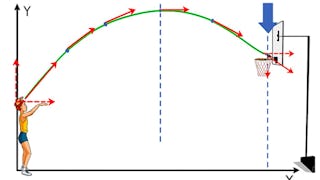
    Mechanics: Motion, Forces, Energy and Gravity, from Particles to Planets

    Skills you'll gain: Mechanics, Physics, Experimentation, Engineering Calculations, Applied Mathematics, Physical Science, Systems Of Measurement, Engineering Analysis, Mathematical Modeling, Estimation

    4.7
    Rating, 4.7 out of 5 stars
    ·
    1.1K reviews

    Beginner · Course · 1 - 3 Months

  • Status: Preview
    Preview
    U

    University of Arizona

    Astronomy: Exploring Time and Space

    Skills you'll gain: Physics, Engineering, Scientific, and Technical Instruments, Ancient History, Chemistry, General Science and Research, Global Positioning Systems, Scientific Methods, Scientific Visualization, Research, Simulations

    4.8
    Rating, 4.8 out of 5 stars
    ·
    3.9K reviews

    Beginner · Course · 1 - 3 Months

  • Status: New
    New
    B

    Birla Institute of Technology & Science, Pilani

    General Physics

    Skills you'll gain: Physics, Mechanics, Thermal Management, Engineering, Applied Mathematics, Vibrations, Physical Science, Engineering Analysis, Torque (Physics), Laboratory Equipment, Mathematical Theory & Analysis, Problem Solving, Science and Research, Analytical Skills, Computer Science, Critical Thinking and Problem Solving, Logical Reasoning, Research, Software Development, Critical Thinking
    Beginner · Course · 1 - 3 Months

  • Status: Free Trial
    Free Trial
    U

    University of Michigan

    Rocket Science 101

    Skills you'll gain: Environmental Monitoring, Global Positioning Systems, Environmental Science, Physics, Mechanical Engineering, Environment, Physical Science, Climate Change Programs, Engineering Calculations, Geographic Information Systems, Scientific Methods, Manufacturing and Production, World History, Chemical Engineering, International Relations, Engineering Analysis, Electrical Power, Political Sciences, Emerging Technologies, Timelines

    4.9
    Rating, 4.9 out of 5 stars
    ·
    57 reviews

    Beginner · Specialization · 1 - 3 Months

  • Status: Free Trial
    Free Trial
    D

    Dartmouth College

    Question Reality! Science, philosophy, a search for meaning

    Skills you'll gain: Scientific Methods, Logical Reasoning, General Science and Research, Physics, Physical Science, Artificial Intelligence, Computational Thinking, Experimentation, Simulations, Computer Science, Psychology, Science and Research, Ancient History, Vibrations, Mechanics, Chemistry, Laboratory Equipment, Research, World History, Qualitative Research

    4.7
    Rating, 4.7 out of 5 stars
    ·
    39 reviews

    Beginner · Specialization · 1 - 3 Months

  • Status: Free Trial
    Free Trial
    R

    Rice University

    Physics 102 - Electric Charges and Fields

    Skills you'll gain: Basic Electrical Systems, Electrical Engineering, Physics, Mechanics, Electrical Systems, Calculus, Mathematical Modeling, Trigonometry, Problem Solving, Applied Mathematics

    4.7
    Rating, 4.7 out of 5 stars
    ·
    186 reviews

    Intermediate · Course · 1 - 4 Weeks

What brings you to Coursera today?

  • Status: Free Trial
    Free Trial
    U

    University of Colorado Boulder

    Spacecraft Dynamics and Control

    Skills you'll gain: Control Systems, Vibrations, Mechanics, Torque (Physics), Global Positioning Systems, Linear Algebra, Numerical Analysis, Engineering Calculations, Simulations, Engineering Analysis, Trigonometry, Physics, Mathematical Modeling, Visualization (Computer Graphics), Differential Equations, Simulation and Simulation Software, Applied Mathematics, Verification And Validation, Engineering, Advanced Mathematics

    4.8
    Rating, 4.8 out of 5 stars
    ·
    434 reviews

    Advanced · Specialization · 3 - 6 Months

  • Status: Preview
    Preview
    C

    Caltech

    The Science of the Solar System

    Skills you'll gain: Science and Research, Research, Physical Science, Scientific Methods, Life Sciences, Environmental Science, Physics, Water Resources, Advanced Mathematics, Chemistry, Environment, Biology

    4.8
    Rating, 4.8 out of 5 stars
    ·
    813 reviews

    Mixed · Course · 1 - 3 Months

  • Status: Free Trial
    Free Trial
    R

    Rice University

    Physics 101 - Forces and Kinematics

    Skills you'll gain: Mechanics, Problem Solving, Physics, Engineering Calculations, Mathematical Modeling, Algebra, Calculus, Physical Science, Applied Mathematics, Mechanical Engineering, Trigonometry

    4.7
    Rating, 4.7 out of 5 stars
    ·
    192 reviews

    Intermediate · Course · 1 - 4 Weeks

  • Status: Preview
    Preview
    U

    Universidad Nacional Autónoma de México

    Astronomía básica

    Skills you'll gain: Physical Science, Physics, Life Sciences, Environment, General Science and Research, Global Positioning Systems, Biology, Systems Of Measurement, Estimation, Geospatial Information and Technology, Scientific Visualization

    Beginner · Course · 1 - 4 Weeks

  • Status: Preview
    Preview
    R

    Rutgers the State University of New Jersey

    Analyzing the Universe

    Skills you'll gain: Data Analysis Software, Image Analysis, Scientific Visualization, Spatial Analysis, Science and Research, Physics, Physical Science, General Science and Research, Scientific Methods

    4.8
    Rating, 4.8 out of 5 stars
    ·
    234 reviews

    Beginner · Course · 1 - 3 Months

  • Status: Preview
    Preview
    Y

    Yale University

    Rocket Science for Everyone

    Skills you'll gain: Global Positioning Systems, Wireless Networks, General Networking, Communication Systems, Mechanics, Telecommunications, Technical Communication, Physics, Environmental Monitoring

    4.9
    Rating, 4.9 out of 5 stars
    ·
    659 reviews

    Beginner · Course · 1 - 3 Months

1234…834

In summary, here are 10 of our most popular physics and astronomy courses

  • Mechanics: Motion, Forces, Energy and Gravity, from Particles to Planets: UNSW Sydney (The University of New South Wales)
  • Astronomy: Exploring Time and Space: University of Arizona
  • General Physics: Birla Institute of Technology & Science, Pilani
  • Rocket Science 101: University of Michigan
  • Question Reality! Science, philosophy, a search for meaning: Dartmouth College
  • Physics 102 - Electric Charges and Fields: Rice University
  • Spacecraft Dynamics and Control: University of Colorado Boulder
  • The Science of the Solar System: Caltech
  • Physics 101 - Forces and Kinematics : Rice University
  • Astronomía básica: Universidad Nacional Autónoma de México

Frequently Asked Questions about Physics And Astronomy

Any level learner can begin learning about physics and astronomy. Beginners are best suited for a beginning-level course to start off with and may move up from there. A background in hard sciences—natural sciences, such as chemistry, geology, and biology—is helpful but not required.‎

People with an innovative mind who have a desire to keep pushing forward are best suited for roles in physics and astronomy. Those who are constantly asking questions and want to know as much as they can about the world around them can succeed in these roles. People studying physics and astronomy should be analytical thinkers with a solid background in math, logic, and reasoning. Many people who study physics or astronomy work in a laboratory setting or in a university as a professor, so it’s important to understand and study various research methods.‎

For those interested in the intersection of data-driven astronomy and computer science, topics that explore implementing large algorithms and working with large datasets can help you discover ways to manage your data. Topics that explore the Big Bang theory will ask learners to consider where we come from and where we're headed. Advanced learners who are interested in spacecraft may consider topics related to the control of nonlinear attitude, kinetics, and spacecraft motion. Topics explaining nuclear reactor physics are perfect for engineers or those interested in neutron transport theory.‎

People with a background in physics and astronomy may work for NASA or other government-supported agencies. They may also work in the private or public sector as mechanical, electrical, civil, or optical engineers. Laboratories and other research facilities hire people with a background in physics and astronomy to conduct research. You may also choose a career in education, teaching high school or university students physics and astronomy.‎

This FAQ content has been made available for informational purposes only. Learners are advised to conduct additional research to ensure that courses and other credentials pursued meet their personal, professional, and financial goals.

Other topics to explore

Arts and Humanities
338 courses
Business
1095 courses
Computer Science
668 courses
Data Science
425 courses
Information Technology
145 courses
Health
471 courses
Math and Logic
70 courses
Personal Development
137 courses
Physical Science and Engineering
413 courses
Social Sciences
401 courses
Language Learning
150 courses

Coursera Footer

Skills

  • Artificial Intelligence (AI)
  • Cybersecurity
  • Data Analytics
  • Digital Marketing
  • English Speaking
  • Generative AI (GenAI)
  • Microsoft Excel
  • Microsoft Power BI
  • Project Management
  • Python

Certificates & Programs

  • Google Cybersecurity Certificate
  • Google Data Analytics Certificate
  • Google IT Support Certificate
  • Google Project Management Certificate
  • Google UX Design Certificate
  • IBM Data Analyst Certificate
  • IBM Data Science Certificate
  • Machine Learning Certificate
  • Microsoft Power BI Data Analyst Certificate
  • UI / UX Design Certificate

Industries & Careers

  • Business
  • Computer Science
  • Data Science
  • Education & Teaching
  • Engineering
  • Finance
  • Healthcare
  • Human Resources (HR)
  • Information Technology (IT)
  • Marketing

Career Resources

  • Career Aptitude Test
  • Examples of Strengths and Weaknesses for Job Interviews
  • High-Income Skills to Learn
  • How Does Cryptocurrency Work?
  • How to Highlight Duplicates in Google Sheets
  • How to Learn Artificial Intelligence
  • Popular Cybersecurity Certifications
  • Preparing for the PMP Certification
  • Signs You Will Get the Job After an Interview
  • What Is Artificial Intelligence?

Coursera

  • About
  • What We Offer
  • Leadership
  • Careers
  • Catalog
  • Coursera Plus
  • Professional Certificates
  • MasterTrack® Certificates
  • Degrees
  • For Enterprise
  • For Government
  • For Campus
  • Become a Partner
  • Social Impact
  • Free Courses
  • Share your Coursera learning story

Community

  • Learners
  • Partners
  • Beta Testers
  • Blog
  • The Coursera Podcast
  • Tech Blog

More

  • Press
  • Investors
  • Terms
  • Privacy
  • Help
  • Accessibility
  • Contact
  • Articles
  • Directory
  • Affiliates
  • Modern Slavery Statement
  • Do Not Sell/Share
Learn Anywhere
Download on the App Store
Get it on Google Play
Logo of Certified B Corporation
© 2025 Coursera Inc. All rights reserved.
  • Coursera Facebook
  • Coursera Linkedin
  • Coursera Twitter
  • Coursera YouTube
  • Coursera Instagram
  • Coursera TikTok