• For Individuals
  • For Businesses
  • For Universities
  • For Governments
Degrees
​
Log In
Join for Free
  • Browse
  • Aeronautical Engineering

Aeronautical Engineering Courses

Aeronautical engineering courses can help you learn fluid dynamics, propulsion systems, aircraft design, and aerodynamics. You can build skills in computational modeling, structural analysis, and systems integration. Many courses introduce tools like MATLAB for simulations, CAD software for design, and wind tunnel testing techniques to analyze performance and stability.


Popular Aeronautical Engineering Courses and Certifications


  • Status: Free Trial
    Free Trial
    I

    ISAE-SUPAERO

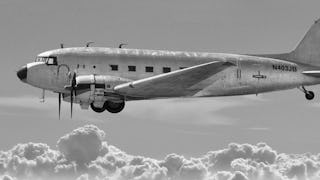
    Fundamentals of Flight mechanics

    Skills you'll gain: Mechanics, Thermal Management, Energy and Utilities, Hazard Analysis, Risk Control, Physical Science, Simulations, Applied Mathematics, Control Systems, Systems Of Measurement, Vibrations, Engineering Analysis, Engineering Calculations, Physics, Engineering, Mathematical Modeling

    4.7
    Rating, 4.7 out of 5 stars
    ·
    584 reviews

    Beginner · Specialization · 3 - 6 Months

  • Status: Free Trial
    Free Trial
    I

    ISAE-SUPAERO

    Flight mechanics - The basis

    Skills you'll gain: Mechanics, Simulations, Engineering Calculations, Physics, Applied Mathematics, Engineering Analysis, Systems Of Measurement

    4.7
    Rating, 4.7 out of 5 stars
    ·
    489 reviews

    Beginner · Course · 1 - 4 Weeks

  • C

    Coursera

    Computational Fluid Mechanics - Airflow Around a Spoiler

    Skills you'll gain: Simulation and Simulation Software, Engineering Analysis, Engineering, Prototyping, Computer-Aided Design, Cloud Computing

    4.5
    Rating, 4.5 out of 5 stars
    ·
    382 reviews

    Beginner · Guided Project · Less Than 2 Hours

  • Status: Free Trial
    Free Trial
    I

    ISAE-SUPAERO

    Flight mechanics - Propulsive balance and energy

    Skills you'll gain: Thermal Management, Energy and Utilities, Mechanics, Control Systems, Engineering Analysis, Engineering Calculations, Engineering, Mathematical Modeling, Physics

    4.7
    Rating, 4.7 out of 5 stars
    ·
    61 reviews

    Intermediate · Course · 1 - 4 Weeks

  • Status: Free Trial
    Free Trial
    C

    Columbia University

    Financial Engineering and Risk Management

    Skills you'll gain: Portfolio Management, Derivatives, Financial Market, Securities (Finance), Investment Management, Portfolio Risk, Asset Management, Credit Risk, Mortgage Loans, Mathematical Modeling, Applied Mathematics, Capital Markets, Financial Modeling, Risk Modeling, Regression Analysis, Market Liquidity, Futures Exchange, Risk Management, Equities, Actuarial Science

    4.6
    Rating, 4.6 out of 5 stars
    ·
    408 reviews

    Intermediate · Specialization · 3 - 6 Months

  • Status: Free Trial
    Free Trial
    T

    The Hong Kong University of Science and Technology

    Mathematics for Engineers

    Skills you'll gain: Differential Equations, Linear Algebra, Matlab, Engineering Calculations, Engineering Analysis, Numerical Analysis, Finite Element Methods, Integral Calculus, Mathematical Software, Mechanical Engineering, Calculus, electromagnetics, Algebra, Applied Mathematics, Mathematical Modeling, Engineering, Simulation and Simulation Software, Advanced Mathematics, Geometry, Computational Thinking

    4.8
    Rating, 4.8 out of 5 stars
    ·
    7.7K reviews

    Beginner · Specialization · 3 - 6 Months

What brings you to Coursera today?

  • Status: Preview
    Preview
    G

    Georgia Institute of Technology

    Introduction to Engineering Mechanics

    Skills you'll gain: Engineering Analysis, Mechanics, Torque (Physics), Engineering Calculations, Mechanical Engineering, Engineering, Civil Engineering, Structural Analysis, Applied Mathematics, Trigonometry

    4.8
    Rating, 4.8 out of 5 stars
    ·
    5.1K reviews

    Mixed · Course · 1 - 3 Months

  • Next level skills. New Year savings.

    Save on Coursera Plus
  • U

    University of California, Berkeley

    Master of Advanced Study in Engineering

    Skills you'll gain: User Research, Medical Imaging, File I/O, Materials science, Exploratory Data Analysis, Java Programming, Semiconductors, Medical Devices, Finite Element Methods, Teamwork, Energy and Utilities, Control Systems, Mechanics, Robotics, Environmental Engineering, Radiation Protection, Sustainable Engineering, Structural Engineering, Vibrations, Linear Algebra

    Earn a degree

    Degree · 1 - 4 Years

  • Status: Free Trial
    Free Trial
    A

    Arizona State University

    Materials Science for Technological Application

    Skills you'll gain: Materials science, Failure Analysis, Semiconductors, Manufacturing Processes, Structural Analysis, Mechanical Engineering, Chemical Engineering, Chemistry, Thermal Management, Engineering, Laboratory Testing, Physical Science, Physics, Engineering Analysis, Reliability, Engineering Calculations

    4.7
    Rating, 4.7 out of 5 stars
    ·
    274 reviews

    Beginner · Specialization · 3 - 6 Months

  • Status: New
    New
    Status: Free Trial
    Free Trial
    B

    Birla Institute of Technology & Science, Pilani

    Mathematics for Engineering

    Skills you'll gain: Data Analysis, Computational Logic, Engineering Calculations, Trigonometry, Linear Algebra, Engineering Analysis, Logical Reasoning, Deductive Reasoning, Probability & Statistics, Statistical Analysis, Calculus, Analytical Skills, Bayesian Statistics, Differential Equations, Programming Principles, Statistical Inference, Theoretical Computer Science, Numerical Analysis, Descriptive Analytics, Applied Mathematics

    4.6
    Rating, 4.6 out of 5 stars
    ·
    191 reviews

    Beginner · Specialization · 3 - 6 Months

  • Status: Preview
    Preview
    C

    Coursera

    Avionics and Aircraft Systems: Fundamentals

    Skills you'll gain: Wire Harnesses, Basic Electrical Systems, Maintenance, Repair, and Facility Services, System Monitoring, Control Systems, Electronic Systems, Electrical Systems, Safety Assurance, Test Equipment, Global Positioning Systems, Display Devices, Communication Systems, Engineering, Analysis, Operations

    4.7
    Rating, 4.7 out of 5 stars
    ·
    70 reviews

    Beginner · Course · 1 - 4 Weeks

  • Status: New
    New
    Status: Preview
    Preview
    I

    ISAE-SUPAERO

    Introduction to Aircraft Airworthiness

    Skills you'll gain: Safety Culture, Engineering Design Process, Product Development, Systems Design

    4.9
    Rating, 4.9 out of 5 stars
    ·
    9 reviews

    Beginner · Course · 1 - 3 Months

What brings you to Coursera today?

Searches related to aeronautical engineering

introduction to aeronautical engineering
1234…373

In summary, here are 10 of our most popular aeronautical engineering courses

  • Fundamentals of Flight mechanics: ISAE-SUPAERO
  • Flight mechanics - The basis: ISAE-SUPAERO
  • Computational Fluid Mechanics - Airflow Around a Spoiler: Coursera
  • Flight mechanics - Propulsive balance and energy: ISAE-SUPAERO
  • Financial Engineering and Risk Management: Columbia University
  • Mathematics for Engineers: The Hong Kong University of Science and Technology
  • Introduction to Engineering Mechanics: Georgia Institute of Technology
  • Master of Advanced Study in Engineering: University of California, Berkeley
  • Materials Science for Technological Application: Arizona State University
  • Mathematics for Engineering: Birla Institute of Technology & Science, Pilani

Frequently Asked Questions about Aeronautical Engineering

Aeronautical engineering is a branch of engineering that focuses on the design, development, and maintenance of aircraft and spacecraft. This field is crucial because it directly impacts transportation, defense, and space exploration, contributing to advancements in technology and safety. As the demand for efficient air travel and innovative aerospace solutions grows, aeronautical engineers play a vital role in shaping the future of aviation and space travel.‎

A degree in aeronautical engineering opens up various career opportunities. You can work as an aerospace engineer, systems engineer, or design engineer, focusing on aircraft and spacecraft design. Other roles include project management, research and development, and quality assurance. Additionally, positions in government agencies, defense contractors, and private aerospace companies are common, allowing for a diverse range of job environments.‎

To succeed in aeronautical engineering, you need a solid foundation in mathematics and physics, as these subjects are integral to understanding aerodynamics and structural analysis. Proficiency in computer-aided design (CAD) software is essential for creating and testing designs. Additionally, skills in problem-solving, teamwork, and communication are important, as engineers often collaborate with multidisciplinary teams to bring projects to fruition.‎

There are several online courses available that can help you gain knowledge in aeronautical engineering. While specific aeronautical engineering courses may vary, you can find relevant programs that cover essential topics such as aerodynamics, propulsion, and structural mechanics. Exploring platforms like Coursera can provide you with access to specialized courses that align with your interests and career goals.‎

Yes. You can start learning aeronautical engineering on Coursera for free in two ways:

  1. Preview the first module of many aeronautical engineering courses at no cost. This includes video lessons, readings, graded assignments, and Coursera Coach (where available).
  2. Start a 7-day free trial for Specializations or Coursera Plus. This gives you full access to all course content across eligible programs within the timeframe of your trial.

If you want to keep learning, earn a certificate in aeronautical engineering, or unlock full course access after the preview or trial, you can upgrade or apply for financial aid.‎

To learn aeronautical engineering, start by enrolling in foundational courses that cover key principles in mathematics and physics. Following that, explore specialized courses that focus on aerodynamics, propulsion systems, and aircraft design. Engaging in hands-on projects or internships can also provide practical experience, helping you apply theoretical knowledge in real-world scenarios.‎

Aeronautical engineering courses typically cover a range of topics, including fluid dynamics, materials science, propulsion systems, and structural analysis. You may also study avionics, flight mechanics, and systems engineering. These subjects provide a comprehensive understanding of how aircraft and spacecraft operate, ensuring you are well-prepared for a career in the aerospace industry.‎

For training and upskilling employees in aeronautical engineering, consider courses that focus on practical applications and industry standards. Programs that cover topics like systems engineering and agile methodologies can be particularly beneficial. The Agile Systems Engineering Specialization is an example of a course that can enhance skills relevant to the aerospace sector.‎

This FAQ content has been made available for informational purposes only. Learners are advised to conduct additional research to ensure that courses and other credentials pursued meet their personal, professional, and financial goals.

Other topics to explore

Arts and Humanities
338 courses
Business
1095 courses
Computer Science
668 courses
Data Science
425 courses
Information Technology
145 courses
Health
471 courses
Math and Logic
70 courses
Personal Development
137 courses
Physical Science and Engineering
413 courses
Social Sciences
401 courses
Language Learning
150 courses

Coursera Footer

Skills

  • Artificial Intelligence (AI)
  • Cybersecurity
  • Data Analytics
  • Digital Marketing
  • English Speaking
  • Generative AI (GenAI)
  • Microsoft Excel
  • Microsoft Power BI
  • Project Management
  • Python

Certificates & Programs

  • Google Cybersecurity Certificate
  • Google Data Analytics Certificate
  • Google IT Support Certificate
  • Google Project Management Certificate
  • Google UX Design Certificate
  • IBM Data Analyst Certificate
  • IBM Data Science Certificate
  • Machine Learning Certificate
  • Microsoft Power BI Data Analyst Certificate
  • UI / UX Design Certificate

Industries & Careers

  • Business
  • Computer Science
  • Data Science
  • Education & Teaching
  • Engineering
  • Finance
  • Healthcare
  • Human Resources (HR)
  • Information Technology (IT)
  • Marketing

Career Resources

  • Career Aptitude Test
  • Examples of Strengths and Weaknesses for Job Interviews
  • High-Income Skills to Learn
  • How Does Cryptocurrency Work?
  • How to Highlight Duplicates in Google Sheets
  • How to Learn Artificial Intelligence
  • Popular Cybersecurity Certifications
  • Preparing for the PMP Certification
  • Signs You Will Get the Job After an Interview
  • What Is Artificial Intelligence?

Coursera

  • About
  • What We Offer
  • Leadership
  • Careers
  • Catalog
  • Coursera Plus
  • Professional Certificates
  • MasterTrack® Certificates
  • Degrees
  • For Enterprise
  • For Government
  • For Campus
  • Become a Partner
  • Social Impact
  • Free Courses
  • Share your Coursera learning story

Community

  • Learners
  • Partners
  • Beta Testers
  • Blog
  • The Coursera Podcast
  • Tech Blog

More

  • Press
  • Investors
  • Terms
  • Privacy
  • Help
  • Accessibility
  • Contact
  • Articles
  • Directory
  • Affiliates
  • Modern Slavery Statement
  • Do Not Sell/Share
Learn Anywhere
Download on the App Store
Get it on Google Play
Logo of Certified B Corporation
© 2026 Coursera Inc. All rights reserved.
  • Coursera Facebook
  • Coursera Linkedin
  • Coursera Twitter
  • Coursera YouTube
  • Coursera Instagram
  • Coursera TikTok