Anthropic
Skills you'll gain: Web Servers, File Management, Server Side
Mixed · Course · 1 - 4 Weeks

Birla Institute of Technology & Science, Pilani
Skills you'll gain: Web Servers, Distributed Computing, Network Troubleshooting, Servers, Network Architecture, System Programming, Network Protocols, Systems Architecture, TCP/IP, Computer Networking, Network Performance Management, Scalability, File Transfer Protocol (FTP), System Design and Implementation, Web Services, Microservices, Debugging, OS Process Management, Software Development, Application Programming Interface (API)

Beginner · Course · 1 - 3 Months

Skills you'll gain: UI Components, ASP.NET, .NET Framework, C# (Programming Language), Application Programming Interface (API), Web Applications, Full-Stack Web Development, Restful API, OAuth, Microsoft Azure, Back-End Web Development, Application Frameworks, Network Routing, Cloud Applications, Server Side, Javascript, Application Deployment, Cloud API, Authentications, Event-Driven Programming
Intermediate · Specialization · 3 - 6 Months

Anthropic
Skills you'll gain: Tool Calling, LLM Application, Prompt Engineering, Application Programming Interface (API), Program Development, Systems Architecture, Test Tools, Server Side, Development Testing, Debugging, Application Design, Document Management
Beginner · Course · 1 - 4 Weeks

Skills you'll gain: Virtualization, Network Administration, File Systems
Intermediate · Course · 1 - 3 Months

Skills you'll gain: Dashboard, Databases, Project Schedules, Data Visualization, Calendar Management, Customer Relationship Management (CRM) Software, Project Management, Content Creation, Process Improvement and Optimization, File Management, Collaboration, User Accounts
Beginner · Specialization · 3 - 6 Months

Skills you'll gain: Network Troubleshooting, Network Administration, Event Monitoring, Software Installation, System Configuration, Virtual Machines
Intermediate · Course · 1 - 3 Months

Skills you'll gain: Node.JS, Server Side, Full-Stack Web Development, Back-End Web Development, Cloud Applications, Web Development, Restful API, Web Applications, Web Servers, Authentications, Javascript, Application Programming Interface (API), Computer Science, JSON, Middleware
Intermediate · Course · 1 - 4 Weeks

Skills you'll gain: Ubuntu, Package and Software Management, Bash (Scripting Language), Linux Servers, Linux Administration, Unix, Linux, Shell Script, Unix Shell, Server Administration, Operating System Administration, Linux Commands, Systems Administration, User Accounts, Servers, System Monitoring, User Provisioning, Command-Line Interface, Software Installation, Computer Security
Intermediate · Course · 1 - 3 Months

Skills you'll gain: Logo Design, Adobe Illustrator, Presentations, Typography, Graphic Design, Animations, Adobe After Effects, Motion Graphics, Adobe Creative Cloud, Design, Branding, Brand Strategy, Marketing Design, System Configuration, Brainstorming, Intellectual Property, Graphic and Visual Design, Strategic Thinking, Legal Risk, Adobe Photoshop
Beginner · Specialization · 3 - 6 Months

Skills you'll gain: Software Architecture, Systems Development Life Cycle, Systems Architecture, Systems Thinking, Software Design Patterns, Stakeholder Communications, Systems Analysis, Application Design
Beginner · Course · 1 - 3 Months

Skills you'll gain: Microsoft Intune (Mobile Device Management Software), Endpoint Security, Microsoft Windows, Authentications, Application Deployment, Operating System Administration, Azure Active Directory, Group Policy, Enterprise Application Management, Identity and Access Management, Windows Servers, Apple iOS, Android Development, Mobile Security, System Configuration, Security Management, User Provisioning, Android (Operating System), Patch Management, Active Directory
Intermediate · Specialization · 1 - 3 Months
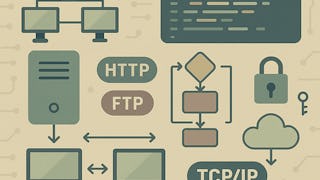
Client-server is a computing architecture where multiple devices are connected over a network, and these devices are classified as clients or servers. In this architecture, a client requests services or resources from a server, which then processes the request and sends back the desired information or performs the requested task. This model allows for efficient distribution of work and resources, as well as centralized management and control.‎
To excel in Client Server, you should acquire the following skills:
Networking: Understanding various networking concepts such as IP addressing, TCP/IP protocols, DNS, and DHCP will help you effectively operate and manage client-server environments.
Operating Systems: Familiarize yourself with different operating systems like Windows Server, Linux, or UNIX. Know how to install, configure, and manage them to support client-server architecture.
Server Administration: Develop skills in server administration, including user management, resource allocation, backup and recovery procedures, and security configurations.
Database Management: Learn how to design, implement, and manage databases using popular database management systems (DBMS) like MySQL, Microsoft SQL Server, or Oracle. Understand concepts like database normalization, SQL queries, and database security.
Web Technologies: Gain proficiency in web technologies such as HTML, CSS, and JavaScript, as these play a vital role in client-server application development and deployment.
Virtualization: Understand virtualization technologies like VMware or Hyper-V, which enable multiple virtual servers to run on a single physical server, allowing for efficient resource utilization.
Security: Get insights into client-server security practices, including authentication mechanisms, encryption protocols, access controls, and intrusion detection techniques.
Troubleshooting: Develop troubleshooting skills to diagnose and resolve issues related to client-server systems, network connectivity, software conflicts, or server performance bottlenecks.
Scripting and Automation: Familiarize yourself with scripting languages such as PowerShell or Bash, enabling you to automate routine tasks and improve administrative efficiency.
Remember, this is not an exhaustive list, but acquiring these skills will lay a strong foundation for understanding and working with client-server technologies.‎
Having client server skills opens up a wide range of job opportunities in the field of information technology and computer networking. Some common job roles that require client server skills are:
Network Administrator: This job involves managing and maintaining the computer networks within an organization. This includes troubleshooting network issues, configuring servers, and ensuring network security.
System Administrator: System administrators are responsible for installing, configuring, and maintaining the servers, operating systems, and software applications that run on the client server architecture.
Database Administrator: Database administrators manage and maintain databases that are used in client server environments. They ensure data integrity and security, perform database backups, and optimize database performance.
IT Support Specialist: IT support specialists provide technical assistance to users who are experiencing issues with their computer systems or software. They troubleshoot client server issues, resolve network connectivity problems, and provide timely technical support to end-users.
Network Engineer: Network engineers design, implement, and manage computer networks within an organization. They are responsible for planning and configuring the client server architecture, optimizing network performance, and ensuring network security.
Cloud Engineer: With the increasing adoption of cloud computing, client server skills are valuable for cloud engineers. These professionals design, implement, and manage cloud-based infrastructures using client server architecture.
Web Developer: Web developers with client server skills can create dynamic and interactive web applications that rely on server-side processing to communicate with client devices.
These are just a few examples, but there are many more job opportunities available for individuals with client server skills.‎
People who are interested in computer networking, have a strong understanding of programming languages, and enjoy problem-solving and troubleshooting would be best suited for studying Client Server.‎
There are several topics related to Client Server that you can study. Some of the key areas to explore include:
Networking: Learn about the fundamentals of computer networking, protocols like TCP/IP, OSI model, LANs, WANs, routers, switches, and firewalls.
Web Development: Dive into server-side programming languages like PHP, Python, or Ruby on Rails, and learn about web servers such as Apache or Nginx. Understand how web browsers and web servers communicate.
Database Management: Gain knowledge of database systems like MySQL, Oracle, or Microsoft SQL Server, and learn how to design, query, and manage databases efficiently.
Security: Explore the concepts of network security, including authentication, encryption, digital certificates, and firewalls. Understand the various security threats and measures to protect client-server systems.
Cloud Computing: Gain insight into cloud-based technologies like Amazon Web Services (AWS), Microsoft Azure, or Google Cloud Platform (GCP). Learn about deploying, managing, and scaling client-server applications in the cloud.
Virtualization: Understand virtualization technologies like VMware or Hyper-V, and learn how virtual machines can be utilized to optimize client-server infrastructure.
Distributed Systems: Explore the concepts of distributed computing, including load balancing, fault tolerance, distributed file systems, and distributed databases.
Mobile Computing: Get acquainted with the challenges and techniques involved in building client-server applications for mobile devices, including mobile app development frameworks and APIs.
Internet of Things (IoT): Study how client-server architectures play a role in IoT systems, learn about IoT protocols, device management, and data aggregation.
Remember, these topics provide a starting point, and as you delve deeper, you may uncover more specialized areas within the Client Server domain that align with your interests and career goals.‎
Online Client Server courses offer a convenient and flexible way to enhance your knowledge or learn new Client-server is a computing architecture where multiple devices are connected over a network, and these devices are classified as clients or servers. In this architecture, a client requests services or resources from a server, which then processes the request and sends back the desired information or performs the requested task. This model allows for efficient distribution of work and resources, as well as centralized management and control. skills. Choose from a wide range of Client Server courses offered by top universities and industry leaders tailored to various skill levels.‎
When looking to enhance your workforce's skills in Client Server, it's crucial to select a course that aligns with their current abilities and learning objectives. Our Skills Dashboard is an invaluable tool for identifying skill gaps and choosing the most appropriate course for effective upskilling. For a comprehensive understanding of how our courses can benefit your employees, explore the enterprise solutions we offer. Discover more about our tailored programs at Coursera for Business here.‎