Modern Art Courses
Modern Art courses can help you learn about key movements, influential artists, and critical theories while exploring styles like abstract expressionism and pop art. You can build skills in visual analysis, contextual interpretation, and art criticism, enhancing your ability to engage with contemporary works. Many courses introduce tools such as digital art software and online galleries, allowing you to apply your skills in creating and curating modern art projects.
Popular Modern Art Courses and Certifications
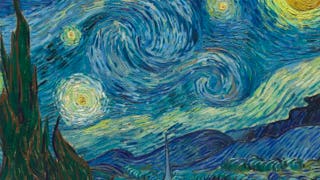
The Museum of Modern Art
Skills you'll gain: Cultural Diversity, Liberal Arts, Creativity, Storytelling, Technology Solutions, Design Thinking, Culture, Public History, Journalism, Social Justice, Design Elements And Principles, Social Studies, Sustainable Development, Environmental Issue, Sustainability Standards, Research, Non-Verbal Communication, Sociology, 3D Modeling, World History
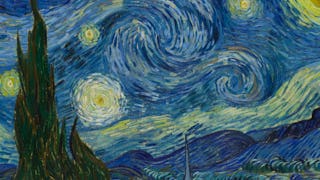
The Museum of Modern Art
Skills you'll gain: Cultural Diversity, Creativity
The Museum of Modern Art
Skills you'll gain: Creativity, Performing Arts, Innovation, Electronic Media, Aesthetics, Technology Solutions, Design Thinking, Liberal Arts, AI powered creativity, Multimedia, Public History, Visual Storytelling, Storytelling, Photo/Video Production and Technology, Social Justice
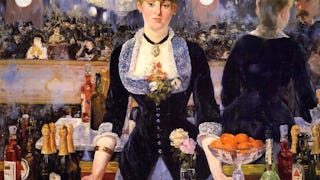
Wesleyan University
Skills you'll gain: Aesthetics, Art History, European History, Liberal Arts, Social Studies, World History, Culture, Political Sciences, Sociology
Skills you'll gain: AI powered creativity, Storytelling, Prompt Engineering, Ideation, Conceptual Design, Style Guides, Cinematography, Prompt Patterns, Creative Thinking, Creative Design, Visual Design, Creativity, Graphic and Visual Design, Systems Design, Design, Design Thinking, Persona Development, Design Elements And Principles, Layout Design, Generative AI

What brings you to Coursera today?
Università Bocconi
Skills you'll gain: Leadership and Management, Branding, Business Management, Brand Management, Brand Strategy, Brand Loyalty, Data Strategy, Fundraising, Data-Driven Decision-Making, Marketing, Consumer Behaviour, Customer experience strategy (CX), Customer Engagement, Value Propositions, Target Audience

The Museum of Modern Art
Skills you'll gain: Design Thinking, Creative Thinking, Creative Problem-Solving, Education and Training, Empathy & Emotional Intelligence, Instructional Strategies, Liberal Arts, Interactive Learning, Pedagogy, Student-Centred Learning, Cultural Responsiveness, Creativity, Social Justice, Self-Awareness, Curriculum Development, Empathy, Social Impact, Literacy, Learning Strategies, Communication Strategies
The Museum of Modern Art
Skills you'll gain: Ethical Standards And Conduct, Cultural Diversity, Social Impact, Creativity, Market Trend, Creative Thinking, Product Design, Production Process, World History, Social Sciences, Consumer Behaviour, Design Elements And Principles, Personal Development, Problem Solving, Critical Thinking

University of Pennsylvania
Skills you'll gain: Dental Care, Oral and Dental Care, Dentistry, Patient Evaluation, Dental Procedures, Oral Health, Periodontology, Dental Informatics, Oral Cancer Screening, Cardiology, Developmental Disabilities, Disabilities, Pain Management, General Medicine, Biomedical Technology, Biomedical Engineering, Endocrinology, Oral Hygiene, Medical History Documentation, Oncology

Skills you'll gain: Star Schema, Snowflake Schema, Data Lakes, Data Warehousing, CI/CD, Database Design, Microsoft Azure, Power BI, Data Governance, Continuous Integration, Real Time Data, Data Pipelines, Microsoft Copilot, Transaction Processing, Data Architecture, Model Optimization, Transact-SQL, Enterprise Architecture, SQL, Cloud Infrastructure
Northwestern University
Skills you'll gain: Robotics, Machine Controls, Control Systems, Mathematical Modeling, Mathematical Software, Simulation and Simulation Software, Engineering, Mechanics, Mechanical Engineering, Torque (Physics), Applied Mathematics, Numerical Analysis, Simulations, Engineering Calculations, Process Control, Engineering Analysis, Virtual Environment, Graph Theory, Matlab, Algorithms

University of Michigan
Skills you'll gain: Social Justice, Art History, Public History, Creativity, Social Impact, Diversity Awareness, Liberal Arts, Visual Storytelling, Research, Advocacy, Case Studies, Performing Arts, Cultural Diversity, Multimedia
What brings you to Coursera today?
Best free Modern Art courses
High-quality free Modern Art courses you can start today.
- The Modern and the Postmodern (Part 1)Wesleyan UniversityMixed1 - 3 MonthsFree
- Arts and Heritage ManagementUniversità BocconiMixed1 - 3 MonthsFree
- Visualizing Women's Work: Using Art Media for Social JusticeUniversity of MichiganBeginner1 - 4 WeeksFree
Best Modern Art courses from The Museum of Modern Art
Top-rated Modern Art courses offered by The Museum of Modern Art on Coursera.
- Modern and Contemporary Art and DesignThe Museum of Modern ArtBeginner3 - 6 MonthsThe Museum of Modern Art
- Modern Art & IdeasThe Museum of Modern ArtBeginner1 - 3 MonthsThe Museum of Modern Art
- What Is Contemporary Art?The Museum of Modern ArtBeginner1 - 3 MonthsThe Museum of Modern Art
Best Modern Art certificate programs
Earn a certificate in Modern Art from top universities and companies.
- AI Concept Art and Design with Adobe FireflyAdobeBeginner1 - 3 MonthsSpecialization
- Teaching with Art: Using Inquiry, Activities, and ThemesThe Museum of Modern ArtIntermediate3 - 6 MonthsSpecialization
- Fashion As DesignThe Museum of Modern ArtBeginner1 - 3 MonthsSpecialization










