Service Design Courses
Service design courses can help you learn user journey mapping, service blueprinting, and prototyping techniques. You can build skills in stakeholder engagement, service evaluation, and designing for diverse user needs. Many courses introduce tools like journey mapping software and customer feedback platforms, that support visualizing service interactions and gathering insights to enhance user experiences.
Popular Service Design Courses and Certifications

Skills you'll gain: Customer experience improvement, Service Design, Design Thinking, Change Management, Hospitality Services, Service Improvement, Key Performance Indicators (KPIs), Journey Mapping, Hospitality Management, Hospitality, Customer Analysis, Sustainable Business, Innovation, Performance Measurement, Customer Insights, Continuous Improvement Process, Feasibility Studies, Collaboration
University of Virginia
Skills you'll gain: Brainstorming, Design Thinking, Innovation, Ideation, Stakeholder Analysis, Creative Thinking, User Research, Journey Mapping, Human Centered Design, Design Research, Project Scoping, Persona Development, Project Planning, Strategic Thinking, Overcoming Obstacles, Creativity, Interviewing Skills, Prioritization, Customer Insights, Empathy
University of Michigan
Skills you'll gain: UI/UX Research, Surveys, Qualitative Research, User Experience Design, User Experience, Usability Testing, User Research, User Story, Prototyping, Wireframing, User Centered Design, Survey Creation, Design Research, Interaction Design, Ideation, A/B Testing, Conceptual Design, Persona (User Experience), Web Analytics, Experience Design
Microsoft
Skills you'll gain: Storyboarding, User Research, Information Architecture, User Experience Design, Design Thinking, Mockups, User Interface (UI), User Experience, Prototyping, Usability Testing, User Interface and User Experience (UI/UX) Design, Wireframing, Ideation, User Centered Design, Web Content Accessibility Guidelines, Human Centered Design, Figma (Design Software), User Interface (UI) Design, User Flows, Artificial Intelligence
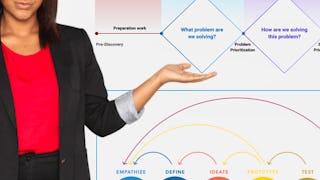
Fractal Analytics
Skills you'll gain: Responsible AI, A/B Testing, Design Thinking, Ideation, Generative AI, User Centered Design, Innovation, User Research, Data Storytelling, Dashboard, AI powered creativity, AI literacy, Competitive Analysis, Data Analysis, Journey Mapping, Artificial Intelligence, Prompt Engineering, Critical Thinking, Business Consulting, Problem Solving

University of California San Diego
Skills you'll gain: Design Research, Interaction Design, User Experience Design, Statistical Analysis, Usability, Experience Design, User Experience, Ideation, User Research, User Interface (UI), UI/UX Strategy, Graphic and Visual Design, User Interface (UI) Design, Experimentation, A/B Testing, Human Factors, Collaborative Software, Telecommuting, R Programming, Storyboarding
What brings you to Coursera today?

California Institute of the Arts
Skills you'll gain: Information Architecture, Wireframing, User Interface and User Experience (UI/UX) Design, Persona (User Experience), User Experience, Mockups, User Experience Design, Responsive Web Design, Experience Design, User Interface (UI), Web Design, UI/UX Strategy, User Interface (UI) Design, Adobe XD, User Centered Design, Prototyping, Layout Design, Interaction Design, User Research, Graphic Design

Skills you'll gain: User Experience, UI/UX Research, User Experience Design, User Research, Design Thinking, Design Research, Usability, User Centered Design, Design, Prototyping, Usability Testing, Sprint Retrospectives, Wireframing, Ideation

University of California San Diego
Skills you'll gain: Interaction Design, Usability, Human Centered Design, Mockups, Storyboarding, Design Strategies, Design Thinking, Prototyping, Usability Testing, User Research, Interviewing Skills

Skills you'll gain: Systems Design, Systems Architecture, System Design and Implementation, Software Design, Software Architecture, Distributed Computing, Scalability, API Design, Data Storage Technologies, Microservices, Data Storage, Restful API, API Gateway, Databases, Application Programming Interface (API), Network Protocols, Capacity Management, Performance Tuning

University of Virginia
Skills you'll gain: Design Thinking, Innovation, User Research, Design Research, Human Centered Design, Project Scoping, Project Planning, Strategic Thinking, Interviewing Skills, Customer Insights, Empathy

Pearson
Skills you'll gain: Systems Architecture, Software Architecture, Systems Design, Software Design, Verification And Validation, Maintainability, Systems Analysis
Best Service Design courses from University of Virginia
Top-rated Service Design courses offered by University of Virginia on Coursera.
- Design ThinkingUniversity of VirginiaBeginner3 - 6 MonthsUniversity of Virginia
- Design Thinking: Insights to InspirationUniversity of VirginiaBeginner1 - 3 MonthsUniversity of Virginia
Best Service Design certificate programs
Earn a certificate in Service Design from top universities and companies.
- User Experience Research and DesignUniversity of MichiganBeginner3 - 6 MonthsSpecialization
- Microsoft UX DesignMicrosoftBeginner3 - 6 MonthsProfessional Certificate
- Mastering User Centric Design with Generative AIFractal AnalyticsBeginner1 - 3 MonthsSpecialization
Best Service Design courses for beginners
Top-rated beginner-friendly Service Design courses with no prerequisites.
- Effective Service Innovation by Design in Hotel ManagementSTARWEAVERBeginner1 - 4 WeeksNo prerequisites
- UI / UX DesignCalifornia Institute of the ArtsBeginner3 - 6 MonthsNo prerequisites
- Foundations of User Experience (UX) DesignGoogleBeginner1 - 4 WeeksNo prerequisites










