Free Courses
Free courses can help you learn coding languages like Python and JavaScript, data analysis techniques, and web development fundamentals. You can build skills in problem-solving, algorithm design, and creating interactive websites. Many courses introduce tools such as Git for version control, SQL for database management, and various frameworks that streamline web development, allowing you to apply your skills in practical projects.
Popular Free Courses

Georgia Institute of Technology
Skills you'll gain: Engineering Analysis, Mechanics, Torque (Physics), Engineering Calculations, Mechanical Engineering, Engineering, Engineering Practices, Structural Analysis, Applied Mathematics, Trigonometry

University of North Texas
Skills you'll gain: Arithmetic, Graphing, Geometry, Statistics, Algebra, Descriptive Statistics, General Mathematics, Applied Mathematics, Statistical Visualization
Princeton University
Skills you'll gain: Combinatorics, Algorithms, Theoretical Computer Science, Mathematical Theory & Analysis, Data Structures, Advanced Mathematics, Mathematical Modeling, Probability, Applied Mathematics, Calculus
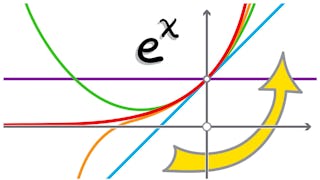
University of Pennsylvania
Skills you'll gain: Calculus, Mathematical Theory & Analysis, Algebra, Advanced Mathematics, Applied Mathematics, Derivatives
Duke University
Skills you'll gain: Probability, Graphing, Algebra, Bayesian Statistics, Data Science, Calculus, General Mathematics, Applied Mathematics, Derivatives

Columbia University
Skills you'll gain: Financial Market, Securities (Finance), Derivatives, Mathematical Modeling, Applied Mathematics, Capital Markets, Futures Exchange, Finance, Financial Modeling, Risk Modeling, Probability, Risk Management, Probability Distribution, Model Optimization
What brings you to Coursera today?

Northwestern University
Skills you'll gain: Robotics, Machine Controls, Control Systems, Mathematical Modeling, Mathematical Software, Simulation and Simulation Software, Engineering, Mechanics, Mechanical Engineering, Applied Mathematics, Numerical Analysis, Simulations, Process Control, Virtual Environment, Torque (Physics), Graph Theory, Matlab, Algorithms, Engineering Calculations, Physics

Princeton University
Skills you'll gain: Combinatorics, Mathematical Theory & Analysis, Advanced Mathematics, Theoretical Computer Science, Calculus, Mathematics and Mathematical Modeling, Integral Calculus, Applied Mathematics

Rice University
Skills you'll gain: Mechanics, Problem Solving, Physics, Graphing, Mathematical Modeling, Algebra, Calculus, Physical Science, Applied Mathematics, Mechanical Engineering, Trigonometry
Northwestern University
Skills you'll gain: Robotics, Mathematical Modeling, Mathematical Software, Applied Mathematics, Mechanics, Simulation and Simulation Software, Engineering, Virtual Environment, Torque (Physics), Numerical Analysis
Northwestern University
Skills you'll gain: Robotics, Engineering, Mechanics, Mathematical Software, Mathematical Modeling, Simulation and Simulation Software, Matlab, Control Systems, Applied Mathematics, Physics, Differential Equations

Rice University
Skills you'll gain: electromagnetics, Electrical Engineering, Physics, Mechanics, Electrical Systems, Calculus, Integral Calculus, Engineering Calculations, Scientific Visualization, Mathematical Modeling, Problem Solving, Applied Mathematics
In summary, here are 10 of our most popular free courses
- Introduction to Engineering Mechanics: Georgia Institute of Technology
- Math Prep: College & Work Ready: University of North Texas
- Analysis of Algorithms: Princeton University
- Calculus: Single Variable Part 1 - Functions: University of Pennsylvania
- Data Science Math Skills: Duke University
- Introduction to Financial Engineering and Risk Management: Columbia University
- Modern Robotics: Mechanics, Planning, and Control: Northwestern University
- Analytic Combinatorics: Princeton University
- Physics 101 - Forces and Kinematics : Rice University
- Modern Robotics, Course 2: Robot Kinematics: Northwestern University










