Engineering Courses
Engineering courses can help you learn design principles, project management, systems analysis, and problem-solving techniques. You can build skills in technical drawing, materials selection, and prototyping, along with understanding regulatory standards and sustainability practices. Many courses introduce tools such as CAD software for design, simulation programs for testing, and project management platforms to streamline workflows.
Popular Engineering Courses and Certifications

L&T EduTech
Skills you'll gain: Oil and Gas, Petroleum Industry, Hazard Analysis, Safety Standards, Environmental Resource Management, Safety Assurance, Safety Training, Environment and Resource Management, Environmental Regulations, Environment Health And Safety, Environmental Science, Environmental Engineering and Restoration, Big Data, Plant Operations and Management, Energy and Utilities, Process Engineering, Environmental Engineering, Data Management, Pump Stations, Environmental Issue

University of California, Davis
Skills you'll gain: Chemical Engineering, Hazard Analysis, Process Engineering, Occupational Hygiene, Hazard Communication (HazCom), Safety Assurance, Fire And Life Safety, Chemical and Biomedical Engineering, Occupational Health, Health And Safety Standards, Risk Analysis, Risk Modeling, Risk Management, Engineering Practices, Environment Health And Safety, Failure Analysis, Risk Control, Chemistry, Accident Prevention, Risk Mitigation
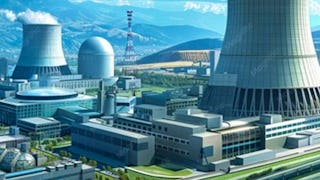
Skills you'll gain: Plant Operations and Management, Radiation Protection, Energy and Utilities, Electrical Power, Electric Power Systems, Mechanical Engineering, Safety Assurance, Thermal Management, Engineering, Safety Standards, Oil and Gas, Process Engineering, Control Systems, Equipment Design, Environmental Engineering
University of Colorado Boulder
Skills you'll gain: HVAC, Building Services Engineering, Architectural Engineering, Building Design, Energy and Utilities, Climate Change Mitigation, Engineering Practices, Mechanical Engineering, Pump Stations, Systems Design, Civil and Architectural Engineering, Construction, Architecture and Construction, Mechanical Design, Architectural Design, Design Strategies, Trigonometry
University of Colorado Boulder
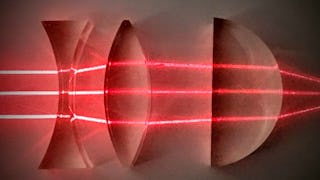
Skills you'll gain: Model Optimization, Electrical Engineering, electromagnetics, Image Quality, Equipment Design, Engineering Calculations, Systems Design, System Requirements, Engineering, Scientific, and Technical Instruments, Design Software, Simulation and Simulation Software, Image Analysis, Engineering Analysis, System Design and Implementation, Systems Analysis, Numerical Analysis, Graphical Tools, Human Factors, Medical Imaging, Technical Design

What brings you to Coursera today?

University of Toronto
Skills you'll gain: Computer Vision, Convolutional Neural Networks, Image Analysis, Control Systems, Robotics, Deep Learning, Simulation and Simulation Software, Software Architecture, Simulations, Safety Assurance, Global Positioning Systems, Hardware Architecture, Systems Architecture, Network Routing, Graph Theory, Estimation, Algorithms, Artificial Intelligence, Mathematical Modeling, Linear Algebra

Coursera
Skills you'll gain: Model Deployment, Fine-tuning, PyTorch (Machine Learning Library), Model Evaluation, Model Training, Vision Transformer (ViT), Model Optimization, Transfer Learning, MLOps (Machine Learning Operations), Natural Language Processing, Debugging, Containerization, Kubernetes, Docker (Software), Distributed Computing, Performance Tuning, Tensorflow, Deep Learning, Cloud Computing, Data Pipelines

Princeton University
Skills you'll gain: Microarchitecture, Computer Architecture, Memory Management, Hardware Architecture, Computer Engineering, Systems Architecture, Distributed Computing, Performance Tuning
University of Colorado Boulder
Skills you'll gain: Chemical Engineering, Chemistry, Thermal Management, Mechanics, Mechanical Engineering, Engineering Calculations, Mathematical Software, Process Engineering, Analytical Chemistry, Numerical Analysis, Vibrations, Differential Equations, Engineering, Physics, Applied Mathematics, Integral Calculus, Probability Distribution, Mathematical Modeling, Materials science, Physical Science

L&T EduTech
Skills you'll gain: Building Codes, Construction, Laboratory Testing, Structural Engineering, Structural Analysis, Laboratory Experience, Construction Engineering, General Construction and Construction Labor, Civil Engineering, Engineering Analysis, Experimentation, Research Reports, Analytical Testing, Engineering Practices, Failure Analysis, Test Equipment, Finite Element Methods, Engineering Design Process, Engineering Calculations, Design Specifications

Amazon Web Services
Skills you'll gain: Prompt Engineering, Retrieval-Augmented Generation, Generative Model Architectures, Personally Identifiable Information, Dashboard Creation, Token Optimization, Generative AI Agents, Responsible AI, AI Workflows, Generative AI, Agentic systems, Enterprise Architecture, API Design, API Gateway, Amazon Web Services, Artificial Intelligence and Machine Learning (AI/ML), Cloud Applications, Artificial Intelligence, Cloud Platforms, Machine Learning

Skills you'll gain: Prompt Engineering, AI Orchestration, AI Workflows, LangGraph, Agentic Workflows, LangChain, Retrieval-Augmented Generation, Prompt Patterns, Prompt Engineering Tools, LLM Application, Tool Calling, Agentic systems, Multimodal Prompts, Model Context Protocol, Generative AI Agents, Generative AI, AI Security, Vector Databases, AI Integrations, Software Development
What brings you to Coursera today?
Best Engineering courses from L&T EduTech
Top-rated Engineering courses offered by L&T EduTech on Coursera.
- Petroleum Engineering with AI ApplicationsL&T EduTechAdvanced3 - 6 MonthsL&T EduTech
- Combined Cycle & Nuclear Power Plant EngineeringL&T EduTechAdvanced1 - 4 WeeksL&T EduTech
- Geotechnical Foundation DesignL&T EduTechAdvanced3 - 6 MonthsL&T EduTech
Best Engineering certificate programs
Earn a certificate in Engineering from top universities and companies.
- Chemical Hazards and Process SafetyUniversity of California, DavisAdvanced3 - 6 MonthsSpecialization
- Building Energy Systems EngineeringUniversity of Colorado BoulderAdvanced3 - 6 MonthsSpecialization
- Optical EngineeringUniversity of Colorado BoulderAdvanced3 - 6 MonthsSpecialization










