Serverless Api Courses
Serverless API courses can help you learn how to design and deploy APIs without managing servers, as well as understanding event-driven architecture, microservices, and cloud functions. You can build skills in creating scalable applications, optimizing performance, and managing API security. Many courses introduce tools like AWS Lambda, Azure Functions, and Google Cloud Functions, demonstrating how these platforms enable you to implement serverless solutions effectively while streamlining development workflows.
Popular Serverless Api Courses and Certifications
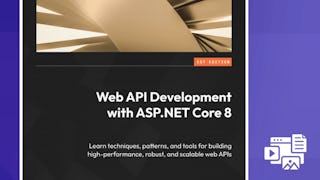
Skills you'll gain: Restful API, GraphQL, API Design, ASP.NET, Application Programming Interface (API), Azure DevOps Pipelines, API Testing, .NET Framework, Unit Testing, Docker (Software), Object-Relational Mapping, CI/CD, Containerization, Software Documentation, Cloud-Native Computing, Data Modeling, DevOps, C# (Programming Language), Web Applications, Object Oriented Programming (OOP)

Skills you'll gain: API Design, API Gateway, Application Programming Interface (API), Postman API Platform, Restful API, API Testing, Data Validation, Authentications, OAuth, Cloud API, Microservices, Application Deployment, Continuous Deployment, CI/CD, Authorization (Computing), Application Frameworks, Performance Tuning, Application Lifecycle Management, Prometheus (Software), Grafana

Skills you'll gain: API Gateway, Amazon CloudWatch, API Design, Amazon Web Services, Cloud-Based Integration, Microservices, Event-Driven Programming, Cloud Deployment, Data Validation
Skills you'll gain: Cloud Deployment, Application Deployment, OpenShift, Cloud Applications, Serverless Computing, Microservices, Istio, API Gateway, Cloud-Native Computing, Restful API, Cloud Computing, IBM Cloud, Kubernetes, Application Development, Containerization, Software Architecture, Scalability, Flask (Web Framework)

Google Cloud
Skills you'll gain: Dataflow, Data Pipelines, Serverless Computing, Identity and Access Management, Google Cloud Platform, Site Reliability Engineering, Cloud Security, Data Integrity, Performance Tuning, Data Security, CI/CD, Data Processing, Debugging, Real Time Data, System Monitoring, Cloud Storage, Extract, Transform, Load, Unit Testing, Containerization, File I/O

What brings you to Coursera today?

Meta
Skills you'll gain: Restful API, API Testing, Django (Web Framework), API Design, Software Documentation, Application Programming Interface (API), Authentications, Authorization (Computing), Debugging, JSON, Performance Tuning, Back-End Web Development, Data Validation

Skills you'll gain: Serverless Computing, API Gateway, Image Analysis, Cloud-Based Integration, Amazon CloudWatch, Extensible Markup Language (XML), JSON, Computer Vision, Cloud Deployment, Restful API, API Design, Amazon Web Services, Event-Driven Programming, Amazon S3, Microservices, Cloud Development, AWS CloudFormation, Extensible Languages and XML, Cloud-Native Computing, Artificial Intelligence and Machine Learning (AI/ML)
Skills you'll gain: JSON, Application Programming Interface (API), Restful API, Javascript, Web Applications, Hypertext Markup Language (HTML), Servers, Cascading Style Sheets (CSS)

Edureka
Skills you'll gain: API Design, Application Programming Interface (API), Postman API Platform, Restful API, API Testing, Application Deployment, Continuous Deployment, CI/CD, Application Lifecycle Management, Test Automation, Software Documentation, Application Performance Management, Continuous Integration

Skills you'll gain: Restful API, Software Quality (SQA/SQC), Java Programming, Test Automation, Java

Skills you'll gain: ASP.NET, Azure DevOps Pipelines, Docker (Software), CI/CD, Containerization, Restful API, Application Programming Interface (API), Software Documentation, Cloud-Native Computing, Azure DevOps, .NET Framework, Software Architecture, Microservices, Continuous Deployment, Application Deployment, Data Validation, Application Performance Management, Maintainability, Verification And Validation, Web Development

Skills you'll gain: Version Control, Git (Version Control System), Restful API, ASP.NET, API Design, .NET Framework, Software Versioning, API Testing, Application Programming Interface (API), Database Development, Back-End Web Development, Object-Relational Mapping, Web Services, Database Management, Database Management Systems, Databases, Development Environment, Server Side, Database Design, C# (Programming Language)
What brings you to Coursera today?
In summary, here are 10 of our most popular serverless api courses
- Web API Development with ASP.NET Core 8: Packt
- API Development and Architecture: Edureka
- Master AWS Lambda & API Workflows for Serverless Automation: EDUCBA
- Application Development using Microservices and Serverless: IBM
- Serverless Data Processing with Dataflow: Google Cloud
- APIs: Meta
- AWS Serverless & AI/ML Project-Based Cloud Specialization: EDUCBA
- API Basics 1: Build a Bot (Fetch, JSON & Async JavaScript): Scrimba
- Getting Started with APIs: Edureka
- Spring Boot REST API: Real-World Java Projects: EDUCBA










