Cours en Apprentissage automatique
Les cours en apprentissage automatique peuvent vous aider à comprendre comment construire, entraîner et analyser des modèles prédictifs. Vous pouvez développer des compétences en préparation des données, choix d'algorithmes, optimisation et évaluation. De nombreux cours utilisent des bibliothèques courantes pour tester des modèles.
Cours et certificats populaires en Apprentissage automatique

Duke University
Skills you'll gain: Fine-tuning, MLOps (Machine Learning Operations), Model Deployment, Cloud Deployment, Pandas (Python Package), AWS SageMaker, NumPy, Microsoft Azure, Hugging Face, GitHub Copilot, Responsible AI, Data Manipulation, DevOps, Cloud Computing, Python Programming, Machine Learning, GitHub, Big Data, Data Management, Data Analysis

Skills you'll gain: Feature Engineering, Decision Tree Learning, Applied Machine Learning, Supervised Learning, Advanced Analytics, Machine Learning, Machine Learning Algorithms, Unsupervised Learning, Analytics, Machine Learning Methods, Random Forest Algorithm, Model Optimization, Model Evaluation, Python Programming, Performance Tuning
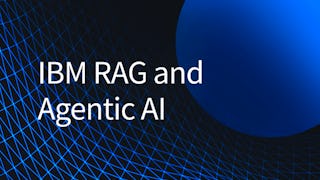
Skills you'll gain: Prompt Engineering, AI Orchestration, AI Workflows, LangGraph, Agentic Workflows, LangChain, Retrieval-Augmented Generation, LLM Application, Tool Calling, Agentic systems, Model Context Protocol, Generative AI Agents, Generative AI, AI Security, Vector Databases, Responsible AI, Embeddings, Large Language Modeling, AI Integrations, Software Development

John Wiley & Sons
Skills you'll gain: Supervised Learning, Machine Learning Methods, Applied Machine Learning, Computer Vision, Machine Learning Algorithms, Machine Learning, Artificial Intelligence and Machine Learning (AI/ML), Natural Language Processing, Deep Learning, Artificial Neural Networks, Decision Tree Learning, Data Science, Logistic Regression, Data Preprocessing, Embeddings

Google Cloud
Skills you'll gain: Model Deployment, Google Cloud Platform, Tensorflow, MLOps (Machine Learning Operations), Natural Language Processing, Embeddings, Model Evaluation, Recurrent Neural Networks (RNNs), Computer Vision, Reinforcement Learning, Convolutional Neural Networks, Large Language Modeling, Model Optimization, Model Training, Data Preprocessing, Cloud Deployment, Applied Machine Learning, Feature Engineering, Machine Learning, Machine Learning Algorithms
What brings you to Coursera today?

Skills you'll gain: Statistics, Descriptive Statistics, Logistic Regression, Decision Tree Learning, Advanced Analytics, Probability & Statistics, Probability Distribution, Statistical Inference, Applied Machine Learning, Data-Driven Decision-Making, Supervised Learning, Workflow Management, Statistical Methods, Statistical Programming, Data Cleansing, Data Manipulation, Data Structures, Interviewing Skills, NumPy, Google Gemini

Skills you'll gain: Feature Engineering, Model Deployment, Data Visualization, Data Ethics, Exploratory Data Analysis, Model Evaluation, Unsupervised Learning, Data Presentation, Tensorflow, Application Deployment, Dimensionality Reduction, Model Training, Probability Distribution, Apache Spark, Statistical Hypothesis Testing, Supervised Learning, Design Thinking, Data Science, Machine Learning, Python Programming

Skills you'll gain: Version Control, Cloud Management, Test Automation, Infrastructure As A Service (IaaS), Cloud Computing, Cloud Infrastructure, Virtual Machines, Development Testing, Scripting, Software Testing, Cloud Services, Performance Tuning, Email Automation, Web Presence, Python Programming, CI/CD, Configuration Management, Program Development, Containerization, Unit Testing

Amazon Web Services
Skills you'll gain: Prompt Engineering, Retrieval-Augmented Generation, Personally Identifiable Information, Dashboard Creation, Token Optimization, Generative AI Agents, Responsible AI, AI Workflows, Generative AI, Agentic systems, Enterprise Architecture, API Design, API Gateway, Performance Tuning, Amazon Web Services, Artificial Intelligence and Machine Learning (AI/ML), Cloud Applications, Artificial Intelligence, Cloud Platforms, Machine Learning
Skills you'll gain: Exploratory Data Analysis, Unsupervised Learning, Supervised Learning, Machine Learning Methods, Applied Machine Learning, Data Presentation, Machine Learning, Data Analysis, Machine Learning Algorithms, Descriptive Statistics, Regression Analysis, Python Programming, Artificial Neural Networks, Application Development

Skills you'll gain: Model Deployment, MLOps (Machine Learning Operations), Data Preprocessing, Exploratory Data Analysis, Logistic Regression, Statistical Machine Learning, Model Evaluation, Supervised Learning, Decision Tree Learning, Model Training, Applied Machine Learning, Statistics, Machine Learning Methods, Workflow Management, Feature Engineering, SAS (Software), Machine Learning, Correlation Analysis, Artificial Neural Networks, Machine Learning Algorithms

Google Cloud
Skills you'll gain: Google Cloud Platform, Model Deployment, MLOps (Machine Learning Operations), Tensorflow, Model Training, Cloud Deployment, Cloud-Native Computing, Data Validation, Model Optimization, Applied Machine Learning, Systems Architecture, Data Quality, Hybrid Cloud Computing, Distributed Computing, Performance Tuning, Scalability, Dependency Analysis
Best Machine Learning courses from Google
Top-rated Machine Learning courses offered by Google on Coursera.
- The Nuts and Bolts of Machine LearningGoogleAdvanced1 - 3 MonthsGoogle
- Google Advanced Data AnalyticsGoogleAdvanced3 - 6 MonthsGoogle
- Google IT Automation with PythonGoogleAdvanced3 - 6 MonthsGoogle
Best Machine Learning certificate programs
Earn a certificate in Machine Learning from top universities and companies.
- MLOps | Machine Learning OperationsDuke UniversityAdvanced3 - 6 MonthsSpecialization
- IBM RAG and Agentic AIIBMAdvanced3 - 6 MonthsProfessional Certificate
- Advanced Machine Learning on Google CloudGoogle CloudAdvanced3 - 6 MonthsSpecialization










