Beginner Cybersecurity Courses
Beginner cybersecurity courses can help you learn network security basics, threat detection, risk management, and incident response strategies. You can build skills in vulnerability assessment, secure coding practices, and understanding security policies. Many courses introduce tools like firewalls, intrusion detection systems, and antivirus software, showing how these tools are applied to protect systems and data from cyber threats.
Popular Beginner Cybersecurity Courses and Certifications

Skills you'll gain: Cybersecurity, Information Technology, Cyber Security Strategy, Technical Support and Services, Computer Security Awareness Training, Network Security, Data Security, Cyber Security Policies, Information Assurance
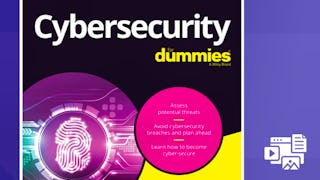
John Wiley & Sons
Skills you'll gain: Cybersecurity, Cyber Security Assessment, Human Factors (Security), Incident Response, Cyber Attacks, Cyber Security Strategy, Cyber Threat Intelligence, Security Management, Authentications, Vulnerability Assessments, Governance, Disaster Recovery, Computer Security Incident Management, Security Awareness, Threat Management, Threat Detection, Enterprise Security, Security Controls, Network Security, Risk Management
Skills you'll gain: Email Security, Cybersecurity, Hardening, Authorization (Computing), Cyber Attacks, Security Awareness, Security Controls, Threat Management, Encryption, Data Security, Identity and Access Management, Authentications, Application Security, Endpoint Security, Threat Detection, Cryptography, Malware Protection, Patch Management, Multi-Factor Authentication

Skills you'll gain: Email Security, Public Key Infrastructure, Encryption, Network Security, Cryptography, IT Security Architecture, Cybersecurity, Endpoint Detection and Response, Hardening, Data Security, Cyber Threat Hunting, Cryptographic Protocols, Advanced Encryption Standard (AES), Key Management, Authorization (Computing), Cyber Attacks, Information Technology, Computer Security Incident Management, Cyber Security Strategy, Technical Support and Services

Skills you'll gain: Malware Protection, Identity and Access Management, Incident Response, Cybersecurity, Computer Security Incident Management, Network Security, Threat Management, Cyber Attacks, Authentications, Distributed Denial-Of-Service (DDoS) Attacks, Security Awareness, Security Controls, Cyber Security Policies, Authorization (Computing), Multi-Factor Authentication, Human Factors (Security)

What brings you to Coursera today?

Macquarie University
Skills you'll gain: Cyber Risk, Security Awareness, Cyber Attacks, Mobile Security, Cybersecurity, Cyber Security Assessment, Cyber Security Policies, Cyber Threat Hunting, Data Security, Security Strategy, Email Security, Authentications, Security Management

Skills you'll gain: File I/O, Security Controls, Cryptography, User Accounts

Skills you'll gain: Cybersecurity, Security Controls, Cyber Attacks, Cyber Risk, Security Information and Event Management (SIEM), Information Assurance, Data Ethics, Network Analysis

University of London
Skills you'll gain: Key Management, Security Management, Cyber Attacks, Cryptography, Cyber Security Policies, Cybersecurity, Cyber Risk, Encryption, ISO/IEC 27001, Threat Management, Risk Management Framework, Security Controls, Data Integrity

Skills you'll gain: Data Storage Technologies, Operating Systems, Data Loss Prevention, Generative Model Architectures, Data Maintenance, Disaster Recovery, Vulnerability Management, IT Infrastructure, Cyber Threat Intelligence, Email Security, Productivity Software, Cybersecurity, AI literacy, Computer Architecture, Computing Platforms, Cloud Computing

Board Infinity
Skills you'll gain: Risk Management Framework, Business Continuity Planning, Incident Response, Risk Mitigation, Cyber Threat Hunting, Cyber Risk, Business Continuity, Risk Management, Computer Security Incident Management, Risk Analysis, Threat Management, Cybersecurity, Vulnerability Management, Security Management, Enterprise Risk Management (ERM), Network Security, Cyber Security Policies, Incident Management, Operational Risk, Business Risk Management

Cisco Learning and Certifications
Skills you'll gain: Network Security, Vulnerability Assessments, Infrastructure Security, Network Infrastructure, Threat Modeling, Network Monitoring, Distributed Denial-Of-Service (DDoS) Attacks, IT Security Architecture, Firewall, Authorization (Computing), Cybersecurity, Role-Based Access Control (RBAC), TCP/IP, Network Protocols, Identity and Access Management, Security Controls, Malware Protection, Network Model, Exploitation techniques, Enterprise Security
What brings you to Coursera today?
Best Beginner Cybersecurity courses from IBM
Top-rated Beginner Cybersecurity courses offered by IBM on Coursera.
- Introduction to Cybersecurity CareersIBMBeginner1 - 4 WeeksIBM
- Introduction to Cybersecurity EssentialsIBMBeginner1 - 4 WeeksIBM
- Cybersecurity FundamentalsIBMBeginner3 - 6 MonthsIBM
Best Beginner Cybersecurity certificate programs
Earn a certificate in Beginner Cybersecurity from top universities and companies.
- Cybersecurity For DummiesJohn Wiley & SonsBeginner3 - 6 MonthsSpecialization
- Cybersecurity Fundamentals with Cisco ToolsBoard InfinityIntermediate1 - 3 MonthsSpecialization
Best Beginner Cybersecurity courses for beginners
Top-rated beginner-friendly Beginner Cybersecurity courses with no prerequisites.
- Introduction to Cybersecurity Tools & CyberattacksIBMBeginner1 - 3 MonthsNo prerequisites
- Cyber Security: EssentialsMacquarie UniversityBeginner1 - 4 WeeksNo prerequisites
- Foundations of CybersecurityGoogleBeginner1 - 4 WeeksNo prerequisites










