Virtual teaching courses can help you learn effective online instructional design, student engagement strategies, assessment techniques, and the use of multimedia resources. You can build skills in creating interactive lessons, facilitating discussions, and using feedback to enhance learning experiences. Many courses introduce tools like learning management systems (LMS), video conferencing software, and collaborative platforms, showing how these technologies can support your teaching methods and improve student outcomes.

Skills you'll gain: Education Software and Technology, Virtual Environment, Teaching, Collaborative Software, Data Sharing, Google Workspace
Beginner · Guided Project · Less Than 2 Hours

University of California, Irvine
Skills you'll gain: Peer Review, Instructional Design, Education Software and Technology, Parent Communication, Instructional Strategies, Student Engagement, Learning Management Systems, Student Support and Services, Course Development, Collaborative Software, Curriculum Development, Blended Learning, Digital pedagogy, Educational Materials, Community Development, Classroom Management, Teaching, Performance Testing, Collaboration, Planning
Beginner · Specialization · 3 - 6 Months

Skills you'll gain: Prompt Engineering, Responsible AI, ChatGPT, Data Ethics, Education Software and Technology, Generative AI, Digital pedagogy, LLM Application, AI Security, AI Personalization, Canva (Software), Personally Identifiable Information, Instructional Design, Information Privacy
Beginner · Course · 1 - 3 Months

Deep Teaching Solutions
Skills you'll gain: Lesson Planning, Critical Thinking, Classroom Management, Stress Management, Instructional Strategies, Teaching, Education and Training, Student Engagement, Blended Learning, Differentiated Instruction, Human Learning, Learning Strategies, Interactive Learning, Pedagogy, Lecturing, Course Development, Learning Theory, Digital pedagogy, Special Education, Stress First Aid
Beginner · Specialization · 1 - 3 Months

Arizona State University
Skills you'll gain: Digital pedagogy, Grammar, English Language, Language Learning, Oral Comprehension, Vocabulary, Requirements Analysis
Intermediate · Course · 1 - 3 Months

Vanderbilt University
Skills you'll gain: ChatGPT, Creative Problem-Solving, AI Personalization, Innovation, Brainstorming, Game Design, Education Software and Technology, Student Engagement, Prompt Engineering, Generative AI
Beginner · Course · 1 - 4 Weeks

UNSW Sydney (The University of New South Wales)
Skills you'll gain: Teaching, Digital pedagogy, Learning Management Systems, Education Software and Technology, Planning, Technology Strategies, digital literacy, Technical Communication, Content Management
Beginner · Course · 1 - 3 Months

The Museum of Modern Art
Skills you'll gain: Design Thinking, Art History, Liberal Arts, Lesson Planning, Literacy, Creative Thinking, Aesthetics, Learning Styles, Teaching, Learning Strategies, Social Studies, Empathy, Instructing, Emotional Intelligence, Creativity, Instructional Strategies, Student Engagement, Classroom Management, Curriculum Planning, Self-Awareness
Intermediate · Specialization · 3 - 6 Months

Rice University
Skills you'll gain: Differentiated Instruction, Diversity Awareness, Web Content Accessibility Guidelines, digital literacy, Instructional Strategies, Culture, Education Software and Technology, Special Education, Cultural Responsiveness, Intercultural Competence, Cultural Diversity, Teaching, Instructing, Curriculum Planning, English Language, Learning Management Systems, Lifelong Learning, Student Engagement, Lesson Planning, Language Learning
Beginner · Specialization · 1 - 3 Months

The University of Hong Kong
Skills you'll gain: Instructional Design, Curriculum Development, Lesson Planning, Pedagogy, Teaching, Course Development, Instructional Strategies, Student Engagement, Higher Education, Learning Theory
Beginner · Course · 1 - 3 Months

Johns Hopkins University
Skills you'll gain: Student Engagement, Pedagogy, Teaching, Special Education, Digital pedagogy, Disabilities, Instructional Strategies, Learning Strategies, Diversity Awareness, Diversity Equity and Inclusion Initiatives, Higher Education
Mixed · Course · 1 - 4 Weeks

Commonwealth Education Trust
Skills you'll gain: Pedagogy, Communication Strategies, Teaching, Instructional Strategies, Classroom Management, Student Engagement, Professional Development, Self-Awareness, Cultural Diversity
Mixed · Course · 1 - 3 Months
Virtual teaching refers to the practice of delivering educational content and facilitating learning through digital platforms. This approach has gained significant importance, especially in recent years, as it allows educators to reach diverse learners across geographical boundaries. Virtual teaching fosters flexibility, enabling students to learn at their own pace and on their own schedule. It also promotes inclusivity, as it can accommodate various learning styles and needs, making education more accessible to everyone.‎
A career in virtual teaching can lead to various roles, including online instructor, instructional designer, educational technology specialist, and curriculum developer. These positions can be found in schools, universities, and corporate training environments. Additionally, as the demand for online education continues to grow, opportunities for virtual teaching roles are expanding, allowing professionals to contribute to innovative educational practices.‎
To succeed in virtual teaching, you should develop a range of skills. Key competencies include digital literacy, effective communication, and adaptability to various online tools and platforms. Understanding instructional design principles and being able to engage students through interactive content are also crucial. Familiarity with assessment methods and the ability to provide constructive feedback can enhance your effectiveness as an online educator.‎
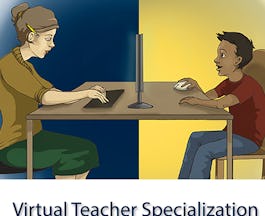
Some of the best virtual teaching courses online include specialized programs that focus on various aspects of online education. For instance, the Virtual Teacher Specialization offers insights into effective online teaching strategies. Additionally, the Advanced Instructional Strategies in the Virtual Classroom course provides practical techniques for engaging students in a virtual environment.‎
Yes. You can start learning virtual teaching on Coursera for free in two ways:
If you want to keep learning, earn a certificate in virtual teaching, or unlock full course access after the preview or trial, you can upgrade or apply for financial aid.‎
To learn virtual teaching, start by exploring online courses that focus on effective teaching strategies and technologies. Engage with interactive content and participate in discussions to enhance your understanding. Additionally, practice your skills by creating lesson plans and teaching materials tailored for online delivery. Seeking feedback from peers or mentors can also help you refine your approach and build confidence.‎
Typical topics covered in virtual teaching courses include instructional design, student engagement techniques, assessment strategies, and the use of technology in education. Courses may also address challenges specific to online learning environments, such as fostering community among students and managing diverse learning needs. Understanding these topics can equip you with the knowledge necessary to create effective virtual learning experiences.‎
For training and upskilling employees or the workforce, courses like the Teaching Impacts of Technology in K-12 Education Specialization can be particularly beneficial. These programs focus on integrating technology into teaching practices, which is essential for modern educational settings. Additionally, the Uncommon Sense Teaching Specialization provides insights into effective teaching methods that can enhance workforce training initiatives.‎