Supply Chain Courses
Supply chain courses can help you learn how goods and information move through planning, sourcing, production, and distribution stages. You can build skills in forecasting, inventory management, supplier coordination, and evaluating operational performance. Many courses introduce tools such as spreadsheets, analytics platforms, and workflow systems that support organizing and improving supply chain activities.
Popular Supply Chain Courses and Certifications
Skills you'll gain: Process Analysis, Process Modeling, Business Process, Business Analysis, Process Mapping, Process Management, Process Flow Diagrams, Business Process Modeling, Business Modeling, Stakeholder Management, Stakeholder Analysis, Computer Literacy
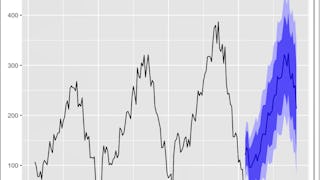
Skills you'll gain: Demand Planning, Customer Demand Planning, Supply Chain Planning, Production Planning, Forecasting, Time Series Analysis and Forecasting, Trend Analysis, Inventory Management System, Data Analysis, Plot (Graphics), R Programming, Data Visualization, R (Software), Model Evaluation, Model Training
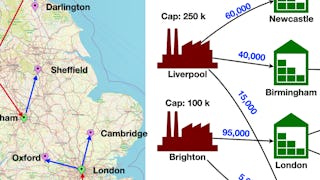
Skills you'll gain: Operations Research, Supply Chain Systems, Supply Chain, Supply Chain Management, Supply Chain Planning, Operational Analysis, Process Optimization, Model Optimization, Capacity Planning, Production Planning, Data Analysis, R Programming
Skills you'll gain: Prompt Engineering, Persona Development, Personalized Campaigns, Prompt Engineering Tools, Customer Analysis, AI Personalization, Target Audience, ChatGPT, Customer Insights, Data-Driven Marketing, Generative AI, Email Marketing, Social Media Campaigns, LLM Application, Content Creation, Social Media Content
Skills you'll gain: Databricks, Data Lakes, Data Pipelines, Data Integration, JSON, Dashboard, SQL, Data Manipulation, Apache Spark, Dashboard Creation, Big Data, Data Management, Data Transformation, Data Architecture, Version Control

What brings you to Coursera today?
Skills you'll gain: Dashboard, Dashboard Creation, Data Warehousing, Data Presentation, Relational Databases, Database Development, Data Access, Database Management, SQL, Query Languages, Data Management, Data Analysis, Data Analysis Software, Cloud Computing, Benchmarking, Market Share

Skills you'll gain: Operational Analysis, Operational Performance Management, Performance Measurement, Performance Analysis, Performance Metric, Performance Improvement, Operating Cost, Data Import/Export, Variance Analysis, Exploratory Data Analysis, Data Analysis, Financial Analysis, Corrective and Preventive Action (CAPA), Operations Management, Plot (Graphics), Waterfall Methodology

Skills you'll gain: Open Web Application Security Project (OWASP), Vulnerability Scanning, Proxy Servers, Security Testing, Penetration Testing, Vulnerability Assessments, Brute-force attacks, Test Tools, Web Scraping
Best Supply Chain courses from Coursera
Top-rated Supply Chain courses offered by Coursera on Coursera.
- Business Analysis & Process ManagementCourseraBeginnerLess Than 2 HoursCoursera
- Demand Planning in RStudio: Create Demand ForecastCourseraIntermediateLess Than 2 HoursCoursera
- Supply Chain Network Optimization Using MILP on RStudioCourseraBeginnerLess Than 2 HoursCoursera
Best short Supply Chain courses
Quick Supply Chain courses you can complete in a few hours or less.
- Crafting Personalized Content with Gen AI: Create a CampaignCourseraIntermediateLess Than 2 HoursQuick completion
- Data Management with Databricks: Big Data with Delta LakesCourseraIntermediateLess Than 2 HoursQuick completion
- Snowflake for Beginners: Make your First Snowsight DashboardCourseraBeginnerLess Than 2 HoursQuick completion










