Cybersecurity Courses
Cybersecurity courses can help you learn network security, risk management, encryption techniques, and incident response strategies. You can build skills in threat analysis, vulnerability assessment, and implementing security protocols to protect sensitive information. Many courses introduce tools like firewalls, intrusion detection systems, and security information and event management (SIEM) software, showing how these tools support the skills needed to safeguard digital environments.
Popular Cybersecurity Courses and Certifications

New York University
Skills you'll gain: Cyber Attacks, Infrastructure Security, Mobile Security, Enterprise Security, Cyber Risk, Cyber Governance, Cyber Security Policies, Cybersecurity, IT Security Architecture, Cloud Security, NIST 800-53, Hybrid Cloud Computing, Security Awareness, Security Controls, Risk Management Framework, Blockchain, Internet Of Things, Cryptographic Protocols, Cryptography, Data Integrity
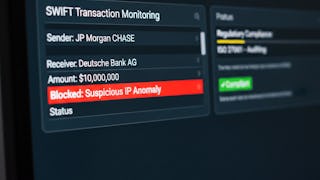
Skills you'll gain: Cyber Threat Intelligence, Cyber Attacks, Cyber Security Policies, Regulatory Requirements, Cyber Security Assessment, Financial Industry Regulatory Authorities, Continuous Monitoring, Regulatory Compliance, Governance Risk Management and Compliance, Risk Analysis, Data Ethics, Emerging Technologies, Cloud Security, AI Security, Blockchain
Skills you'll gain: Blockchain, Cryptography, Cryptographic Protocols, Security Engineering, Threat Modeling, Threat Management, Cyber Security Assessment, Security Controls, Data Security, Vulnerability Assessments, Threat Detection, Information Systems Security, Cyber Security Strategy, Key Management, Encryption, Regulatory Compliance, Network Protocols, Financial Regulation, Scalability, Scripting

Alex Genadinik
Skills you'll gain: Blockchain, Digital Assets, Cryptography, Security Awareness, Risking, Payment Systems, FinTech, Key Management, Emerging Technologies, Cybersecurity, Investments, digital literacy, Transaction Processing

Skills you'll gain: Cryptographic Protocols, Blockchain, Business Continuity Planning, Cryptography, Encryption, Business Continuity, Disaster Recovery, Data Management, Security Engineering, Digital Assets, Threat Modeling, Vulnerability Assessments, Security Architecture Review, Cybersecurity, Regulatory Compliance, Enterprise Security, Network Security, Asset Protection, Vulnerability Management, Data Security
Skills you'll gain: Public Key Infrastructure, Encryption, Cryptography, Cybersecurity, Data Security, Cryptographic Protocols, Advanced Encryption Standard (AES), Key Management, Data Encryption Standard, Blockchain, Algorithms, Data Integrity
What brings you to Coursera today?

Association of International Certified Professional Accountants
Skills you'll gain: Blockchain, Key Management, Digital Assets, Asset Protection, Supply Chain, Data Security, Supply Chain Management, FinTech, Cryptography, Security Management, Cybersecurity, Public Key Infrastructure, Accounting, Security Awareness, Payment Systems, Emerging Technologies, Ledgers (Accounting), Security Controls, Risk Management, Business

LearnQuest
Skills you'll gain: Blockchain, Key Management, Public Key Infrastructure, Security Controls, Cryptography, Cybersecurity, Data Security, Application Security, Network Security, Security Architecture Review, IT Security Architecture, Vulnerability Assessments, Encryption, Secure Coding, Cryptographic Protocols, Distributed Denial-Of-Service (DDoS) Attacks, Public Key Cryptography Standards (PKCS), Security Testing, Vulnerability Management, Solution Design

O.P. Jindal Global University
Skills you'll gain: Emerging Technologies, Cloud Deployment, Cloud Computing, Cloud Services, Technology Strategies, Digital Marketing, Internet Of Things, Digital Transformation, Cybersecurity, Artificial Intelligence, Blockchain, Business Strategy, Data Security, Business Modeling, Artificial Intelligence and Machine Learning (AI/ML), Automation

Skills you'll gain: Blockchain, Cryptography, Cybersecurity, Cyber Threat Intelligence, Enterprise Application Management, Cyber Attacks, Emerging Technologies, Financial Trading, Digital Assets, Cyber Security Assessment, Cryptographic Protocols, FinTech, Payment Systems, Security Testing, Auditing, Transaction Processing, Data Integrity

Skills you'll gain: Blockchain, Security Controls, Cybersecurity, Data Security, Network Security, Security Architecture Review, Cryptography, IT Security Architecture, Vulnerability Assessments, Cryptographic Protocols, Encryption, Key Management, Risk Management, Public Key Cryptography Standards (PKCS), Data Integrity
The Hong Kong University of Science and Technology
Skills you'll gain: Financial Regulation, Financial Regulations, Bank Regulations, FinTech, Financial Services, Financial Industry Regulatory Authorities, Law, Regulation, and Compliance, Regulatory Compliance, Risk Management Framework, Regulatory Requirements, Financial Controls, Regulatory Affairs, Fraud detection, Loss Prevention, Data Security, Cybersecurity, Human Factors (Security), Insurance, Blockchain, Information Privacy
In summary, here are 10 of our most popular cybersecurity courses
- Enterprise and Infrastructure Security: New York University
- Analyze Cybersecurity Risks in Financial Systems: EDUCBA
- Securing the Assets: Bitcoin Security: AI CERTs
- Introduction To Cryptocurrency For Beginners - 2026: Alex Genadinik
- Certified Blockchain Security Professional (CBSP) Exam Prep: SkillUp
- Encryption and Cryptography Essentials: IBM
- Introduction to Blockchain: Association of International Certified Professional Accountants
- Security for Blockchain and DApps: LearnQuest
- Emerging Technologies & Digital Business: O.P. Jindal Global University
- Practical Blockchain and Cryptocurrency: Pearson










